Organisation · Interwar Prague · Ukrainians in Czechia · R0034
Ukrainian Free University
Український вільний університет · Ukrajinská svobodná univerzita · 1921–1950
Essence
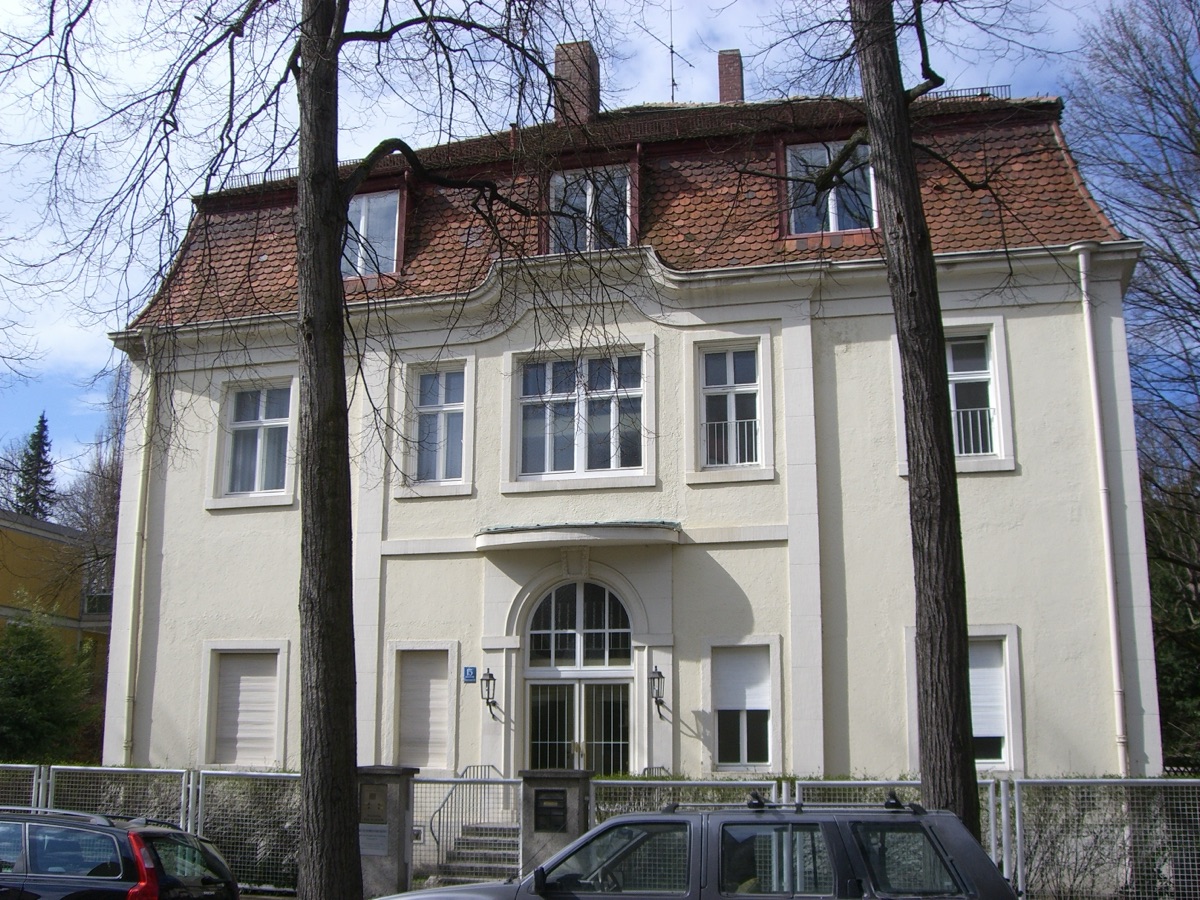
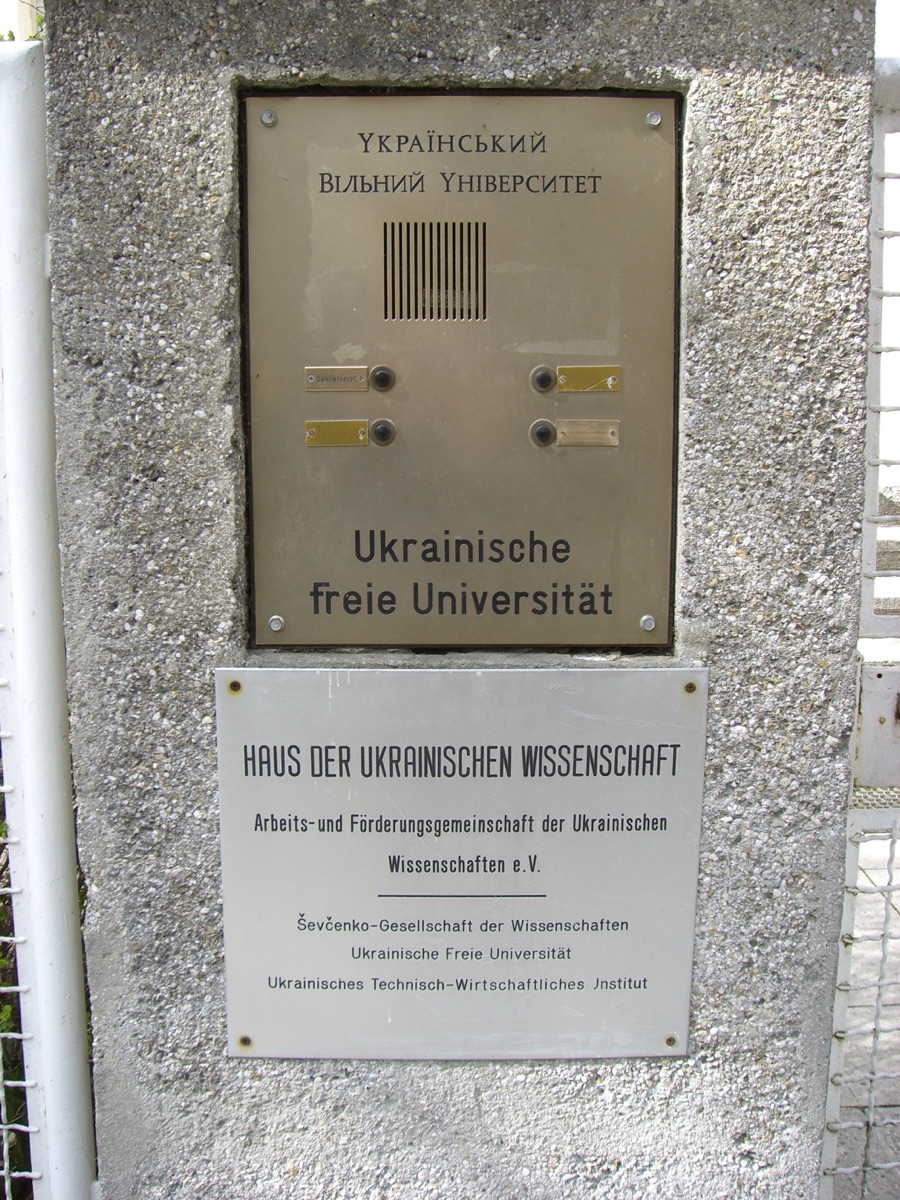
Founded in Vienna in January 1921, the Ukrainian Free University moved to Prague later that year. With support from the Czechoslovak government and cooperation with Charles University, it developed into a major academic institution for Ukrainians in exile. Its Prague period lasted until 1945, after which the university resumed its work in Munich. Surviving statutes, senate minutes and publication lists provide unusually rich evidence for this history.
Timeline
- 17.01.1921Opening of the Ukrainian Free University in Vienna [U02; U03]
- Autumn 1921Relocation to Prague [U01; U03]
- 23.10.1921Beginning of the ceremonial Prague period of activity [U02]
- 1921–1922Initial teaching at two faculties; over 700 attendees according to the official history [U01; U03]
- 1923Academic societies in the university’s Prague orbit [U03]
- 1930sPublication exchanges with Ukrainian institutions; university catalogues [U02]
- 15.06.1931Minutes of the Faculty of Philosophy teachers’ meeting [U02; archival reference]
- 26.03.1935Minutes of the Senate meeting [U02; archival reference]
- 04.06.1940Rector I. Borkovskyi’s letter on pay reductions [U02; archival reference]
- 1945Relocation of activities to Munich [U01; U04]
- 1950Recognition of degrees in Bavaria (according to the UFU history) [U01]
Full research text
Why this is one of the atlas’s central institutions
The Ukrainian Free University (UFU) is a unique story of institutional continuity: founded in Vienna on 17 January 1921, it moved to Prague that same year, becoming a leading academic centre of Ukrainian emigration in 1921–1945; from 1945 it resumed work in Munich. The story for Czech audiences is how support from the state and Charles University helped preserve Ukrainian higher education after the loss of statehood. [U01; U02; U03]
This history can be shown in three ways: as the university’s timeline, as a network of professors and students, and as a digital archival exhibition with original documents. The Central State Archive of Public Associations and Ukrainian Studies has already prepared an exhibition with specific archival references: the 1921 draft statute, university resolutions, admission materials, Senate minutes and the rector’s 1940 letter about reductions in paid hours. This provides a much stronger evidential basis than repeating general biographical statements. [U02]
Profile and periodisation
| Field | Value |
|---|---|
| Ukrainian name | «Український вільний університет» («УВУ») |
| Czech name | Ukrajinská svobodná univerzita (USU) — check the official historical Czech name for the interface |
| English name | Ukrainian Free University (UFU) |
| Foundation | 17 January 1921, Vienna [U02; U03] |
| Move to Prague | Autumn 1921; ceremonial opening in Prague on 23.10.1921 [U02; U03] |
| Prague stage | 1921–1945, institutional work, two faculties [U01; U03] |
| Munich stage | From 1945; Bavarian recognition of academic degrees in 1950 [U01] |
| Succession | Institutional continuity between the Vienna, Prague and Munich stages is described by the present UFU [U01] |
| Single ID | R0034, public slug ufu; do not duplicate “Ukrainische Freie Universität” |
Background, establishment and state support
Vienna 1921. Ukrainian scholars and émigré figures created the UFU following the events of the Ukrainian Revolution. The university’s official history names Mykhailo Hrushevsky and Oleksandr Kolessa among its founders. The university began as an academic initiative intended to provide teaching and research in Ukrainian outside Ukraine. [U01; U03]
Move to Prague. Relocation became possible through conditions provided by the Czechoslovak government and Charles University. The latter supplied classrooms; Ukrainian professors and students gained access to an active university environment. The history should not be reduced to a single politician: faculties, administrations, teachers and Ukrainian civic institutions also matter. [U01; U03]
Funding. The Ukrainian Institute of National Memory reports an initial monthly subsidy of 500,000 Czech crowns. For academic publication, this amount must be dated to a precise budget period and confirmed by a government resolution or accounting report: it cannot automatically be extended over all of 1921–1945. [U03]
Structure and teaching. The university had faculties of philosophy and law and economics. The UFU’s official history reports over 700 attendees in the first Prague semester; the Ukrainian historical calendar specifies audience numbers for different periods. Statistical charts must distinguish registered attendees, regular students, graduates and degrees awarded, rather than presenting them as one “student” count. [U01; U03]
The Prague period: scholarship, people and documents
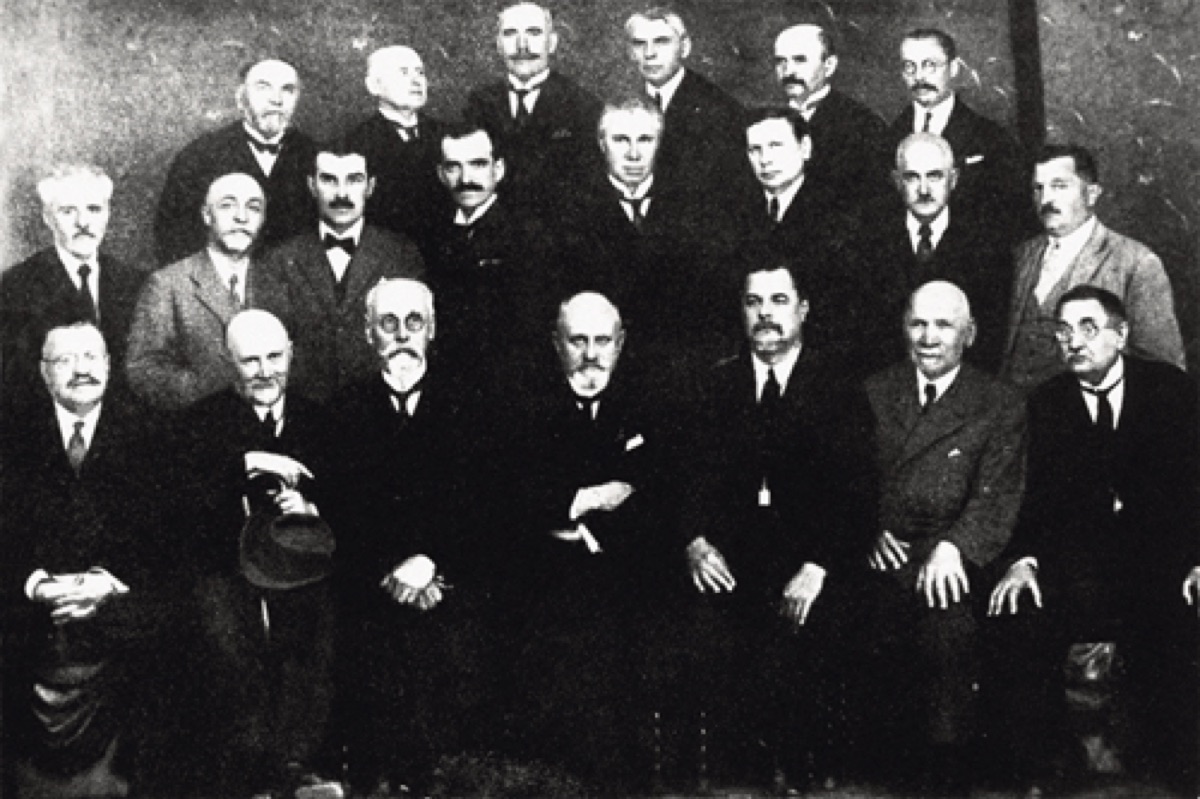
Academic environment. Historians, philologists, legal scholars and researchers associated with the UFU included Oleksandr Kolessa, Dmytro Antonovych, Ivan Horbachevsky, Dmytro Doroshenko, Stanislav Dnistriansky, Stepan Smal-Stotsky and Andrii Yakovliv. Their roles in different years should appear as separate dated records (professor_at, dean_of, rector_of); a list of professors should not automatically be applied to every year. [U01; U03]
Scholarly and publishing centre. The university published research and supported émigré intellectual life. The archival exhibition presents a list of its publications dating no earlier than 1931 and a description of literature received from the All-Ukrainian Academy of Sciences. This is a particularly valuable connection between Prague and Ukraine through actual book exchange, rather than personal biographies alone. [U02]
A network of related institutions. The Ukrainian historical calendar mentions a Ukrainian legal society (1923), a historical and philological society (1923) and initiatives to preserve a Ukrainian archive. However, these must remain separate organisations with their own statutes and leadership; the UFU page can be their network node, rather than a legal “parent” organisation without evidence. [U03]
The Senate and faculties in documents. The central archive describes the draft university statute (1921), resolutions, minutes of the Faculty of Philosophy meeting on 15 June 1931, Senate minutes of 26 March 1935 and a notice of the professors’ meeting on 6 June 1935. These artefacts can provide illustrative website pages: “How a university in exile was governed”. [U02]
Conditions before and during the war. In a letter of 4 June 1940, Rector Ivan Borkovskyi wrote to professors about a forced reduction in paid hours. This is important evidence that the Prague period was not an unchanging “golden age” from beginning to end: support changed, while work continued under increasingly difficult external circumstances. [U02]
Evacuation and continuation. In 1945, some staff and professors left Prague; activities resumed in Munich. According to the official history, Vadym Shcherbakivsky played a key role and became the first UFU rector in its German stage; Bavarian recognition of degrees was secured in 1950. The Munich university is not a separate contemporary “new UFU” in the database, but the same historical object with a dated change of location. [U01]
The archives’ fate. The scholarly journal «Архіви України» describes dispersal of Prague-period documents among archives in Ukraine, Czechia, Germany and elsewhere. This makes the archival_holding model important: original institution, current custodian, fond, inventory, file and page. [U04]
Graph: teachers, institutions and documents
| Object | Relationship type / period | Sources and status |
|---|---|---|
| Oleksandr Kolessa | one of the initiators / rectoral terms | U01; check rectoral years against the archive |
| Ivan Horbachevsky (R0002) | professor / rector — specific years separately | U01; U03; documented environment |
| Dmytro Antonovych | professor and organisational figure | U01; U03 |
| Ivan Borkovskyi | rector, signatory of the 1940 letter | U02; direct documentary testimony |
| Charles University | institution_provided_premises, from 1921 | U01; U03 |
| Czechoslovak government | provided_financial_support, period requires clarification | U01; U03 |
| Tomáš Garrigue Masaryk (R0024) | public_support_context, president | U01; not founder_of |
| Mykyta Shapoval (R0003) | shared_emigration_educational_context, not automatic UFU founder status | S01; S02; U03; specification required |
| Ukrainian Economic Academy (R0035) | parallel_exile_institution, not identical to the UFU | U03 |
| Prague academic societies | intellectual_network / institutional_contacts | U03; separate entity IDs |
| Ukrainian Academy of Sciences | book_exchange_partner, documents of the 1930s | U02 |
Archival exhibits with exact references
| Artefact | Custodian / reference | Purpose |
|---|---|---|
| Draft statute, 1921 | TsDAHOU, fond 269, inventory 1, file 426, folios 10–17 | legal history, comparison with the current text |
| Basic resolutions, 1921 | TsDAHOU, fond 269, inventory 1, file 426, folios 29–30 verso | early-period decisions |
| Applicant guide, 1921 | TsDAHOU, fond 269, inventory 2, file 15, folios 102–103 | school UX and admission conditions |
| Faculty minutes, 15.06.1931 | TsDAHOU, fond 269, inventory 1, file 427, folios 53–54 | staffing and academic decisions |
| Senate minutes, 26.03.1935 | TsDAHOU, fond 269, inventory 1, file 427, folio 44 | organisational history |
| Letter on funding cuts, 04.06.1940 | TsDAHOU, fond 269, inventory 1, file 432, folio 64 | changing conditions of operation |
All references come from TsDAHOU’s digital exhibition; the existence of a description does not mean unconditional permission to publish archival images. [U02]
Statistics, contradictions and context
Attendee numbers. First Prague semester: “over 700” in the UFU’s current history. Other historical surveys give similar but non-identical figures. A chart needs a table from the original university register defining “attendee”. [U01; U03]
Initial funding amount. The 500,000 crowns is a report from UINP; there is no basis for asserting uninterrupted payment of this amount until 1945. [U03]
Rectors. The source documents contain a broad list of rectors with repeated terms. The dossier does not reproduce an unverified complete chronology; it requires academic yearbooks and Senate documents. [U02]
The UFU and other higher schools. Do not merge the UFU, the Poděbrady Academy and the Drahomanov pedagogical institute into a single organisation; these are separate legal and educational objects. [U03]
Prague’s “golden period”. This is a retrospective assessment of success in the 1920s–1930s, rather than a claim that the institution faced no difficulties in the 1940s. The 1940 document attests reductions in paid work. [U02]
Connections
Mentioned in dossiers
- Andrij Jakovliv · Person
- Fedir Shcherbyna · Person
- Vasyl Bidnov · Person
- Oleksander Mytsiuk · Person
- Augustyn Voloshyn · Person
- Oleksa Stefanovyč · Person
- Spyrydon Čerkasenko · Person
- Oleh Olžyč · Person
- Stepan Smal-Stockyj · Person
- Oleksandr Kolessa · Person
- Stanislav Dnistrjanskyj · Person
- Edvard Beneš · Person
- Ukrainian Real Gymnasium in Czechoslovakia · Organisation
- Ukrainian Academic Hromada · Organisation
- Central Union of Ukrainian Students · Organisation
- Society of the Museum of Ukraine's Struggle for Independence · Organisation
- Vsesvit – Ukrainian publisher in Prague · Organisation
- Ukrainian Student Community in Prague · Organisation
- Řevnice · Place
- Klementinum v Praze · Place
- Historické prostory Univerzity Karlovy · Place
- Prague edition of the Kobzar, 1876 · Work
- Rozbudova natsii – Ukrainian political periodical · Work
- Suspilstvo (La société) – scholarly series · Work
- Ukrainian emigration in interwar Czechoslovakia · Event
- Relocation of the Ukrainian Free University from Vienna to Prague (1921) · Event
- Founding of the Ukrainian Economic Academy in Poděbrady (1922) · Event
- Founding of the Museum of the Ukrainian Liberation Struggle in Prague (1925) · Event
Sources
- U01 Ukrainian Free University. «Історія УВУ». ufu-muenchen.de
- U02 Central State Archive of Public Associations and Ukrainian Studies. Documentary exhibition «Український вільний університет в Празі — осередок освіти і науки української еміграції». tsdahou.archives.gov.ua
- U03 Ukrainian Institute of National Memory. «1921 — заснування Українського Вільного Університету». uinp.gov.ua
- U04 «Архіви України» (2021), scholarly article on the UFU’s centenary and documentary heritage. au.archives.gov.ua
- U05 History of the UFU in German, official website. ufu-muenchen.de
Photos and videos
Verification
Draft
Research draft with sources; independent check still pending.
How we verify
- DraftResearch draft with sources; independent check still pending.
- Checked automaticallyQuotes mechanically matched to sources; an independent model found no contradictions.
- Two sources (automatic score)Automatic evidence score: key facts rest on at least two independent sources. No person has yet read the whole dossier.
- Confirmed by an editorAn editor confirmed the dossier; the reason is shown on the page. This is not an independent scholarly review.
- Disputed pointsSources disagree; disputed points are marked in the text.
Report an error or add information
Your message goes to the editorial queue. AI pre-sorts it, a human decides.