Person · National revival · Shared · R0024
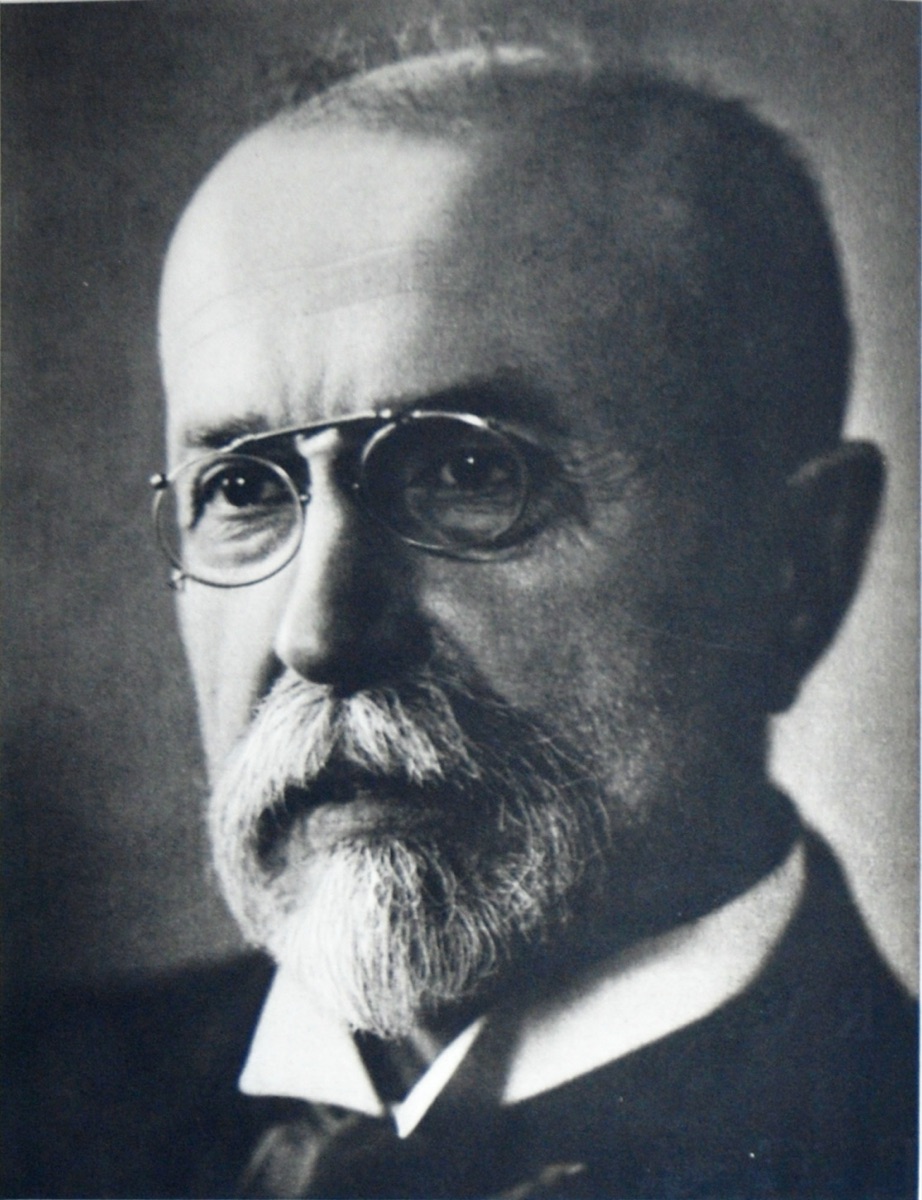
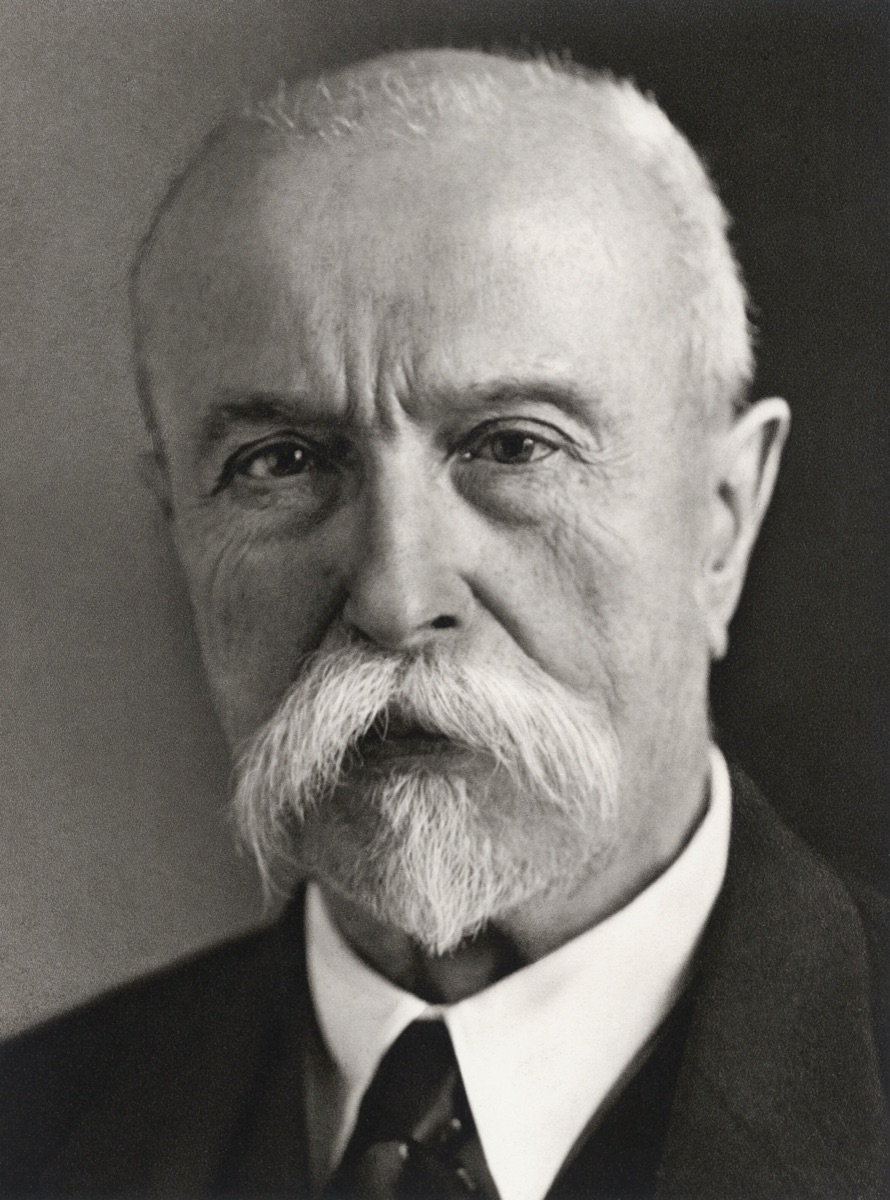
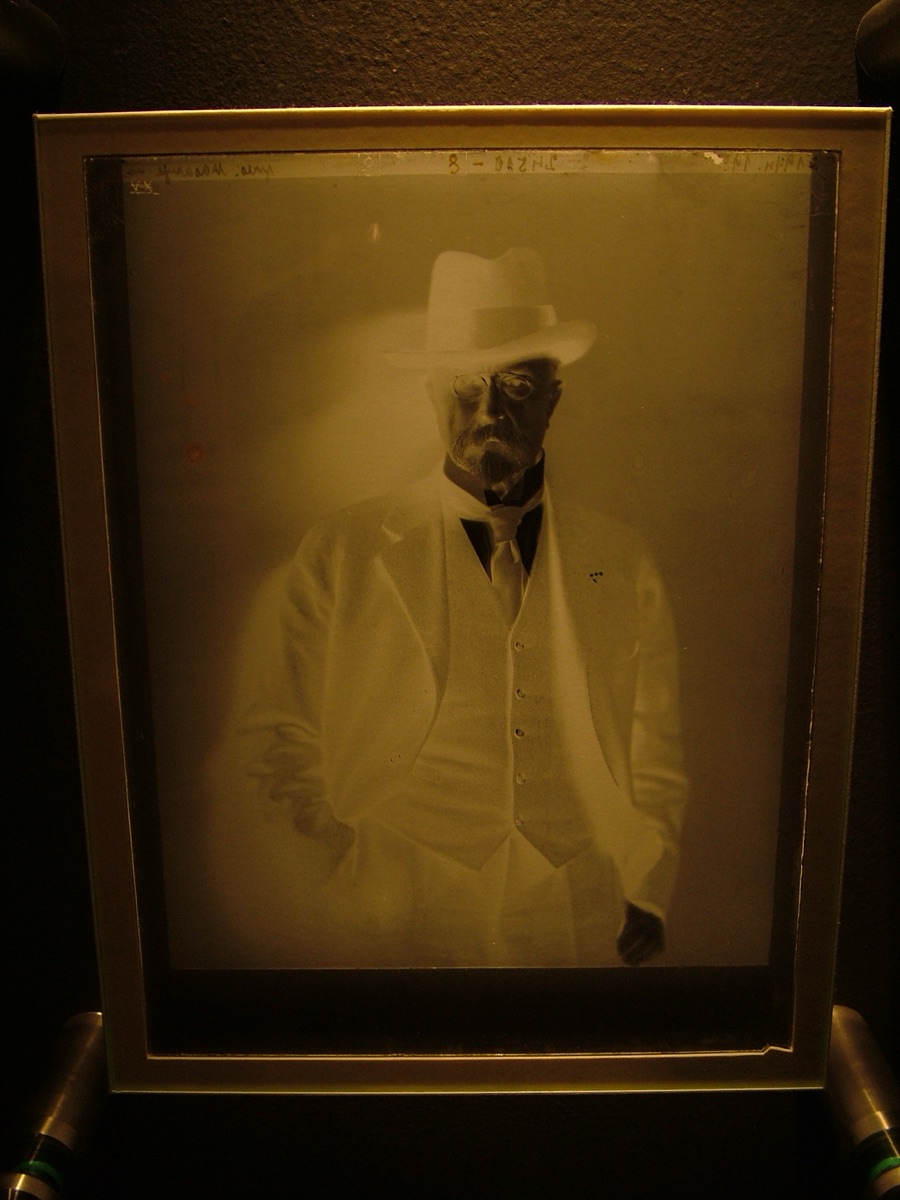
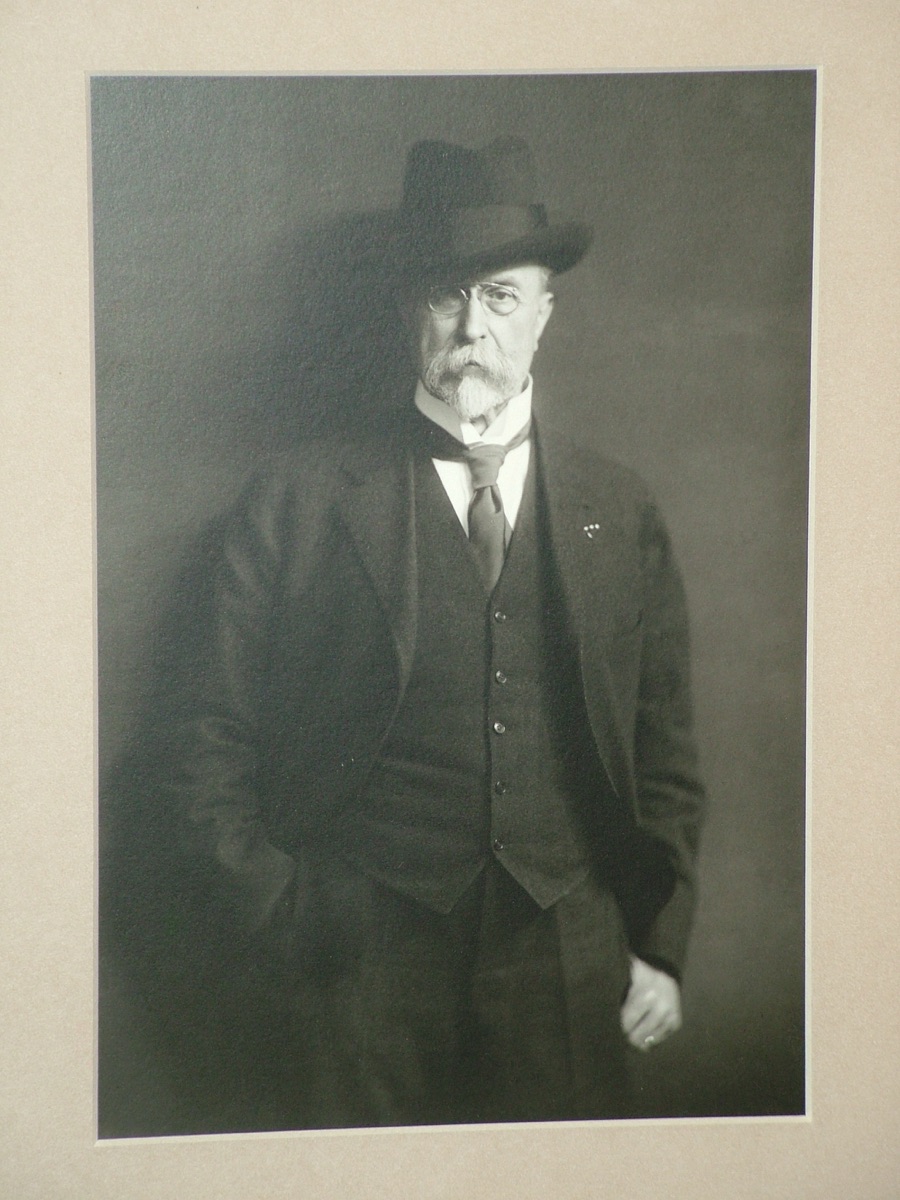
Tomáš Garrigue Masaryk
Томаш Ґарріґ Масарик · 1850–1937
Essence
Tomáš Garrigue Masaryk (1850–1937), Czechoslovakia's first president, supported an interwar relief policy that also benefited Ukrainian émigrés. Prague and Poděbrady became important centers of Ukrainian higher education. The president's political support must be distinguished from the direct administrative actions and funding decisions of state institutions. [M03; M04]
Timeline
- 07.03.1850Born in Hodonín. [M12; M13]
- 1882Begins teaching at Prague University. [M12; M13]
- 14.11.1918Elected president of Czechoslovakia. [M12; M13]
- 1920According to the Czech Embassy, meets Mykhailo Hrushevsky in Prague. [M04]
- 1921State aid operation begins; the Ukrainian Free University relocates to Prague. [M04; M06]
- 1922The Ukrainian Economic Academy is founded in Poděbrady. [M04]
- 09.05.1923A presidential trip to Poděbrady is recorded. [M09]
- 1923The pedagogical institute and art studio begin operating. [M04]
- 1924Initial stage in the formation of the Russian, later Slavonic, Library. [M14]
- 1925Support for the Ukrainian Civic Committee ends. [M10; M06]
- 14.12.1935Resigns as president. [M12; M13]
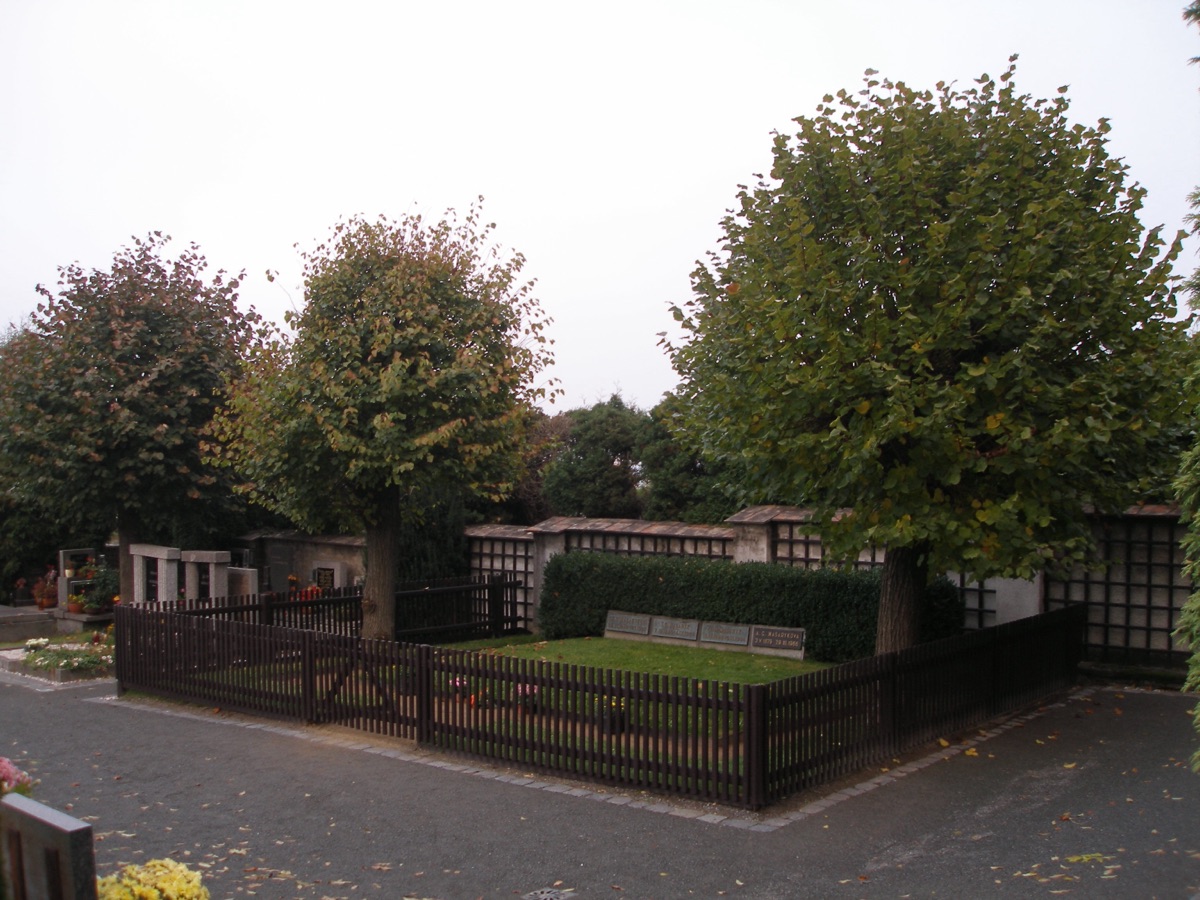
- 14.09.1937Dies in Lány. [M12; M13]
- 1937Oleksandr Oles dedicates a poem to Masaryk’s memory. [M08]
Full research text
Why Masaryk is a central figure in the atlas
Tomáš Garrigue Masaryk is a key figure in Ukrainian–Czech relations during the first half of the twentieth century. During his presidency, Czechoslovakia supported numerous political émigrés from the former Russian Empire, including Ukrainians. The system of state assistance supported the work and growth of Ukrainian universities, teacher-training institutes, learned societies, publishing houses and a substantial Ukrainian publishing community; some institutions (for example the Ukrainian Free University) already existed and relocated to Czechoslovakia. This history concerns specific state programmes and intellectual opportunities rather than an abstract idea of “friendship”. [M03; M04; M05]
Nevertheless, the president's personal decisions, funding by Czechoslovak ministries and Ukrainian émigrés' own initiatives must be distinguished. Masaryk did not personally found every Ukrainian institution, and the “Russian Aid Operation” was not a programme exclusively for Ukrainians. Its purposes, administrative channels and Czech officials' views of the region's future changed. A reliable exhibition cannot simplify these contexts. [M03; M04]
Essential biography and outlook
Masaryk was born in Hodonín on 7 March 1850 and died in Lány on 14 September 1937. After studying in Vienna, he became a philosophy lecturer and worked in Prague's Czech university environment from 1882. His scholarly interests included sociology, philosophy, public morality and political responsibility. He participated in critical intellectual debates, emphasising open discussion and the need to verify claims. [M01; M02]
During the First World War he worked abroad for international recognition of the Czech and Slovak political movement. On 14 November 1918 he was elected first president of the new Czechoslovak Republic and remained in office until his resignation on 14 December 1935 [M12; M13]. His ideas developed amid the complex national movements of Central Europe; contemporary readers need to understand the political limitations of the interwar system alongside positive assessments. [M01; M02]
The aid operation: from humanitarian gesture to institutional policy
Historian Petr Kaleta examines state assistance to émigrés in Czechoslovakia in his scholarly article on the “Russian Aid Operation”. According to the summaries he cites, the programme brought approximately 25,000 Russian, Ukrainian and other refugees to the country. This estimates a mixed group, not 25,000 Ukrainians alone. Universities and secondary schools gained numerous students, while émigré communities could organise educational and civic structures. [M03]
The academic publication supports Masaryk's role in this programme, but different government bodies decided on individual subsidies. Funding for the Ukrainian Free University, Ukrainian Economic Academy or teacher-training institute requires verification against budgets and individual letters from the relevant ministries; the database must not automatically acquire a Masaryk personally_funded institution relationship. [M03; M04; M06]
The expression “Russian Aid Operation” deserves particular attention: it is the historical name of an administrative programme, not a statement of every participant's national identity. Ukrainian refugees, intellectuals and political organisations acted as distinct communities and established their own institutions. In all three language versions, the term should appear in quotation marks with a short explanation. [M03; M04]
Documented Ukrainian contacts
According to the Czech Embassy in Kyiv's historical overview, historian and politician Mykhailo Hrushevsky stayed in Prague and met Masaryk in 1920. This specific bilateral meeting deserves a separate narrative page; however, the precise day, reception venue, subject and outcome of the talks require confirmation through the presidential calendar and correspondence. A met_with relationship can be considered in the graph, but friend_of and political_ally_of require additional evidence. [M04]
Another important subject is Ukrainians' intellectual reception of Masaryk. Mykyta Shapoval studied his sociological ideas and wrote “Masaryk as a Sociologist”; the book offers a way to show scholarly exchange alongside political support. Specific letters or meeting records must be found before claiming personal collaboration between Shapoval and the president. [M07]
A particularly telling example is Ukrainian writer Oleksandr Oles's poem dedicated to Masaryk's memory after his death in 1937. The Czech Embassy reproduced its image in a report about the poet's reburial in 2017. This demonstrates cultural gratitude but does not establish personal acquaintance. [M08]
Ukrainian educational institutions during Masaryk's presidency
In 1921 the Ukrainian Free University moved from Vienna to Prague; in 1922 the Ukrainian Economic Academy opened in Poděbrady; in 1923 the Mykhailo Drahomanov Ukrainian Pedagogical Institute and Ukrainian Studio of Fine Arts emerged in the capital. All this occurred in the political environment of the Czechoslovak aid operation. Each institution nevertheless had its own initiators, legal history and distinct funding. [M04; M03]
Poděbrady is of particular interest among Czech towns: the presidential itinerary lists Masaryk's trip there on 9 May 1923. His visit to the town is recorded, but his presence specifically in the Ukrainian Economic Academy's classrooms needs separate confirmation through the visit programme or local press. The list of journeys alone must not produce a map connection labelled “Masaryk visited the academy”. [M09]
The Ukrainian Civic Committee in Czechoslovakia (R0039) also operated within the broader political conditions of state assistance. Disputes between émigré groups and the end of the committee's activities in 1925 nevertheless show that the aid policy was not entirely free of conflict. This is an important correction to an excessively idealised historical narrative. [M06; M10]
The Slavonic Library and preservation of Ukrainian heritage
Prague's Slavonic Library is the present institutional heir to important interwar archival and book collections. Historical overviews describe its establishment with support from Czechoslovak diplomacy and its holdings of publications from different Slavic émigré communities. Its Ukrainian holdings now enable research into the intellectual life of the Prague émigré community, including organisations' collections, periodicals, statutes and correspondence. [M04; M11]
This is particularly significant for Masaryk's cultural history: the results of interwar funding survive in books, bibliography, manuscripts, archives and research collections. The exhibition's central idea should be that support for scholarship leaves traces for centuries. However, a present-day library reading room does not establish that particular historical meetings occurred there; each address requires separate identification. [M04; M11]
Connections
Mentioned in dossiers
- Oleksandr Kolessa · Person
- Stanislav Dnistrjanskyj · Person
- Maksym Slavinskyj · Person
- Serhij Tymošenko · Person
- Mykhailo Hrushevsky · Person
- Ukrainian Academic Hromada · Organisation
- Plast Czechia – Ukrainian scouting organisation · Organisation
- Ukrainian Civic Publishing Fund · Organisation
- Diplomatic Mission of the Ukrainian People's Republic in Prague · Organisation
- Ukrainian Student Community in Prague · Organisation
Further reading about this person
A catalogue confirms the bibliographic record. It does not mean that every dossier claim has been checked against the book’s full text.
-
Conversations
Hovory s T. G. Masarykem / Бесіди з Томашем Масариком
Karel Čapek / Карел Чапек
Bibliographic details incomplete · Record checked 2026-11-02
Catalogue or publisher record ↗Text reading not documented
Sources
- M01 Prague Castle, “Tomáš Garrigue Masaryk: Životopis”: biographical dates and scholarly and political activity. hrad.cz
- M02 Prague Castle, “Life and works in dates”: chronology of state activity. hrad.cz
- M03 Petr Kaleta, “T. G. Masaryk and the Russian Aid Operation in Czechoslovakia”, 2019: academic analysis of the programme. journals.muni.cz
- M04 Czech Embassy in Kyiv, “Ukrajinci v meziválečném Československu”: meeting with Hrushevsky and institutional history. mzv.gov.cz
- M05 Zdeněk Sládek and Ljubov Běloševská, “Dokumenty k dějinám ruské a ukrajinské emigrace v ČSR (1918–1939)”: an edition of 200 primary documents; individual pages have not been verified. slu.cas.cz
- M06 Ondřej Havel, “Začátek Ruské pomocné akce a činnost Ukrajinského hromadského komitétu v Československu v letech 1921–1925”: a research study. historica.upol.cz
- M07 Vernadsky National Library of Ukraine, commemoration of the 140th anniversary of Mykyta Yukhymovych Shapoval’s birth: a work about Masaryk’s sociology. nbuv.gov.ua
- M08 Czech Embassy in Kyiv, “Panychida za Oleksandra Olese”: a facsimile of the dedication. mzv.gov.cz
- M09 Po stopách T. G. Masaryka, “Prezidentské cesty”: dates of presidential journeys. tg-masaryk.cz
- M10 Encyclopedia of Ukraine, “Ukrainian Civic Committee in Czechoslovakia”: institutional context. encyclopediaofukraine.com
- M11 Slavonic Library, National Library of the Czech Republic, “Ukrainian Committee (1926–1934)”: subsequent history of relief organisations. sbirkysk.nkp.cz
- M12 English Wikipedia, «Tomáš Garrigue Masaryk» — birth, 1882 professorship, election on 14 Nov 1918, resignation on 14 Dec 1935, death at Lány on 14 Sep 1937. en.wikipedia.org
- M13 Czech Wikipedia, «Tomáš Garrigue Masaryk» — the same biographical dates, incl. 14 Dec 1935 as the last day in office. cs.wikipedia.org
- M14 English Wikipedia, «Slavonic Library in Prague» — founded 1924 by the Czechoslovak Foreign Ministry as its Russian Library within the Russian Action, renamed in 1927. en.wikipedia.org
Photos and videos
Verification
Two sources (automatic score)
Automatic evidence score: key facts rest on at least two independent sources. No person has yet read the whole dossier.
- Automatic evidence score: 58 points (threshold 40).
- Independent fact check of every statement against primary sources (3 November 2026).
Evidence coverage
Timeline claims assessed: 13 / 13. Claims with verified contradictions: 0.
The score measures coverage of timeline claims by verified sources, not the probability of historical truth. One independent source gives a claim 0.5 points; two or more give 1 point. A disputed claim receives 0. Unassessed claims remain in the denominator.
evidence-v1 · 2026-11-03
How the score is calculated
Each claim shows its contribution to the score and verified current sources. Multiple references may share an origin; context adds no points.
-
07.03.1850
Born in Hodonín.
Assessed Contribution: 0.5 / 1Independent source origins: 1
Report this claim -
1882
Begins teaching at Prague University.
Assessed Contribution: 0.5 / 1Independent source origins: 1
Report this claim -
14.11.1918
Elected president of Czechoslovakia.
Assessed Contribution: 0.5 / 1Independent source origins: 1
Report this claim -
1920
According to the Czech Embassy, meets Mykhailo Hrushevsky in Prague.
Assessed Contribution: 0.5 / 1Independent source origins: 1
- M04 — supports the claim
-
1921
State aid operation begins; the Ukrainian Free University relocates to Prague.
Assessed Contribution: 1.0 / 1Independent source origins: 2
Report this claim -
1922
The Ukrainian Economic Academy is founded in Poděbrady.
Assessed Contribution: 0.5 / 1Independent source origins: 1
- M04 — supports the claim
-
09.05.1923
A presidential trip to Poděbrady is recorded.
Assessed Contribution: 0.5 / 1Independent source origins: 1
- M09 — supports the claim
-
1923
The pedagogical institute and art studio begin operating.
Assessed Contribution: 0.5 / 1Independent source origins: 1
- M04 — supports the claim
-
1924
Initial stage in the formation of the Russian, later Slavonic, Library.
Assessed Contribution: 0.5 / 1Independent source origins: 1
- M14 — supports the claim
-
1925
Support for the Ukrainian Civic Committee ends.
Assessed Contribution: 1.0 / 1Independent source origins: 2
Report this claim -
14.12.1935
Resigns as president.
Assessed Contribution: 0.5 / 1Independent source origins: 1
Report this claim -
14.09.1937
Dies in Lány.
Assessed Contribution: 0.5 / 1Independent source origins: 1
Report this claim -
1937
Oleksandr Oles dedicates a poem to Masaryk’s memory.
Assessed Contribution: 0.5 / 1Independent source origins: 1
- M08 — supports the claim
2026-11-03
How we verify
- DraftResearch draft with sources; independent check still pending.
- Checked automaticallyQuotes mechanically matched to sources; an independent model found no contradictions.
- Two sources (automatic score)Automatic evidence score: key facts rest on at least two independent sources. No person has yet read the whole dossier.
- Confirmed by an editorAn editor confirmed the dossier; the reason is shown on the page. This is not an independent scholarly review.
- Disputed pointsSources disagree; disputed points are marked in the text.
Report an error or add information
Your message goes to the editorial queue. AI pre-sorts it, a human decides.