Person · National revival · Ukrainians in Czechia · R0008
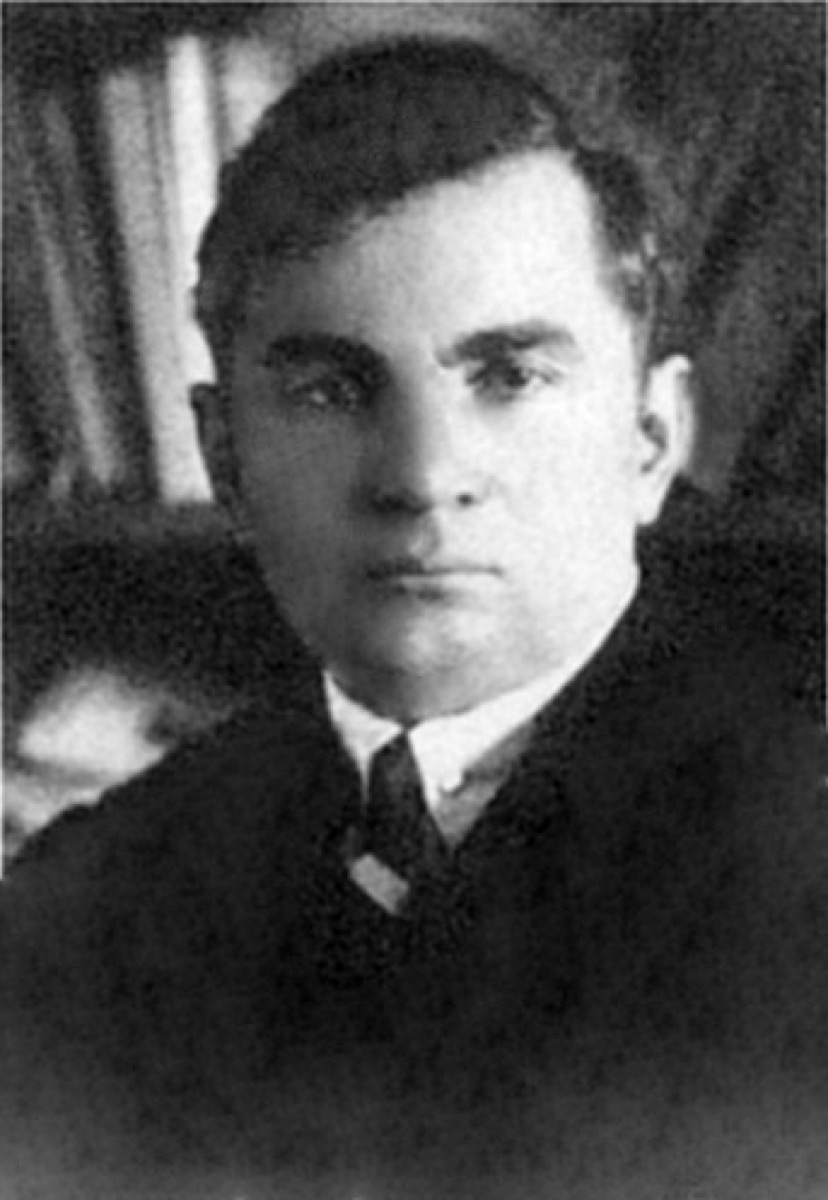
Oleksander Mytsiuk
Олександр Мицюк · Oleksandr Mycjuk · 1883–1943
Essence
Oleksander Mytsiuk (1883–1943) was a Ukrainian economist, politician and academic in Czechoslovakia. Following his service in the Ukrainian National Republic, he taught at the Ukrainian Husbandry Academy in Poděbrady and the Ukrainian Free University in Prague, serving as its rector in 1938–1939 and 1940–1941. He wrote two-volume works on the history of political economy (1922–1923) and agrarian policy (1925).
Timeline
- 1883-06-21/22ESU/IEU: 9 (21) June, Novooleksandrivka in Katerynoslav Governorate. EIU: 22 June, Zolotonosha county in Poltava Governorate. Birth day and place have not been reconciled against a vital register. [MY01; MY02; MY09; MY10]
- 1903Completed Novohlukhiv forestry school. [MY01]
- 1905Repressed for organisational work in the Peasant Union. [MY01; MY05]
- 1906Participated in forming the Ukrainian Party of Socialist Revolutionaries. [MY01]
- 1915Graduated from Kharkiv University's law faculty. [MY01]
- 1917-06Leading economic and administrative work under the Ukrainian Central Rada. [MY01]
- 1918-12–1919-02Minister of Internal Affairs from December 1918 to February 1919. Exact days differ: EIU 28 December–2 February, Fedaka 26 December–12 February; government acts unread. [MY01; MY05; MY09; MY02]
- 1920Deputy Minister of the National Economy of the Ukrainian People's Republic. [MY01; MY02; MY09]
- late 1920Move to Czechoslovakia, beginning of émigré scholarly period. [MY01]
- 1921Participation in the Ukrainian Civic Committee in Czechoslovakia. [MY01]
- 1922–1923Publication of two volumes of «Історія політичної економії» in Poděbrady. [MY01; MY02]
- 1925Two-volume study «Аграрна політика, 1800–1925». [MY01; MY02]
- 1929«Фашизм» article in Prague's «Розбудова нації». [MY01; MY09]
- 1936–1938Two volumes of «Нариси з соціально-господарської історії ... Підкарпатської Руси». [MY01; MY02]
- 1938–1939First rectorial term at the Ukrainian Free University confirmed by encyclopaedias. [MY01; MY02; MY11]
- 1940–1941Second rectorial term at the Ukrainian Free University. [MY01; MY02; MY11]
- 1943-12-30Died in Prague. [MY01; MY02; MY05; MY09]
Full research text
From forestry school to political economy
The day and place of birth remain disputed. ESU and IEU give 9 (21) June 1883 and Novooleksandrivka in Katerynoslav Governorate; the Encyclopedia of the History of Ukraine (EIU), D. Danyliuk's article, gives 22 June and Zolotonosha county in Poltava Governorate. S. Fedaka's article repeats the second version but explicitly cites EIU. Calendar conversion does not explain both the day and governorate differences. Ukrainian Wikipedia and a Skhidnyi Variant article give 22 June and Novooleksandrivka in Bakhmut county [MY09; MY10], while ESU mentions Zolotonosha county as the place of his 1905 exile [MY01]. No birth register has been read. [MY01; MY02; MY05; MY06] His early training was practical: he graduated from the Novohlukhiv forestry school in 1903 and worked in forestry and land management. This differs significantly from scholars who began directly with a professorial chair: practical experience of economically using land and resources preceded theoretical works on agrarian policy. [MY01]
During revolutionary movements in the Russian Empire, Mytsiuk joined Ukrainian political organisations and suffered repression. In 1905 he was persecuted for participation in the peasant movement, and in subsequent years held various administrative and technical posts. In 1915 he completed the law faculty of Kharkiv University, enabling him to combine economic observations with legal questions of organising state power. The public text must carefully distinguish his personal organisational participation from collective programmes he may only have supported. [MY01]
State administration during the Ukrainian Revolution
After the Ukrainian Central Rada was established, Mytsiuk joined administrative bodies concerned with fuel supply and land affairs. ESU mentions posts in the Kyiv Governorate fuel supply committee, General Secretariat of Land Affairs and later the Ukrainian People's Republic's Ministry of Land Affairs. The list itself shows how energy supply, land ownership and natural-resource management stood at the centre of early Ukrainian state-building. These are historical accounts, rather than present-day technical-economic assessments. [MY01]
During the Directory period he was Minister of Internal Affairs of the Ukrainian People's Republic approximately from December 1918 to February 1919. In 1920 he was deputy minister of the national economy. Exact days differ specifically: EIU gives 28 December 1918–2 February 1919, Fedaka 26 December 1918–12 February 1919. The monthly range agrees, but government acts needed to choose exact dates have not been read. [MY05; MY06] Mytsiuk's memoir testimony matters as evidence of a participant's position, but his interpretation cannot automatically be declared a neutral account of all political sides. [MY01; MY02]
Moving to Czechoslovakia: Poděbrady's scholarly centre
In late 1920 Mytsiuk emigrated to Czechoslovakia. Ukrainian educational and civic institutions operated there, supported within the interwar Czechoslovak political order. The Ukrainian Economic Academy in Poděbrady in particular provided a platform for training economists, engineers, cooperative specialists and agricultural experts in Ukrainian. Mytsiuk taught in this environment and published systematic teaching works. [MY01; MY02; MY03]
His two-volume «Історія політичної економії» (History of Political Economy) appeared in Poděbrady in 1922–1923; «Аграрна політика, 1800–1925» (Agrarian Policy, 1800–1925) in 1925. Substantial Ukrainian-language textbooks meant more than personal teaching success. They created an academic-language infrastructure through which students in emigration could study economic theories without adopting imperial educational standards. The digital encyclopaedia should give books separate bibliographic records with complete imprint details, rather than simply linking to “Mytsiuk's works”. [MY01; MY02]
The current structure of economic scholarship must not be projected onto that period. Mytsiuk's terms “agrarianisation”, “national economy” and “political economy” had their own historical meanings and methods. Historians should explain what the author regarded as a problem and which sources he used; present-day ethical assessments of social and national categories should be explicit, particularly where interwar vocabulary is now perceived as discriminatory. [MY02]
The Ukrainian Civic Committee and institutional network
From 1921 Mytsiuk actively participated in the Ukrainian Civic Committee in Czechoslovakia. This structure supported émigré education, social assistance and civic life; its canonical ID in our historical database is R0039. This establishes more than coexistence between two participants in a movement: it is a typed R0008 participated_in R0039 relationship. MY01 describes personal participation; Dubrovina's MY03 article provides institutional context only and does not establish Mytsiuk's personal role. Details of offices, commissions and particular years require minutes. [MY01; MY03]
Another important node is the Ukrainian Economic Academy, R0035 in the database. An institutional profile requires checking Mytsiuk's faculty, subjects, workload and teaching years. The bibliography of two-volume works confirms his scholarly thematic presence in Poděbrady but does not automatically establish leadership of a specific unit. The connection with Mykyta Shapoval remains shared organisational context only. MY03 does not prove personal contact or correspondence; such a conclusion cannot be drawn from an institutional activity survey. [MY01; MY03]
Professor and rector of the Ukrainian Free University
In Prague, Mytsiuk worked at the Ukrainian Free University (R0034). The key chronological clarification is his rectorial terms of 1938–1939 and 1940–1941, with a break between them. ESU and IEU explicitly name both. EIU compresses them to 1938–1941; this is a less detailed account, rather than confirmation of a continuous term. The MY04 mirror also lists two terms, but its print origin is unestablished; the text has the OCR error “1939–10” and erroneously lists the deceased Mytsiuk among postwar lecturers. [MY02; MY05] “Rector in 1938–1941” is an undesirable abbreviation because it conceals a change in leadership and distorts university chronology. The database needs two served_as_rector_of records with two periods, rather than one continuous record. [MY01; MY02; MY04]
Appointment as rector demonstrates Mytsiuk's place in the academic community, but does not resolve questions about the university's internal history in the late 1930s. Czechoslovakia experienced the 1938 Munich crisis, occupation of the Czech lands in 1939 and restrictions on scholarly life. Their specific effects on Ukrainian Free University rectors' decisions must be reconstructed from university minutes. Without these, it cannot be claimed that Mytsiuk personally initiated particular political actions or rescue projects, even if these coincided with his term. [MY01; MY03; MY04]
Scholarly programme: agrarian policy and Subcarpathian Ruthenia
Mytsiuk worked across economic history, social statistics and agrarian relations. His two-volume «Нариси з соціально-господарської історії ... Підкарпатської Руси» (Essays on the Socio-Economic History of ... Subcarpathian Ruthenia, 1936–1938) concerns a specialist subject where Ukrainian émigré scholarship engaged with regional questions in Czechoslovakia at that time. Historians should determine which territories he included in Subcarpathian Ruthenia, which statistics he used and why he chose that perspective. This offers a useful opportunity for a digital exhibition of regional maps in different political periods, with attributed historical maps. [MY01; MY02]
Another area comprised biographical and political-economic studies, including «Євразійство» (Eurasianism, 1930), works on Tadei Rylskyi and Serhii Podolynskyi, and a memoir about the Directory period. Encyclopaedias record titles and years, but some online retellings mix writing dates with metropolitan and repeat editions. An academic catalogue should separately retain the original imprint, republication, library copy, electronic copy and authorial revision. [MY01; MY02]
The web article Mytsiuk, Oleksander, Encyclopedia of Ukraine, volume 3, 1993, is available for reading about him: its complete short web text has been read, but the individual author and printed-volume pages are unestablished. «Євразійство», Prague, 1930, 28 pp., has been checked only against the Archivum Sententiarum record and Oleksandr Lukovyna's abstract; the first edition has not been read. The date 10 August 2024 belongs to the digital record, rather than the book's publication. The Essays' imprint details in Fedaka's bibliography, p. 112, no. 6, are likewise a read description, rather than reading the volumes themselves. [MY02; MY06; MY08]
Political texts: context and critical reading
In 1929 Mytsiuk published «Фашизм» (Fascism) in Prague's Rozbudova natsii, comparing fascism with Bolshevism. This should be represented as a particular author's position in a particular era, rather than an unqualified conclusion of contemporary research. Careful analysis requires the issue's full text: only that can distinguish rhetorical comparison, political polemic and specific arguments. The website should explain the journal's editorial orientation and the text's publication context. [MY01]
Mytsiuk's economic-policy works contain interwar sociological terms and group characterisations requiring critical historiographical commentary today. Bibliographic book titles should be given literally as historical documents, without transferring their vocabulary into present-day authorial judgements. This combines respect for historical sources with editorial responsibility. [MY01; MY02]
Yevhen Onatsky's contemporary response «Фашизм і ми» (Fascism and Us), «Розбудова нації», 1929, no. 12(24), pp. 397–401, has been read as a web transcription. It is a separate contemporary position; it does not replace Mytsiuk's complete Fascism text or turn an author's assessment into a neutral editorial fact. [MY07]
Death, local memory and open burial verification
Mytsiuk died in Prague on 30 December 1943. Two encyclopaedias confirm this. According to Ukrainian Wikipedia (citing the Prague city archive death register and the Berlin paper Nova doba, 1944), the cremation took place on 11 January 1944 at the Prague crematorium [MY09]; Skhidnyi Variant also mentions cremation [MY10]; the record itself has not been read. However, burial location, possible cremation and the grave's present condition have not been verified here through a primary Czech burial register. The website may therefore create a general historical “Prague — place of death” node, but cannot mark a specific grave at Olšany or another cemetery by analogy with colleagues' burials. [MY01; MY02]
The most promising route to clarification is Prague municipal funeral documentation, death registers and obituaries in Ukrainian émigré periodicals. It matters not only to find the last address but also to check historical house numbering, retaining the original street spelling and the date when it existed. A public map pin is permissible only after matching the source to the present-day object; otherwise the map should remain without a point. [MY01]
Connections
- Ukrainian Free University · Organisation · 1938–1939; 1940–1941
- Ukrainian Economic Academy in Poděbrady · Organisation · 1920s–1930s
- Ukrainian Civic Committee in Czechoslovakia · Organisation · from 1921
- Mykyta Šapoval · Person · 1920s–1930s
Further reading about this person
A catalogue confirms the bibliographic record. It does not mean that every dossier claim has been checked against the book’s full text.
-
Encyclopedia entry
Encyclopedia of Ukraine, том 3: стаття Mytsiuk, Oleksander
Редакція Encyclopedia of Ukraine
· 1993
Bibliographic record confirmed · Record checked 2026-11-02
Catalogue or publisher record ↗Text reading not documented
-
Works by this person
Євразійство
Олександр Мицюк
· 1930
Bibliographic record confirmed · Record checked 2026-11-02
Catalogue or publisher record ↗Text reading not documented
Sources
- MY01 P. P. Rotach. «Мицюк Олександр Корнійович». Encyclopedia of Modern Ukraine, 2018. esu.com.ua
- MY02 Internet Encyclopedia of Ukraine. Mytsiuk, Oleksander, Encyclopedia of Ukraine, vol. 3, 1993. encyclopediaofukraine.com
- MY03 Liubov Dubrovina, «Бібліотечний вісник», 2009, no. 2, pp. 3–13: article read by a delegated reader. Pp. 3–6 provide institutional context; the text does not establish Mytsiuk's personal role or contact with Shapoval. dnpb.gov.ua
- MY04 O. Mazur (Lviv), Ukrainian Free University reference on a private mirror. Full text read; edition, year and pages unestablished. The OCR “1939–10” and postwar mention of the deceased Mytsiuk limit reliability. ukraine-history.pp.ua
- MY05 D. Danyliuk, Encyclopedia of the History of Ukraine, vol. 6 (2009): web article read. Gives 22 June 1883 and Zolotonosha county, differing from ESU/IEU; Interior Ministry 28 December 1918–2 February 1919. Not a vital register or government act. holodomor-era.history.org.ua
- MY06 Serhii Fedaka, article on O. Mytsiuk, «Календар краєзнавчих пам’ятних дат на 2018 рік», Uzhhorod: Oleksandra Harkusha Publishing House, 2017, pp. 109–113. Article and bibliography read by a delegated reader: no. 14 explicitly cites Danyliuk/EIU; factual independence unestablished. biblioteka.uz.ua
- MY07 Yevhen Onatsky, «Фашизм і ми», «Розбудова нації», 1929, no. 12(24), pp. 397–401: web transcription with page markers read. Contemporary reception, not Mytsiuk's complete «Фашизм» or an autograph. history.sumy.ua
- MY08 Archivum Sententiarum, «Євразійство» record: Oleksander Mytsiuk, Prague, 1930, 28 pp.; abstract by Oleksandr Lukovyna. Catalogue and abstract read, not first edition. 10 August 2024 is the digital-record date. ars.vntu.edu.ua
- MY09 Ukrainian Wikipedia article on Mytsiuk: 22 June 1883, Novooleksandrivka, Bakhmut county; Minister of Internal Affairs 26 Dec 1918 – 12 Feb 1919; died 30 Dec 1943 in Prague, cremated 11 Jan 1944 (citing the Prague city archive death register and Nova doba, 1944). Secondary source. uk.wikipedia.org
- MY10 Inha Pavlii, Skhidnyi Variant, 22 June 2024: 22 June 1883, Novooleksandrivka, Bakhmut county; organised a peasant union in Zolotonosha; died in Prague, cremated. Popular article relying on EIU and other sources. v-variant.com.ua
- MY11 Ukrainian Wikipedia, list of rectors of the Ukrainian Free University: Mytsiuk 1938–1939 and 1940–1941, with Ivan Borkovskyi (1939–1940) between; based on the UFU Foundation list. uk.wikipedia.org
Photos and videos
Verification
Two sources (automatic score)
Automatic evidence score: key facts rest on at least two independent sources. No person has yet read the whole dossier.
- Automatic evidence score: 76 points (threshold 40).
- Independent fact check of every statement against primary sources (3 November 2026).
Evidence coverage
Timeline claims assessed: 17 / 17. Claims with verified contradictions: 1.
The score measures coverage of timeline claims by verified sources, not the probability of historical truth. One independent source gives a claim 0.5 points; two or more give 1 point. A disputed claim receives 0. Unassessed claims remain in the denominator.
evidence-v1 · 2026-11-03
How the score is calculated
Each claim shows its contribution to the score and verified current sources. Multiple references may share an origin; context adds no points.
-
1883-06-21/22
ESU/IEU: 9 (21) June, Novooleksandrivka in Katerynoslav Governorate. EIU: 22 June, Zolotonosha county in Poltava Governorate. Birth day and place have not been reconciled against a vital register.
Sources contradict one another Contribution: 0.0 / 1Independent source origins: 4
- MY01 — supports the claim
- MY02 — supports the claim
- MY09 — supports the claim
- MY10 — supports the claim
- MY05 — contradicts the claim
- MY01 — context only
-
1903
Completed Novohlukhiv forestry school.
Assessed Contribution: 0.5 / 1Independent source origins: 1
- MY01 — supports the claim
-
1905
Repressed for organisational work in the Peasant Union.
Assessed Contribution: 1.0 / 1Independent source origins: 2
Report this claim -
1906
Participated in forming the Ukrainian Party of Socialist Revolutionaries.
Assessed Contribution: 0.5 / 1Independent source origins: 1
Report this claim -
1915
Graduated from Kharkiv University's law faculty.
Assessed Contribution: 0.5 / 1Independent source origins: 1
- MY01 — supports the claim
-
1917-06
Leading economic and administrative work under the Ukrainian Central Rada.
Assessed Contribution: 0.5 / 1Independent source origins: 1
- MY01 — supports the claim
-
1918-12–1919-02
Minister of Internal Affairs from December 1918 to February 1919. Exact days differ: EIU 28 December–2 February, Fedaka 26 December–12 February; government acts unread.
Assessed Contribution: 1.0 / 1Independent source origins: 4
- MY01 — supports the claim
- MY05 — supports the claim
- MY09 — supports the claim
- MY02 — supports the claim
-
1920
Deputy Minister of the National Economy of the Ukrainian People's Republic.
Assessed Contribution: 1.0 / 1Independent source origins: 3
Report this claim -
late 1920
Move to Czechoslovakia, beginning of émigré scholarly period.
Assessed Contribution: 0.5 / 1Independent source origins: 1
- MY01 — supports the claim
-
1921
Participation in the Ukrainian Civic Committee in Czechoslovakia.
Assessed Contribution: 0.5 / 1Independent source origins: 1
- MY01 — supports the claim
-
1922–1923
Publication of two volumes of «Історія політичної економії» in Poděbrady.
Assessed Contribution: 1.0 / 1Independent source origins: 2
Report this claim -
1925
Two-volume study «Аграрна політика, 1800–1925».
Assessed Contribution: 1.0 / 1Independent source origins: 2
Report this claim -
1929
«Фашизм» article in Prague's «Розбудова нації».
Assessed Contribution: 1.0 / 1Independent source origins: 2
Report this claim -
1936–1938
Two volumes of «Нариси з соціально-господарської історії ... Підкарпатської Руси».
Assessed Contribution: 1.0 / 1Independent source origins: 2
Report this claim -
1938–1939
First rectorial term at the Ukrainian Free University confirmed by encyclopaedias.
Assessed Contribution: 1.0 / 1Independent source origins: 3
Report this claim -
1940–1941
Second rectorial term at the Ukrainian Free University.
Assessed Contribution: 1.0 / 1Independent source origins: 3
Report this claim -
1943-12-30
Died in Prague.
Assessed Contribution: 1.0 / 1Independent source origins: 4
- MY01 — supports the claim
- MY02 — supports the claim
- MY05 — supports the claim
- MY09 — supports the claim
2026-11-03
How we verify
- DraftResearch draft with sources; independent check still pending.
- Checked automaticallyQuotes mechanically matched to sources; an independent model found no contradictions.
- Two sources (automatic score)Automatic evidence score: key facts rest on at least two independent sources. No person has yet read the whole dossier.
- Confirmed by an editorAn editor confirmed the dossier; the reason is shown on the page. This is not an independent scholarly review.
- Disputed pointsSources disagree; disputed points are marked in the text.
Report an error or add information
Your message goes to the editorial queue. AI pre-sorts it, a human decides.