Person · National revival · Ukrainians in Czechia · R0003
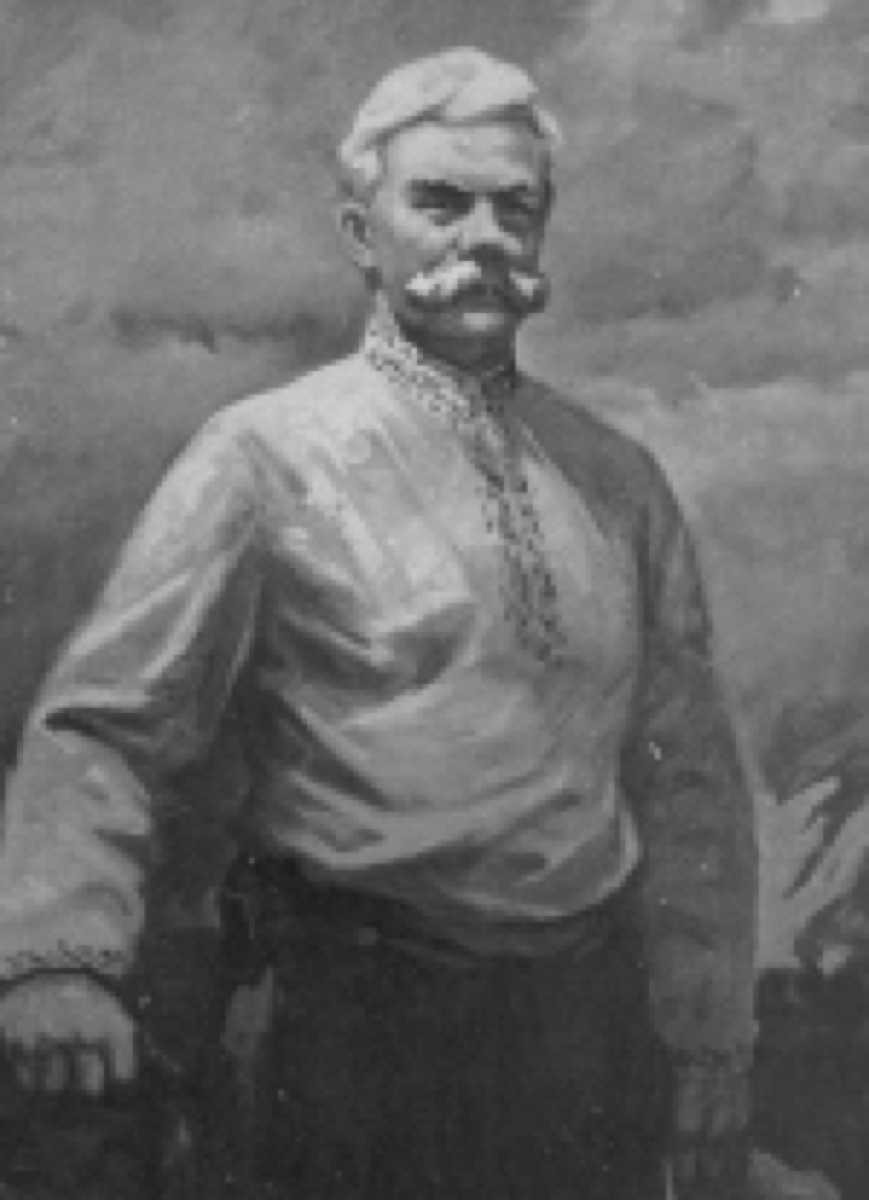
Mykyta Šapoval
Микита Шаповал · 1882–1932
Essence
Mykyta Shapoval (1882–1932) helped build Ukrainian educational and research institutions in interwar Czechoslovakia. He headed the Ukrainian Civic Committee in Prague, supported new schools in Prague and Poděbrady, and founded a Ukrainian sociological institute in 1924. His story illustrates the lasting impact of Czech support for Ukrainian exile communities.
Timeline
- 1882Born on 8 June (New Style) in Sriblianka. [S01]
- 1909–1914Co-edits Ukrainska khata. [S01]
- 1917–1918Activity in the Central Rada; contributes to a draft of the Fourth Universal. [S01]
- 1918–1919Political and governmental activity under the Directory. [S01]
- 1919–1921Emigration through Budapest; Prague arrival date disputed. [S01; S05]
- 1921Ukrainian Civic Committee established in Prague, headed by Shapoval. [S02; S03]
- 1922Initiates the Ukrainian Husbandry Academy in Poděbrady. [S02; S03]
- 1922–1928Editorial and publishing work connected with Nova Ukraina. [S01; S03]
- 1923Supports the establishment of the M. Drahomanov pedagogical institute. [S02]
- 1924Founds the Ukrainian Sociological Institute in Prague. [S04; S06]
- 1925The committee loses Czechoslovak state funding. [S02]
- 1927Prague sociological and political publications; individual titles need catalogue checks. [S01; S08]
- 1932Death on 25 February in Řevnice; burial location disputed. [S07; S09; S10]
Full research text
The story and its cultural value
Mykyta Shapoval (1882–1932) was a figure of the Ukrainian Revolution, a publicist, sociologist and organiser of Ukrainian institutions in interwar Czechoslovakia. His Prague story shows how political emigrants, supported by local authorities, created both assistance for displaced people and Ukrainian-language education and scholarship. He headed the Ukrainian Civic Committee in 1921–1925, supported the establishment of the Ukrainian Husbandry Academy in Poděbrady and the M. Drahomanov Ukrainian Higher Pedagogical Institute, and founded a sociological institute in Prague. [S01; S02; S03]
The main exhibition narrative is “From Refugee Assistance to Universities”: an individual, Czech state support, organisations, students and books. Shapoval should nevertheless not be called the sole founder of all Ukrainian academic infrastructure: individual institutions had their own initiators and founders. Czech historian Miroslav Tomek describes his transition from politician to sociologist, contacts with Czechoslovak scholars and critical reading of Tomáš Masaryk's sociological ideas. [S04; S05]
Stages of his biography
Before emigration. Born in the Donetsk region, Shapoval received professional forestry training and worked as a writer and organiser. In 1909–1914 he co-edited Ukrainska khata. During the 1917–1918 revolution he participated in the Central Rada and the Ukrainian Party of Socialist Revolutionaries. The Vernadskyi National Library identifies him as one contributor to drafts of the Fourth Universal, rather than the sole author of the final document. [S01]
Through Hungary. Following events in Ukraine in 1918–1919, he undertook diplomatic work in Budapest. The library's survey dates his move to Prague to 1921; Miroslav Tomek's academic abstract describes arrival in Prague as a political refugee in 1919. The discrepancy must remain open until passports, correspondence and residence records are compared. [S01; S05]
A committee as an instrument of assistance. The Ukrainian Civic Committee emerged in Prague in summer 1921. The Encyclopedia of Ukraine links the initiative to Shapoval, who developed contacts with Czechoslovak authorities for organisational and humanitarian assistance. The committee had a medical and sanitation section, assisted emigrants and subsequently initiated educational projects. It was not politically uniform: ideological differences led some groups to split away. After losing state funding in 1925, it ceased operating in its previous form. [S02]
Education as a long-term response. In 1922 the committee initiated the Ukrainian Husbandry Academy in Poděbrady, followed by a pedagogical institute in Prague in 1923. Both institutions need their own histories: every decision about faculties, buildings and personnel must not be attributed to Shapoval. Their interaction is significant: a political emigrant, Czechoslovak administrative and financial mechanisms, and Ukrainian-language higher education. [S02; S03; S04]
A sociological laboratory. In 1924 Shapoval founded the Ukrainian Sociological Institute / Ukrainian Institute of Social Studies. His scholarly work covered social structure, national development, political history and social-science methodology. A 2025 study notes that substantial manuscript material survives alongside printed works, opening prospects for archival research. [S04; S06]
Intellectual dialogue with Czechs. Tomek's article specifically analyses the reception of Masaryk's sociology: Shapoval both thanked the Czech president for assistance and critically examined his theoretical constructions. This is more precise evidence of interaction than a general phrase about “friendship with Masaryk”. A formal “personal friend” relationship requires letters or testimony; studied_ideas_of / critiqued_ideas_of can be shown with reference to the scholarly publication. [S05]
Publishing legacy. Shapoval participated in Nova Ukraina and wrote sociological, political and journalistic works. The National Library lists original editions and later reprints; their original publication years and posthumous edition years must be distinguished. His Prague book publishing merits a separate series of pages. [S01; S08]
Conflicts, corrections and degrees of certainty
1919 or 1921: arrival in Prague. The Vernadskyi Library describes Budapest in 1919–1920 and relocation in 1921; Charles University's academic description gives 1919. Suggested wording is: “In the years after the revolution, Shapoval came to Czechoslovakia; by the early 1920s he was working in Prague.” The exact year needs checking against letters. [S01; S05]
Authorship of the Fourth Universal. Shapoval must not be called its sole author: the library refers to one draft considered in preparing the final version. [S01]
The committee's scale of assistance. Estimates such as “32,000 people” recur in derivative texts. Before publication as an exact figure, an annual report and its counting method must distinguish unique individuals from the number of services provided. [S02]
Political conflicts. Present Shapoval's socialist and republican convictions neutrally, separating his political assessments from researchers' conclusions. The committee experienced internal disagreements; a positive editorial focus does not erase them. [S01; S02]
Burial: conflicting sources. The Czech Sociological Encyclopedia gives Řevnice as his place of death; the Donetsk regional administration reports cremation and burial in Řevnice in accordance with his will. A separate recent journalistic article instead names Prague's Olšany Cemetery. Until a cemetery register and a record of the urn or reburial are found, neither location should be published as a verified grave. [S07; S09; S10]
Connections
Mentioned in dossiers
Further reading about this person
A catalogue confirms the bibliographic record. It does not mean that every dossier claim has been checked against the book’s full text.
-
Memoirs and letters
Схема життєпису. Біографія. Листи
Микита Шаповал
Мачулін · 2023
Bibliographic record confirmed · Record checked 2026-11-02
Catalogue or publisher record ↗Text reading not documented
Sources
- S01 V. I. Vernadskyi National Library of Ukraine. “Mykyta Yukhymovych Shapoval… on the 140th Anniversary” (2022). nbuv.gov.ua
- S02 Encyclopedia of Ukraine. “Ukrainian Civic Committee in Czechoslovakia”. encyclopediaofukraine.com
- S03 Donetsk Regional State Administration. “The History of Ukrainian Donetsk in Personalities: Mykyta Shapoval” (2022). dn.gov.ua
- S04 Rohozha M. “The Intellectual Heritage of… Mykyta Shapoval” (2025). doi.org
- S05 Miroslav Tomek. “From Politician to Sociologist: Mykyta Shapoval and Ukrainian…” (2016), Charles University publication register. nomos.is.cuni.cz
- S06 Shapoval M. “On the Organisation of Ukrainian Sociological Studies” (Prague, 1925), digital bibliographical description. commons.wikimedia.org
- S07 Institute of Sociology, Czech Academy of Sciences. “Šapoval Mykyta”, Sociological Encyclopedia. encyklopedie.soc.cas.cz
- S08 “Bibliography of M. Yu. Shapoval’s Works” (historical and bibliographical index). shron1.chtyvo.org.ua
- S09 Donetsk Regional State Administration. “140 Years since the Birth of… Mykyta Shapoval” (2022). dn.gov.ua
- S10 Tribun. “From Forestry School in Kreminna to a Creator of the Fourth Universal…” (2025). tribun.com.ua
Photos and videos
Verification
Draft
Research draft with sources; independent check still pending.
Evidence coverage
Timeline claims assessed: 13 / 13. Claims with verified contradictions: 2.
The score measures coverage of timeline claims by verified sources, not the probability of historical truth. One independent source gives a claim 0.5 points; two or more give 1 point. A disputed claim receives 0. Unassessed claims remain in the denominator.
evidence-v1 · 2026-11-02
How the score is calculated
Each claim shows its contribution to the score and verified current sources. Multiple references may share an origin; context adds no points.
-
1882
Born on 8 June (New Style) in Sriblianka.
Assessed Contribution: 0.5 / 1Independent source origins: 1
Report this claim -
1909–1914
Co-edits Ukrainska khata.
Assessed Contribution: 0.5 / 1Independent source origins: 1
Report this claim -
1917–1918
Activity in the Central Rada; contributes to a draft of the Fourth Universal.
Assessed Contribution: 0.5 / 1Independent source origins: 1
- S01 — supports the claim
-
1918–1919
Political and governmental activity under the Directory.
Assessed Contribution: 0.5 / 1Independent source origins: 1
- S01 — supports the claim
-
1919–1921
Emigration through Budapest; Prague arrival date disputed.
Sources contradict one another Contribution: 0.0 / 1Independent source origins: 1
Report this claim -
1921
Ukrainian Civic Committee established in Prague, headed by Shapoval.
Assessed Contribution: 0.5 / 1Independent source origins: 1
Report this claim -
1922
Initiates the Ukrainian Husbandry Academy in Poděbrady.
Assessed Contribution: 0.5 / 1Independent source origins: 1
Report this claim -
1922–1928
Editorial and publishing work connected with Nova Ukraina.
Assessed Contribution: 0.5 / 1Independent source origins: 1
- S07 — supports the claim
-
1923
Supports the establishment of the M. Drahomanov pedagogical institute.
Assessed Contribution: 0.5 / 1Independent source origins: 1
- S02 — supports the claim
-
1924
Founds the Ukrainian Sociological Institute in Prague.
Assessed Contribution: 0.5 / 1Independent source origins: 1
- S04 — supports the claim
-
1925
The committee loses Czechoslovak state funding.
Assessed Contribution: 0.5 / 1Independent source origins: 1
- S02 — supports the claim
-
1927
Prague sociological and political publications; individual titles need catalogue checks.
Assessed Contribution: 0.0 / 1Independent source origins: 0
Report this claim -
1932
Death on 25 February in Řevnice; burial location disputed.
Sources contradict one another Contribution: 0.0 / 1Independent source origins: 1
Report this claim
How we verify
- DraftResearch draft with sources; independent check still pending.
- Checked automaticallyQuotes mechanically matched to sources; an independent model found no contradictions.
- Two sources (automatic score)Automatic evidence score: key facts rest on at least two independent sources. No person has yet read the whole dossier.
- Confirmed by an editorAn editor confirmed the dossier; the reason is shown on the page. This is not an independent scholarly review.
- Disputed pointsSources disagree; disputed points are marked in the text.
Report an error or add information
Your message goes to the editorial queue. AI pre-sorts it, a human decides.