Organisation · National revival · Ukrainians in Czechia · R0047
Ukrainian Plast in interwar Czechoslovakia
Пласт у міжвоєнній Чехословаччині · Ukrajinský Plast v meziválečném Československu · 1911–1939
Essence
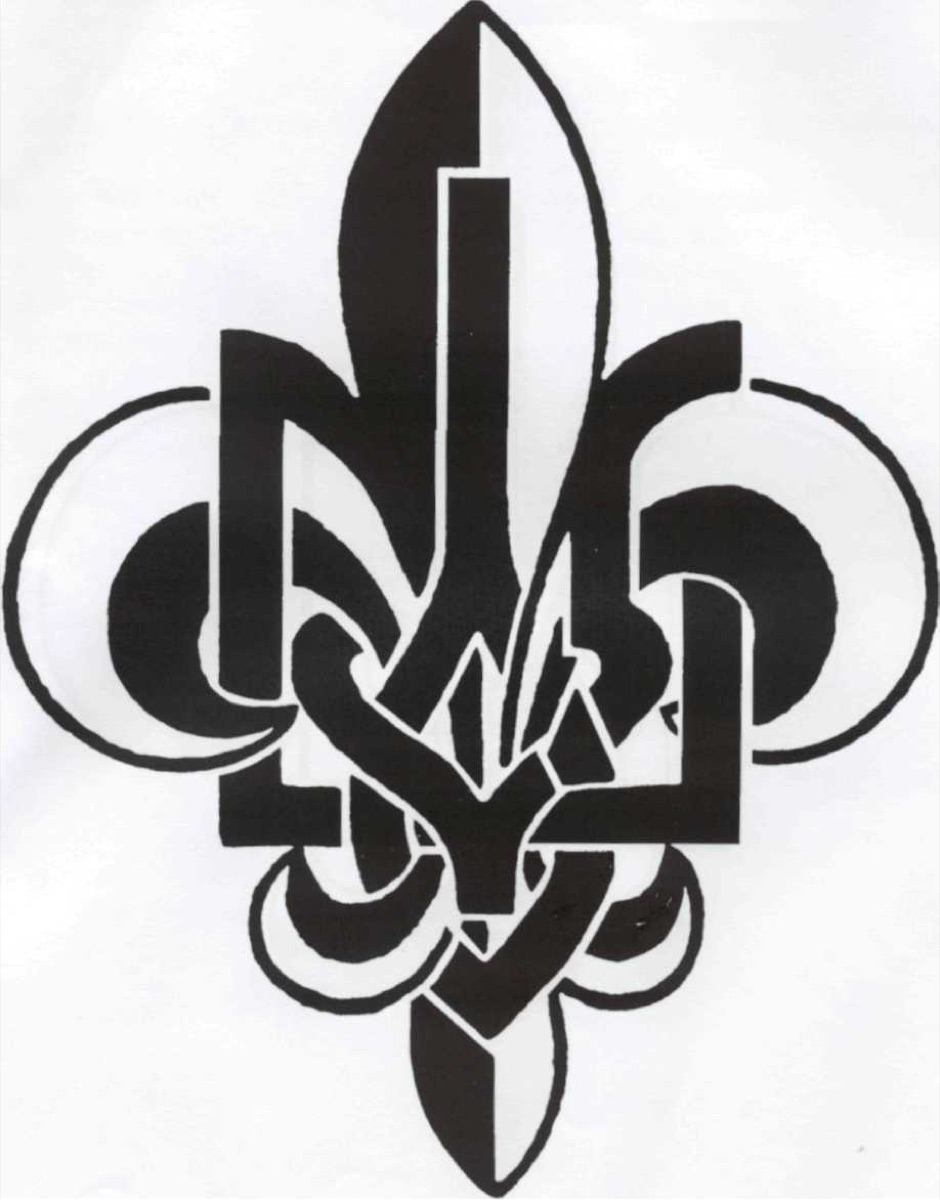
During the interwar years, Czechoslovakia became an important centre for Ukrainian scouting in exile. Plast groups were active in Prague, Poděbrady, Řevnice and other towns. A Prague-based leadership structure emerged in 1925, followed by the Union of Ukrainian Émigré Scouts around 1930–1931. The movement maintained youth education, publishing and international contacts, including participation in a Prague scouting jamboree in 1931.
Timeline
- 1911–1912Beginnings of Ukrainian Plast in Galicia [L02]
- 1921First Plast groups in Czechoslovakia, including Prague / Poděbrady [L01; L04]
- 1923–1927The multilingual Plastun–Junák–Cserkesz is published [L12]
- 1925Ukrainian Plast Command in Prague [L04]
- 1930Plast banned in Polish territory; organisational changes in emigration [L02]
- 02.11.1930First SUPE congress named in a secondary account — `DATE_DISPUTED` [L15]
- 07.06.1931A different account gives the founding congress of SUPE — `DATE_DISPUTED` [L09]
- 1931Ukrainian delegation participates in the Slavic Jamboree in Prague [L11; L05]
- 1931–1934Yevhen Kulchytsky as SUPE president according to the encyclopedia [L10]
- 1935–1936Émigré Plast operates in various towns; numbers only from dated registers [L04]
- 1938–1939Cessation / restriction of work under pressure from occupation regimes [L02; L07]
Full research text
The story the website will tell
The Ukrainian scouting movement Plast, founded in Galicia in the early twentieth century, had an important continuation in interwar Czechoslovakia. Ukrainian youth groups arose in Prague, Poděbrady, Řevnice and other towns; the Ukrainian Plast Command was established in Prague in 1925. After Plast was banned in territories under Polish rule, the Prague Union of Ukrainian Émigré Scouts (SUPE) became one of the main coordinating centres of Ukrainian scouting abroad. [L01; L02; L03; L04]
The central story is “Scouting without a state of their own: how Ukrainian young people preserved their organisation in Czechoslovakia”. It concerns education, camps, movement between countries, participation in international gatherings and cooperation with Czech scouts. The movement was not internally uniform, however: political influences and rivalry between organisations must be described accurately, without campaigning or romanticisation. [L02; L07]
What exactly “Plast” means in the website database
| Canonical object | What it covers | Important limitation |
|---|---|---|
| R0047 — historical Plast in Czechoslovakia | movement, local groups, patrols, camps, 1920s–1939 | a historical network, rather than a single legal firm |
| R0048 — SUPE | formal émigré coordinating structure, Prague, 1930/31–1939 | a separate institution with its own statutes and leadership |
| R0049 — present-day Plast in Czechia | present-day group / legal entity | do not establish legal succession to SUPE without statutes |
| R0038 — Ukrainian gymnasium | independent educational institution with Plast groups | pupils' membership does not make the gymnasium a SUPE branch |
This distinction prevents creating the same person twice or imposing nonexistent legal relationships between historical and present-day organisations.
Background: from Lviv to Prague
A family bridge to Ivan Franko's story. The Ukrainian Institute of National Memory names Petro Franko, Ivan Franko's son, among the co-founders of Ukrainian Plast. For the website, this offers a promising indirect path: N0001 (father) → Petro Franko → early Plast → groups in Czechoslovakia. Ivan Franko himself did not lead Prague's SUPE, which was established much later. [L16]
The movement's beginnings. Plast took shape in Galicia on the basis of the worldwide scouting movement in 1911–1912. Its earliest groups fostered responsibility, civic independence, physical training and a culture of group work. Changes in state borders and policies towards Ukrainian youth affected its interwar history. The Encyclopedia of Ukraine describes progressive restrictions in Poland and Plast's complete prohibition in 1930 in territory under Polish control. [L02]
The first émigré network. According to the encyclopedia overview of Bohemia, organising groups in Czechoslovakia began in 1921. Historical mentions name Prague and Poděbrady, as well as the Ukrainian gymnasium in Řevnice, where young people were concentrated. This was a network of different kinds of patrols and units, rather than a single large camp or university. [L01; L04]
The Ukrainian Plast Command in Prague. The Encyclopedia of Ukrainian Studies dates the establishment of the Ukrainian Plast Command to 1925, linking it to Yaroslav Ivantyshyn; it maintained contact with the Plast leadership in Lviv. The command's materials and Czechoslovak registers are required to describe its statutory status precisely. [L04]
SUPE: coordination and the dating problem
1930 or 1931? The encyclopedia overview of Bohemia gives 1930 for the emergence of Prague's Union of Ukrainian Émigré Scouts. The Encyclopedia of Ukraine article about Plast dates the organisation of émigré groups into SUPE to 1931. One retrospective account names a first congress on 2 November 1930; another gives a founding congress on 7 June 1931, with a separate process of registering the statutes. These versions must not be mechanically reduced to a single founding day: congress minutes, approval of the statutes and Czech registration of the legal entity need to be found. [L01; L02; L09; L15]
Functions. The union represented Ukrainian émigré groups and sought to sustain international scouting contacts. Studies by Olena Humeniuk emphasise its role in international representation and group education. A historical database must distinguish participation in an international event from formal membership of world scouting structures. [L05; L06]
Leaders. The Encyclopedia of Ukraine states that Yevhen Kulchytsky helped found SUPE in Prague and headed it in 1931–1934. Other overviews mention Yevhen Vyrovyi, Robert Lisovskyi and others. Their roles need dating from minutes, since board chair, commandant and journal editor are different positions. [L10; L04]
The Czechoslovak and international context
The Prague Slavic Jamboree of 1931. A monographic overview of Ukrainian scouting mentions 53 male and female Ukrainian scouts participating in the first Slavic Scout Jamboree in Prague in 1931. Other sources confirm SUPE delegations' participation in international events. The figure of 53, the delegation's status and the official programme require checking against participant lists and organisers' photographs; the general public text can simply say “a Ukrainian delegation participated in the Prague jamboree”. [L11; L05]
Czech scouting partners. The émigré structures operated in a country with an established scouting movement of its own. The multilingual journal Plastun–Junák–Cserkesz appeared in Czechoslovakia in 1923–1927 in Ukrainian, Czech and Hungarian; it is particularly important visible evidence of organisational and cultural interaction. However, a joint publication in Subcarpathian Ruthenia must be distinguished from the later Prague SUPE structure. [L12]
Local groups and educational activity. Retrospective materials name various units in Prague and Řevnice, including Burlaky and units named for Ivan Bohun and Olha Kobylianska, among others. They organised camps, discussions, cultural performances, aid collections and educational events. A unit's name in a memoir is sufficient reason for a candidate record, but not for a precise geographical address or a confirmed legal entity. [L08]
Groups outside Prague. Encyclopedia entries and scholarly articles mention Brno, Bratislava, other Czechoslovak centres and international groups. The map should retain a town's historical state affiliation at the event's date: Transcarpathia was within Czechoslovakia in the 1920s and 1930s, but belongs to Ukraine today. Likewise, Bratislava is now in Slovakia. [L01; L05]
Political differences and the end of the interwar phase
History without idealisation. Later Plast materials explicitly discuss the influence and competition of political camps among Ukrainian émigrés in the 1930s. A scholarly exhibition should not be presented as an unbroken story of unity without conflict; equally, no participant should be assigned a particular political organisation's views solely because of SUPE membership. [L07]
1938–1939 and occupation. General overviews describe the cessation of legal activity under German occupation. Plast's official history mentions pressure on the organisation as early as 1938. Since political events did not occur simultaneously in different parts of Czechoslovakia, every unit requires its own dates for final meetings, closure and participants' subsequent paths. [L02; L07]
Graph of related historical objects
| Object | Relationship | Sources / limitations |
|---|---|---|
| SUPE (R0048) | formed_within_emigre_scouting, 1930/31 | L01; L02; dating remains unresolved |
| Ukrainian Plast Command | coordinated_groups_in_Prague, 1925 | L04; a separate organisational form |
| Ukrainian gymnasium in Řevnice (R0038) | hosted_scouting_youth / locality | L08; exact room not established |
| Ukrainian Husbandry Academy (R0035) | educational_context_in_Poděbrady | L04; formal subordination not established |
| Yaroslav Ivantyshyn | organizer_of_Prague_command, 1925 | L04; separate person record after deduplication |
| Petro Franko | co_founder_of_early_Ukrainian_Plast; son of Ivan Franko (N0001) | L16; not automatically a SUPE participant |
| Yevhen Kulchytsky | president_of_SUPE, 1931–1934 | L10; check minutes |
| Robert Lisovskyi | scouting_leadership, 1930s | L04; L07; clarify timeframe |
| Czech / Czechoslovak scouting circles | joint_publication / event_contacts | L12; L11; do not equate with legal affiliation |
| Prague, jamboree of 1931 | participated_in_event | L11; programme required |
| Present-day Plast in Czechia (R0049) | shared_tradition_only | NOT legal identity without documents |
Connections
Mentioned in dossiers
- Spyrydon Čerkasenko · Person
- Ivan Šovheniv · Person
- Ukrainian Real Gymnasium in Czechoslovakia · Organisation
- Plast Czechia – Ukrainian scouting organisation · Organisation
- Fingerova 2181/9 — registered office of Plast in Czechia · Place
- Řevnice · Place
- Ukrainian emigration in interwar Czechoslovakia · Event
- SUPE congresses in Prague (1930–1931) · Event
Sources
- L01 Encyclopedia of Ukraine. “Bohemia”. encyclopediaofukraine.com
- L02 Encyclopedia of Ukraine. “Plast Ukrainian Youth Association”. encyclopediaofukraine.com
- L03 Ukrainian Plast. «Про Пласт». plast.org
- L04 Encyclopedia of Ukrainian Studies, vol. 6, article «Пласт». izbornyk.org.ua
- L05 O. Humeniuk. «Пласт на еміграції як чинник українського молодіжного руху міжвоєнної Європи» (2019), Kyivski istorychni studii. elibrary.kubg.edu.ua
- L06 O. Humeniuk. «Союз українських пластунів-емігрантів в Чехословаччині в контексті міжнародного руху скаутів» (2015). elibrary.kubg.edu.ua
- L07 Ukrainian Plast. «Історія лівих та правих в Пласті». plast.org
- L08 «Нарис з історії Пласту в середовищі українських емігрантів (1920–30-ті рр.)». 100krokiv.info
- L09 «Роль Пласта на Україні в ХХ столітті» (secondary reprint). uahistory.co
- L10 Encyclopedia of Ukraine. “Kulchytsky, Yevhen”. encyclopediaofukraine.com
- L11 “Plast: Ukrainian Scouting, a Unique Story” (monographic description of scouting), digital copy. diasporiana.org.ua
- L12 Encyclopedia of Ukraine. “Plastun”. encyclopediaofukraine.com
- L13 Encyclopedia of Modern Ukraine. «Молоде життя». esu.com.ua
- L14 Bibliography of Ukrainian Plast publications, a digital reprint of the description. diasporiana.org.ua
- L15 Osvita.UA. «Українська діаспора та молодіжні організації діаспори» (historical overview). osvita.ua
- L16 Ukrainian Institute of National Memory. «1856 — народився Іван Франко». uinp.gov.ua
Photos and videos
Verification
Draft
Research draft with sources; independent check still pending.
How we verify
- DraftResearch draft with sources; independent check still pending.
- Checked automaticallyQuotes mechanically matched to sources; an independent model found no contradictions.
- Two sources (automatic score)Automatic evidence score: key facts rest on at least two independent sources. No person has yet read the whole dossier.
- Confirmed by an editorAn editor confirmed the dossier; the reason is shown on the page. This is not an independent scholarly review.
- Disputed pointsSources disagree; disputed points are marked in the text.
Report an error or add information
Your message goes to the editorial queue. AI pre-sorts it, a human decides.