Person · National revival · Ukrainians in Czechia · N0001
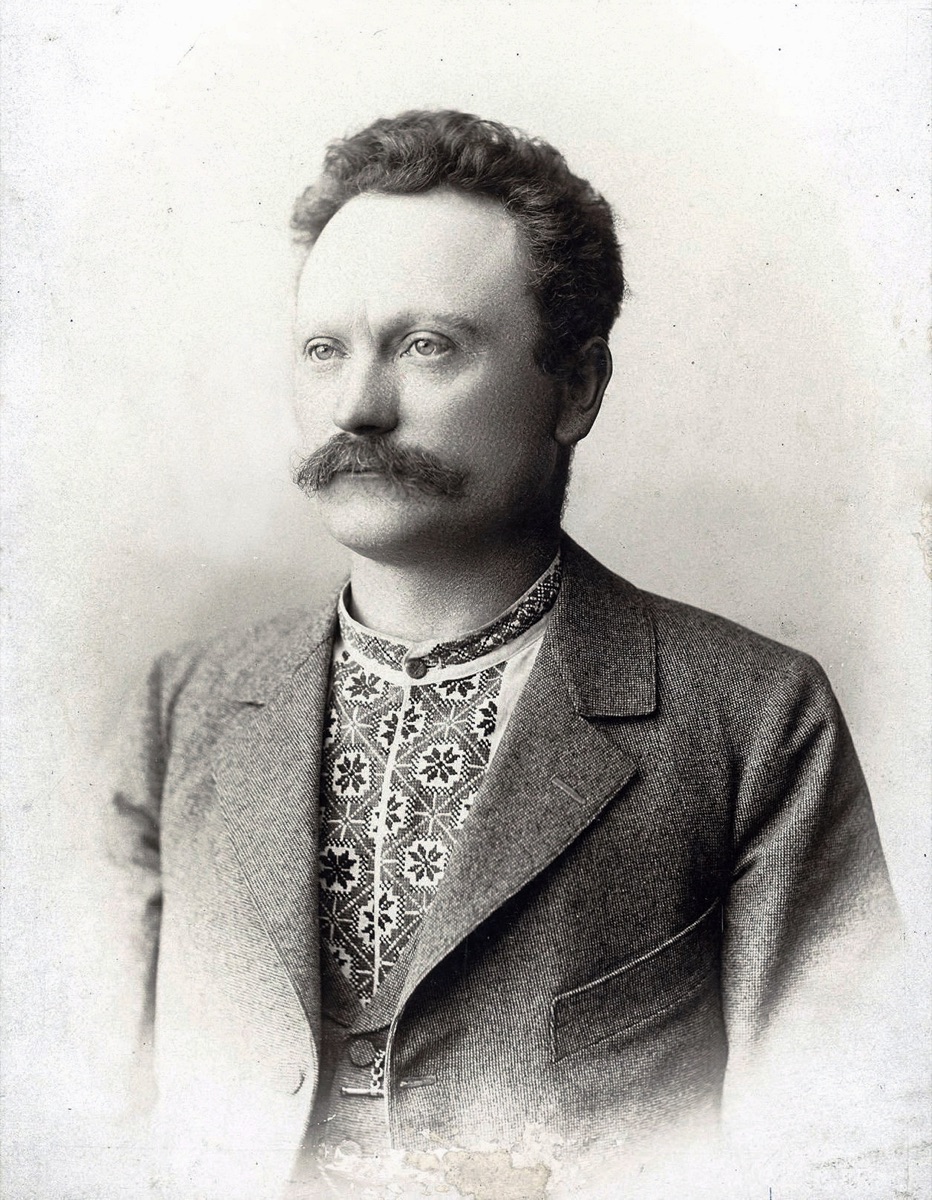
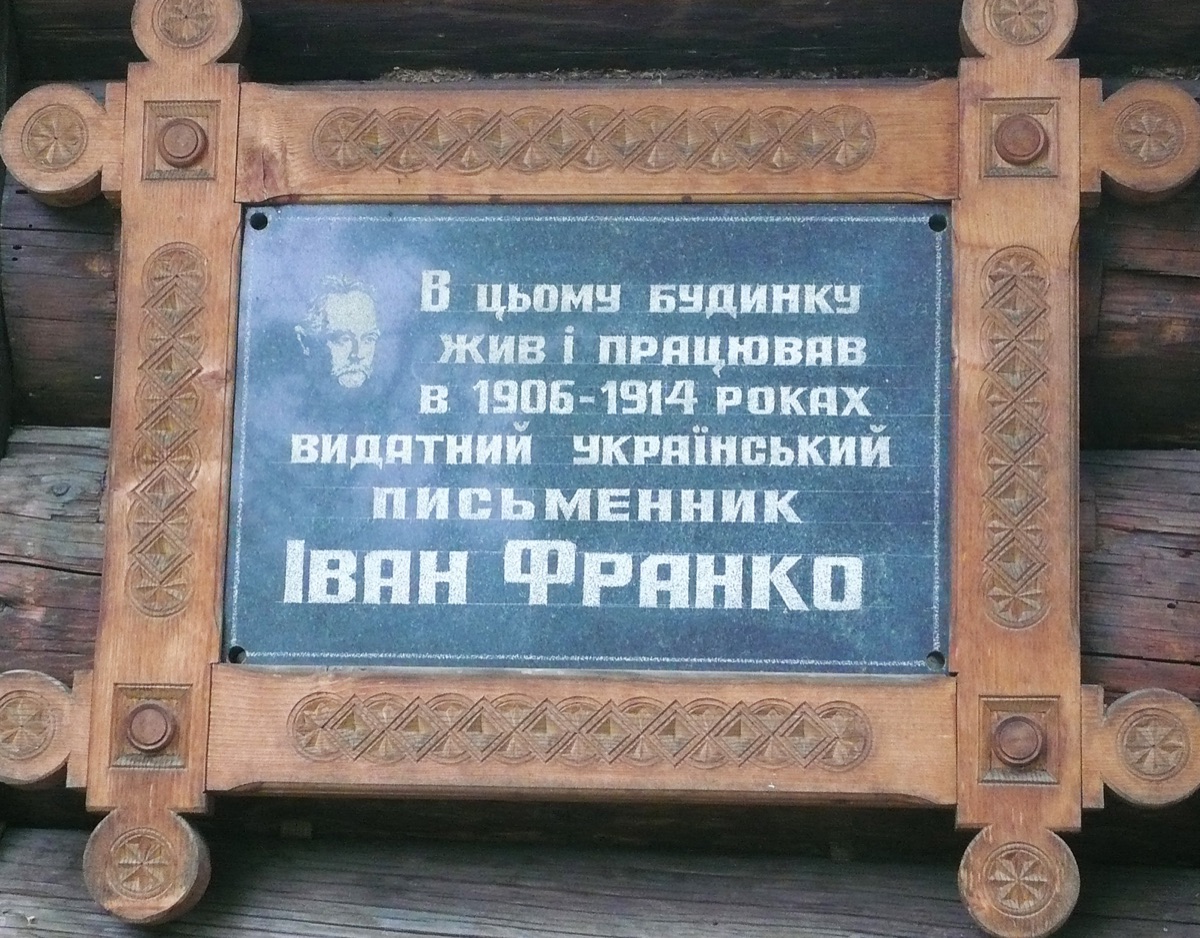
Ivan Franko
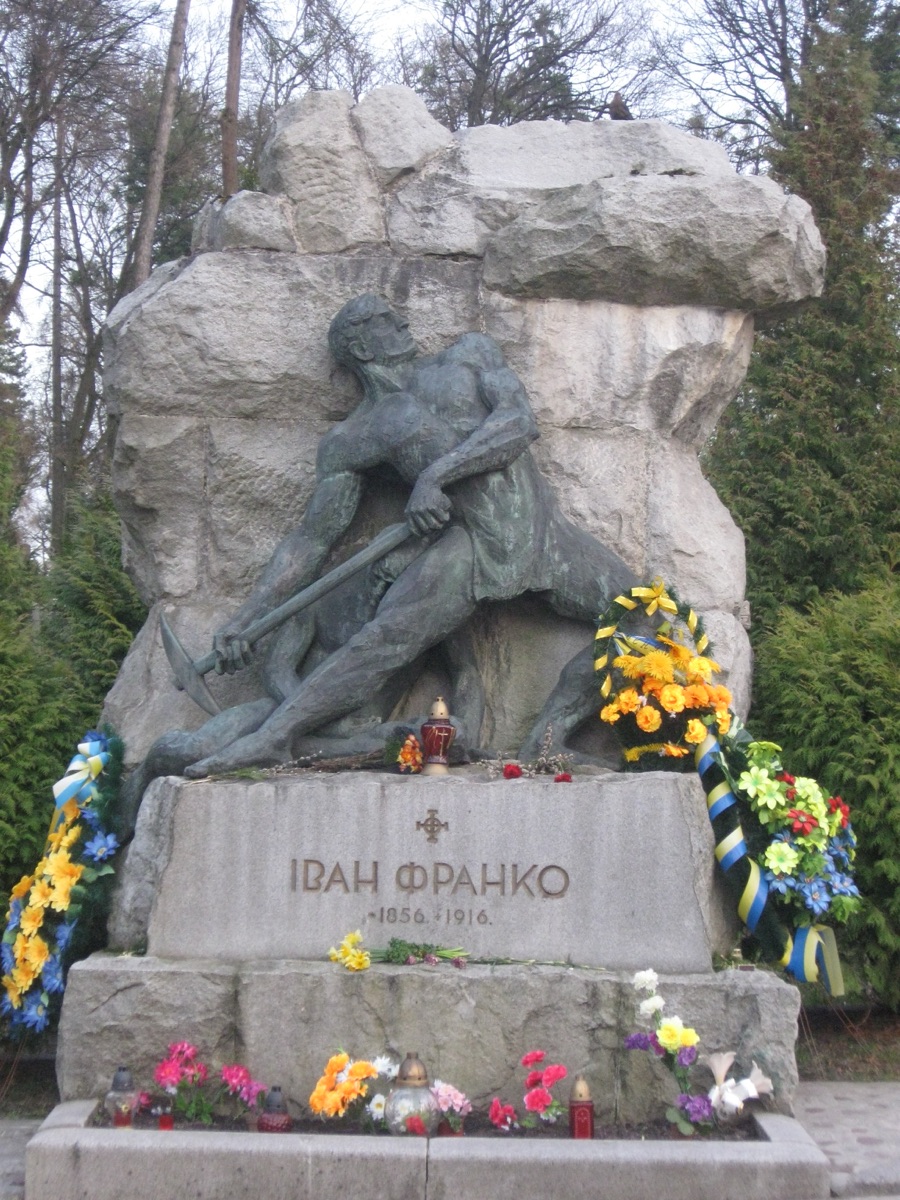
Іван Франко · 1856–1916
Essence
Ivan Franko (1856–1916) visited Prague in May 1891 for a gathering of progressive Slavic students. His surviving letters to Czech ethnographer František Řehoř document exchanges of books and scholarly periodicals, as well as cooperation on ethnographic materials. Franko also wrote about the development of modern Czech literature in 1899. His Czech connections are traceable through dated documents, not simply through cultural stereotypes.
Timeline
- 1856Ivan Franko is born in Galicia. [F07; F10; F09]
- 1887According to F. Řehoř's letter of 19 December 1887 (as published by B. Sobota), Řehoř introduced L. Kuba to Franko. [F06]
- 16–19.05.1891Franko stays in Prague. [F01; F11]
- 17–18.05.1891Congress of progressive Slavic youth in Prague. [F01; F12; F11]
- 08.06.1891Letter to M. Drahomanov critically assessing the Prague congress. [F01]
- 05.02.1894Letter to F. Řehoř: exchanges of periodicals and borrowed books. [F02]
- 15.03.1894Letter to F. Řehoř: Zhytie i slovo, Č. Zíbrt, J. Polívka. [F03]
- 29.05.1894Letter to F. Řehoř: a request to send works for an ethnographic exhibition. [F04]
- 1899The essay “New Czech Literature and Its Development”. [F05]
- 1916Death in Lviv. [F07; F10; F09]
Full research text
Why this person matters specifically to the Czech atlas
Ivan Franko (1856–1916) was a Ukrainian writer, scholar, translator, journalist and public intellectual. For this platform, the focus is not a general biography spanning many volumes, but documented journeys and networks of contacts between Galicia and the Czech lands. In May 1891, Franko visited Prague and attended a congress of progressive Slavic youth. His own letter to Mykhailo Drahomanov, written on 8 June 1891, provides a personal assessment of the Prague meeting. The editorial notes to the published letters date Franko's Prague stay to 16–19 May and the congress itself to 17–18 May. [F01]
The second theme concerns surviving correspondence with the Czech ethnographer František Řehoř, rather than a chance acquaintance. In letters from February, March and May 1894, Franko asks for exchanges of scholarly periodicals, discusses material for Český lid, books they lent each other, and preparations for an ethnographic exhibition. This is direct documentary evidence of collaboration; the greeting “dear friend” also allows cautious discussion of the personal relationship, with attribution to the source. [F02; F03; F04]
Franko should also be presented as an interpreter of Czech literature: in 1899 he published the survey “New Czech Literature and Its Development”, discussing Czech cultural evolution and the work of Jaroslav Vrchlický. This demonstrates a sustained intellectual interest extending beyond four days in Prague. [F05]
Personal record
| Field | Information / qualification |
|---|---|
| Name | Ivan Yakovych Franko / Ivan Franko |
| Dates | 27 August 1856 (Nahuievychi) – 28 May 1916 (Lviv) [F07; F09; F10] |
| Main area of life and work | Galicia, particularly Lviv and its surroundings |
| Stay in Prague | 16–19 May 1891; a visit, not emigration or residence [F01] |
| Main Prague connection | Congress of progressive Slavic youth, May 1891 [F01] |
| Czech contacts | František Řehoř; the letters also mention Jan Polívka and Čeněk Zíbrt as recipients / editorial contacts [F02; F03] |
| Writings about the Czech lands | The article “New Czech Literature and Its Development” (1899) [F05] |
| ID | N0001; link to Řehoř's dossier N0017 from research wave 01 |
A fuller account of Czech–Ukrainian contacts
Why Franko came to Prague. A congress of progressive youth took place in Prague in May 1891. Franko, who was active in Galician editorial offices and cultural and political circles, attended it. His June letter to Drahomanov did not idealise the event: he considered it largely improvised, while noting the possibility of more productive discussion among its participants in the future. The letter to Drahomanov does not name the venue; however, the Czech embassy in Kyiv states that Franko spoke at the congress at Žofín, and according to Radio Svoboda the first congress of Slavic progressive students was held in the hall of Žofín Palace on 18 May 1891 (with a memorial plaque from 1956). The content and exact date of Franko's speech still need to be checked against the programme and the press. [F11; F12] Such testimony makes the story concrete: real interaction did not mean an absence of disagreement. [F01]
The discussion of Slavic solidarity. In the letter, Franko mentions a proposal to make Russian a common language of communication among Slavs; according to his account, it did not gain support in the section and was not brought before the plenary sessions. This helps demonstrate that Slavic cooperation in Prague was not uniform and did not amount to imperial unification. This passing reference must not become a claim that Czechs and Ukrainians adopted a shared policy. [F01]
Correspondence as an archive of friendship. In February 1894, Franko writes to Řehoř about the journal Zhytie i slovo and a possible exchange with Český lid and Květy, mentioning the Náprstek Museum as a contact address. He requests the return of borrowed volumes of Oskar Kolberg's ethnographic studies and Kievskaia starina. The episode illustrates the circulation of books across borders: private libraries and personal arrangements formed a network of knowledge. [F02]
Czech editors and scholars. In his March letter, Franko names Dr Polívka and Čeněk Zíbrt as recipients of individual copies of Zhytie i slovo and offers a review of the Czech journal. Without letters from them, it is inappropriate to label them “Franko's friends”; the relationships corresponded_with, sent_publication_to and requested_exchange_from have different evidential strength. [F03]
An exhibition and encounters between researchers. In his May 1894 letter, Franko asks Řehoř to send works for an exhibition, guarantees their safekeeping together with Volodymyr Shukhevych, and promises to publish a bibliography of Řehoř's works in Zhytie i slovo. The editorial notes state that the intended bibliography did not appear in the specified journal. This is a clear example of why intentions must be distinguished from realised outcomes. [F04]
Ludvík Kuba and musical contacts. A secondary publication analysing Řehoř's letters mentions that Řehoř introduced Franko to the Czech musicologist Ludvík Kuba in 1887; in the quoted letter of 19 December 1887 Řehoř calls Franko his long-standing friend. [F06] This offers a promising scene for an exhibition on “People who introduced cultures to each other”, but the date, location and specific account of the meeting must be checked against the surviving original letter before drawing a route on a map. [F06]
A family connection to Plast. Petro Franko, Ivan Franko's son, was among the co-founders of Ukrainian scouting, Plast. This provides a connection between dossiers N0001 → Petro Franko → R0047, but Ivan Franko must not be labelled a Plast member or an organiser of Prague scouting units: his death in 1916 preceded the interwar centre. [F08]
Czech literature through Franko's eyes. The 1899 work represents another direction of cultural exchange: a Ukrainian author explains the development of Czech literature to his readers, mentioning Vrchlický and Czech university and academic institutions. It should be included in a separate collection on “Czech culture in Ukrainian texts”, with a link to the digital reprint. [F05]
Finding documents for further research
- Examine Prague newspapers from May 1891 and the congress programme; establish the exact building, the Ukrainian delegation's membership and the nature of Franko's contribution.
- Locate manuscript originals of the letters to Řehoř in Prague's literary archive, their collection references, and photographs with permission for reuse.
- Find Řehoř's replies to distinguish mutual agreements from requests made only by Franko.
- Check 1887 as the year of the introduction to Ludvík Kuba against the original letter or diary.
- Find the first printing of Franko's article on the congress in Kurjer Lwowski and the precise editions of the 1899 article.
- Prepare a joint N0001 ↔ N0017 exhibition with manuscripts, Czech and Ukrainian captions, and a map of correspondence without invented journeys.
Further reading about this person
A catalogue confirms the bibliographic record. It does not mean that every dossier claim has been checked against the book’s full text.
-
About this person
Пророк у своїй Вітчизні. Франко та його спільнота (1856—1886)
Ярослав Грицак
Фоліо · 2024 · ISBN 978-617-8493-81-3
Bibliographic record confirmed · Record checked 2026-11-02
Catalogue or publisher record ↗Text reading not documented
Sources
- F01 Ivan Franko. Letter to M. Drahomanov of 8 June 1891. The opening of the web reproduction criticising the congress and the editorial notes were read, rather than the whole letter. The notes date Prague to 16–19 May and the congress to 17–18 May, citing the 1986 edition, vol. 49, pp. 275–282. The physical pages, volume scan and autograph IL, fond 3, no. 1414 were not examined. i-franko.name
- F02 Ivan Franko. Letter to F. Řehoř of 5 February 1894. The entire web reproduction of the letter and the editorial notes were read. The web text is displayed in Cyrillic; it is the notes that state that the Ukrainian original was written in Czech transcription. Pp. 458–459 refer to the 1986 edition, vol. 49, rather than inspected physical pages or a scan. The archival original and photocopy IL, fond 3, no. 1168 have not been read. i-franko.name
- F03 Ivan Franko. Letter to F. Řehoř of 15 March 1894. The entire web reproduction and the editorial notes were read. Pp. 475–476 are a locator in the cited 1986 edition, vol. 49, rather than inspected physical pages or a scan. According to the notes, the planned portraits and biographies of Rački and Havlíček were not published. The archival original and photocopy IL, fond 3, no. 1170 have not been read. i-franko.name
- F04 Ivan Franko. Letter to F. Řehoř of 29 May 1894. The entire web reproduction and notes were read: a request to send written works for Shukhevych's display. P. 503 is a locator in the cited 1986 edition, vol. 49, rather than an inspected physical page or scan. According to the notes, the promised bibliography was not published. The archival original and photocopy IL, fond 3, no. 1169 have not been read. i-franko.name
- F05 Ivan Franko. “New Czech Literature and Its Development” (1899). The selected introduction and publication notes were read, rather than the whole essay. First publication according to the notes: Literaturno-naukovyi vistnyk, 1899, vol. 8, book 12, pp. 153–169. The web reprint cites the collected works of 1979, vol. 31, pp. 481–498, and the 2009 index of censorship cuts, pp. 174–175. The first publication and printed volumes have not been read. i-franko.name
- F06 Bohdan Sobota. “Z listáře Františka Řehoře (4)”, My a Ukrajina, 14 March 2020. Selected paragraphs about Ludvík Kuba in 1887 were read; the text quotes Řehoř's letter of 19 December 1887. This is secondary mediation, rather than reading the original letter or manuscript. myaukrajina.cz
- F07 Marko Robert Stech / Arkadii Zhukovsky. “Franko, Ivan”, Encyclopedia of Ukraine, updated 2007. Only the opening giving birth on 27 August 1856 in Nahuievychi and death on 28 May 1916 in Lviv, the author line and bibliographic metadata were read, rather than the entire long entry. No burial-location claim was found in the portion read. encyclopediaofukraine.com
- F08 Ukrainian Institute of National Memory. “1856 — Ivan Franko was born”. The introduction and 10 facts were read, supporting the birth and death details. Fact 8 recounts the burial; it is neither a cemetery register nor proof of a particular grave. Details of the reburial interval have not been checked separately. uinp.gov.ua
- F09 Ukrainian Wikipedia, “Franko Ivan Yakovych”. The opening of the article was read: born 27 August 1856 in Nahuievychi, died 28 May 1916 in Lviv, buried at Lychakiv Cemetery. A reference source. uk.wikipedia.org
- F10 Institute of History of Ukraine, National Academy of Sciences, Encyclopedia of the History of Ukraine, entry “Franko Ivan Yakovych”. The first 100,000 characters were read: born 27 August 1856 in Nahuievychi, died 28 May 1916 in Lviv, buried at Lychakiv Cemetery. resource.history.org.ua
- F11 Embassy of the Czech Republic in Kyiv (mzv.gov.cz), “From the history of mutual relations: the age of national revivals”. States that Franko spoke at the congress of Slavic progressive youth in Prague at Žofín in May 1891; no day-level dates. mzv.gov.cz
- F12 Radio Svoboda, “Ukrainian Prague (a guide in photographs)”. In the section on Žofín Palace: the first congress of Slavic progressive students was held in its hall on 18 May 1891, Franko took part; memorial plaque of 1956. radiosvoboda.org
Photos and videos
Verification
Two sources (automatic score)
Automatic evidence score: key facts rest on at least two independent sources. No person has yet read the whole dossier.
- Automatic evidence score: 70 points (threshold 40).
- Independent fact check of every statement against primary sources (3 November 2026).
Evidence coverage
Timeline claims assessed: 10 / 10. Claims with verified contradictions: 0.
The score measures coverage of timeline claims by verified sources, not the probability of historical truth. One independent source gives a claim 0.5 points; two or more give 1 point. A disputed claim receives 0. Unassessed claims remain in the denominator.
evidence-v1 · 2026-11-03
How the score is calculated
Each claim shows its contribution to the score and verified current sources. Multiple references may share an origin; context adds no points.
-
1856
Ivan Franko is born in Galicia.
Assessed Contribution: 1.0 / 1Independent source origins: 3
Report this claim -
1887
According to F. Řehoř's letter of 19 December 1887 (as published by B. Sobota), Řehoř introduced L. Kuba to Franko.
Assessed Contribution: 0.5 / 1Independent source origins: 1
- F06 — supports the claim
-
16–19.05.1891
Franko stays in Prague.
Assessed Contribution: 1.0 / 1Independent source origins: 2
Report this claim -
17–18.05.1891
Congress of progressive Slavic youth in Prague.
Assessed Contribution: 1.0 / 1Independent source origins: 3
Report this claim -
08.06.1891
Letter to M. Drahomanov critically assessing the Prague congress.
Assessed Contribution: 0.5 / 1Independent source origins: 1
- F01 — supports the claim
-
05.02.1894
Letter to F. Řehoř: exchanges of periodicals and borrowed books.
Assessed Contribution: 0.5 / 1Independent source origins: 1
- F02 — supports the claim
-
15.03.1894
Letter to F. Řehoř: Zhytie i slovo, Č. Zíbrt, J. Polívka.
Assessed Contribution: 0.5 / 1Independent source origins: 1
- F03 — supports the claim
-
29.05.1894
Letter to F. Řehoř: a request to send works for an ethnographic exhibition.
Assessed Contribution: 0.5 / 1Independent source origins: 1
- F04 — supports the claim
-
1899
The essay “New Czech Literature and Its Development”.
Assessed Contribution: 0.5 / 1Independent source origins: 1
- F05 — supports the claim
-
1916
Death in Lviv.
Assessed Contribution: 1.0 / 1Independent source origins: 3
Report this claim
2026-11-03
How we verify
- DraftResearch draft with sources; independent check still pending.
- Checked automaticallyQuotes mechanically matched to sources; an independent model found no contradictions.
- Two sources (automatic score)Automatic evidence score: key facts rest on at least two independent sources. No person has yet read the whole dossier.
- Confirmed by an editorAn editor confirmed the dossier; the reason is shown on the page. This is not an independent scholarly review.
- Disputed pointsSources disagree; disputed points are marked in the text.
Report an error or add information
Your message goes to the editorial queue. AI pre-sorts it, a human decides.