Person · National revival · Ukrainians in Czechia · R0030
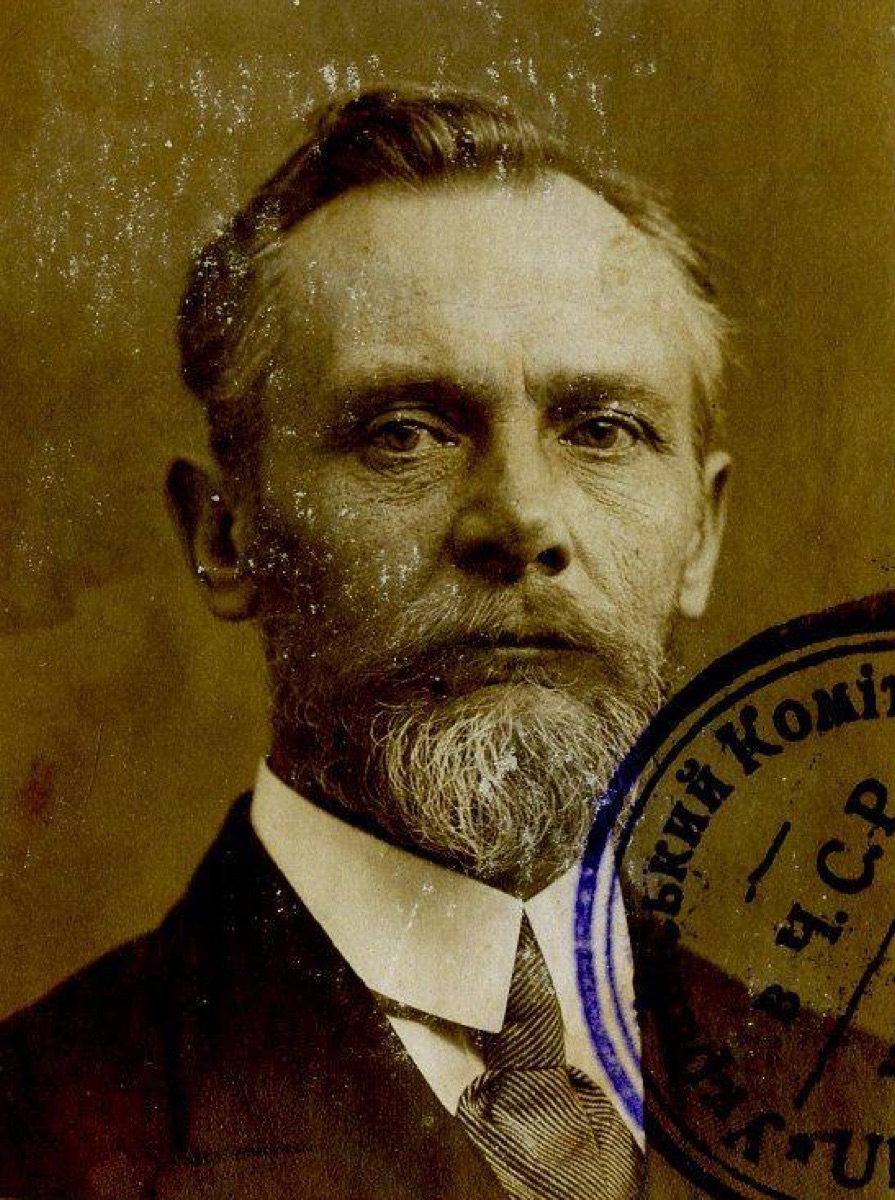
Ivan Šovheniv
Іван Шовгенів · 1874–1943
Essence
Ivan Shovheniv (1874–1943) was a Ukrainian hydraulic engineer and water-management specialist who became the first rector of the Ukrainian Husbandry Academy, founded in Poděbrady in 1922. The academy initially operated in a hotel before moving into Poděbrady Castle. His teaching and technical publications helped develop Ukrainian-language engineering education in exile. He was the father of poet Olena Teliha. He served as rector in 1922–1925 and 1926–1927.
Timeline
- 1874-09-12Birth of Ivan Shovheniv on 12 September in the village of Kamianka in the Kharkiv region (according to the Ukrainian Wikipedia and UAHistory). [SH09; SH10; SH01]
- 1899Graduation from the Institute of Railway Engineers in Saint Petersburg. [SH01; SH09; SH10]
- 1910European engineering internship. [SH01; SH09]
- 1911Teaching at the Saint Petersburg Polytechnic Institute. [SH01; SH09]
- 1912Participation in an international congress of waterway engineers in the USA. [SH01; SH09]
- 1917 / 1918The family’s move to Kyiv: 1918 according to SH01/SH07, 1917 according to SH08; post in the water authority in 1918 according to SH01. [SH01; SH07]
- 1918–1919Professor at the Kyiv Polytechnic Institute. [SH01]
- 1920Deputy minister of transport of the Ukrainian People’s Republic according to SH01; SH07 generally calls him a minister, and the exact title of the post differs. [SH01]
- 1922-02-25The founding commission of the Ukrainian Economic Academy met Masaryk; Shovheniv’s own presence is not proven. [SH04]
- 1922-05-16Approval of the statute of the Ukrainian Economic Academy in Czechoslovakia. [SH04; SH13; SH15]
- 1922-06-22Start of lectures at the Ukrainian Economic Academy. [SH04]
- 1922–1927First rector of the Ukrainian Husbandry Academy: in 1922–1925 and 1926–1927 (in 1925–1926 the rector was Borys Ivanytskyi); he worked as a professor until 1928. [SH12; SH13; SH11; SH07]
- 1922-07According to SH08, departure via Poland and the family settling in Poděbrady; SH07 dates to July only the departure to Czechoslovakia. [SH07; SH10]
- 1924–1925The course of study at the academy was extended from three to four years (academic year 1924/25; the amendment of the statute is dated 23 May 1925). [SH12; SH15]
- 1927“Hidravlika pidzemnykh vod”, Poděbrady. [SH06]
- 1928–1929Move to Poland: 1928 according to Khomenko (after the academy was wound down), 1929 according to SH01 and UAHistory; he worked at the Polish Ministry of Agriculture until 1939. [SH11; SH01; SH10; SH09]
- 1932Creation of the Ukrainian Technical and Economic Institute at the academy according to the archival account; a separate legal entity is not proven by these sources. [SH12; SH15]
- 1935The academy ceased operation. [SH12; SH11; SH13]
- 1940–1941Work at the Ukrainian Black Sea Institute. [SH01; SH09]
- 1941“The Black Sea. A Geographical Sketch of the Black Sea and Its Basin”, Warsaw, Ukrainian Black Sea Institute, no. 5 (some sources give “Hydrographic Sketch”). [SH14; SH01; SH09]
- 1942Work in the water-management service of Danzig. [SH01; SH09]
- 1943-04-13Death on 13 April in Oliwa near Danzig (according to the Ukrainian Wikipedia and UAHistory); according to SH01 he is buried there, the exact grave site is not established. [SH01; SH09; SH10]
Full research text
Identification, names and role in the encyclopedia
Ivan Opanasovych Shovheniv (common variants: Shovhenov, Šovheniv, Ivan Shovheniv, Shovgenov), 1874–1943. The Encyclopedia of the History of the Ukrainian Revolution defines him as a hydraulic engineer, a specialist in land reclamation, an organiser of Ukrainian water management and the first rector of the Ukrainian Economic Academy in Poděbrady (R0035). He died in 1943 in Oliwa near Danzig, now part of Gdańsk. The encyclopedia article used does not give the exact day of birth or death; according to the Ukrainian Wikipedia and the UAHistory site he was born on 12 September 1874 in the village of Kamianka in the Kharkiv region (then Kupiansk uyezd) and died on 13 April 1943 [SH09; SH10]. [SH01]
This dossier illuminates technical modernisation, not only the political history of the emigration: how an engineer trained in a large system of waterways managed to organise a Ukrainian-language higher technical school in Czechoslovakia. The family link to the poet Olena Teliha (R0017) is directly attested by reference works and has the type father_of, not merely associated_with_poetry. [SH01; SH03]
Formation of a specialist: waterways and infrastructure
Shovheniv graduated from the Institute of Railway Engineers in Saint Petersburg in 1899. After that he worked in transport-engineering services and taught port structures, waterways, hydraulic engineering and land reclamation. His scientific and technical biography attests internships in Belgium, Germany and Austria-Hungary in 1910, participation in an international gathering of waterway specialists in the USA in 1912 and subsequent familiarity with American practices. [SH01]
From 1911 the encyclopedia article records a teaching post as docent at the Saint Petersburg Polytechnic Institute. The engineering services of the imperial structures of the time should not be presented as work in Ukrainian state institutions — these were other historical organisations and jurisdictions. A modern explanation of his profession may cover dams, runoff regulation, irrigation and the hydraulics of groundwater, but specific construction projects must be documented by technical reports. [SH01]
Kyiv in the years of revolution
According to the encyclopedia article by Olena Boiko, Shovheniv moved to Kyiv in 1918; the KPI material also gives 1918, whereas the biography of Teliha on the website of the Ukrainian Institute of National Memory gives 1917 for the family’s move. The discrepancy is left open. SH01 dates his teaching at the Kyiv Polytechnic Institute to 1918–1919, his work as director of the department of water and roads management to 1918 and the post of deputy minister of transport of the Ukrainian People’s Republic to 1920. SH07 calls Teliha’s father a minister without such detail; the exact titles should not be mechanically reduced to one. [SH01; SH07; SH08]
The programmatic theme becomes the question of how to preserve technical cadres during state upheavals. This may be useful to readers in both countries, since it shows engineering education as a form of long-term support for society. But statements about Shovheniv’s personal motives remain editorial interpretation without his own letters and diaries. [SH01; SH02]
Founding of the Academy in Poděbrady
After forced emigration Shovheniv found himself in Czechoslovakia. The Ukrainian Public Committee under Mykyta Shapoval initiated a higher polytechnic school. The archival account places the founding in May 1922, while the Czech article places the approval of the statute on 16 May and the start of lectures on 22 June 1922. According to the Czech account the school was first housed in the hotel U krále Jiřího and later in Poděbrady Château. The exact day of the change of premises is not established here. [SH04; SH05]
Shovheniv became the first rector of the academy according to the encyclopedia article that was read and the Czech account of the founding. SH01 summarises the rectorship as 1922–1928, but according to the Encyclopedia of the History of Ukraine, the Czech Wikipedia and Khomenko’s article he was rector in 1922–1925 and 1926–1927 (Borys Ivanytskyi in 1925–1926 and 1928–1935, Serhiy Tymoshenko in 1927–1928), while 1922–1928 is the period of his professorship [SH12; SH13; SH11]. The catalogue SH02 remains a research pointer; its full text was not read this time. [SH01; SH04; SH02]
Three faculties and the polytechnic profile
The academy had a polytechnic profile: agronomy and forestry, engineering, and economics and cooperatives faculties. The archival account dates the transition to a four-year curriculum to 1925; according to the Encyclopedia of the History of Ukraine this is the academic year 1924/25, and the amendment of the statute is dated 23 May 1925 [SH12; SH15]. The catalogue pointer SH02 is linked with counts of 786 admitted students and 118 teachers in the first decade, but its full description is unavailable this time; these figures and the 92/26 breakdown are not verified here. [SH05; SH02]
Teaching technical disciplines in Ukrainian was not merely a linguistic symbol. Lecture notes, handbooks and technical terms had to be created for hydraulic engineering, forestry, agronomy and chemical technology. The compilers of the website would do well to show authored professional texts rather than limit the academy’s history to a photograph of the château: this will help today’s engineers see the heritage of their own discipline. [SH02; SH04]
Hydrology and printed technical legacy
The encyclopedia reports approximately 50 scholarly works by Shovheniv in 1901–1943. The review entry 33 on p. 122 of “Ukraina”, 1928, book 6 (31) (PDF p. 126), attests “Hidravlika pidzemnykh vod”, Poděbrady 1927, 48 pp. The year 1928 belongs to the review, 1927 to the book described. Viewing this entry does not mean reading the whole book. [SH01; SH06]
In the Polish period he worked on problems of the Black Sea. An article of the Institute of History of Ukraine names his “Black Sea. A Hydrographic Sketch of the Black Sea and Its Basin” (1941); in the Diasporiana catalogue the same edition (Warsaw, Ukrainian Black Sea Institute, no. 5, 118 pp. and a map) has the subtitle “Geographical Sketch”, so the exact title should be checked against a copy [SH14]. This is an appropriate next Publication object, connected with the perception of maritime infrastructure and economy. A catalogue, publication data, a map of the edition and copyright questions are needed. [SH01]
Academic infrastructure in Czechoslovakia
The archival exhibition describes state support for the academy and its educational infrastructure. The full library description SH02 was not read this time; claims about the specific composition of the library, the publishing society and the teaching collections require separate verification. The professional support of Czech specialists does not in itself make the Ukrainian Economic Academy a faculty of a Czech university. [SH05; SH02]
The archival exhibition dates the creation of the Ukrainian Technical and Economic Institute to 1932 and the cessation of the academy’s work to 1935. The institute at first operated at the academy as its subsequent educational form; this account does not prove that it was a fully separate legal entity. The academy and the institute must be distinguished by name, time and form of study, without inventing a conclusion about legal personality. [SH05; SH02]
The Shovheniv family and Olena Teliha
Olena Teliha was the daughter of Ivan Shovheniv. The Ukrainian Institute of National Memory describes July 1922 as the departure via Poland and the family’s subsequent settling in Poděbrady; KPI dates to July the departure to Czechoslovakia itself. These accounts are not a registration record of the exact arrival. Poděbrady became part of Teliha’s youth, and later she studied at the M. Drahomanov Ukrainian Higher Pedagogical Institute in Prague. Specific conversations between father and daughter and the influence on individual poems are not established. [SH01; SH07; SH08]
Through his daughter Shovheniv is thematically connected with the Prague School of Poets (R0099). However, this does not mean that he was a poet of that school or its founder. In the graph a direct father_of to R0017 is needed, and any literary relationship only as indirect context. [SH03; SH07]
Later career, Poland and the end of his life
According to the encyclopedia article, from 1929 Shovheniv lived in Poland, where he worked at the Ministry of Agriculture until 1939; according to Khomenko, however, he left Poděbrady and moved to Poland as early as 1928 because of the gradual winding down of the academy [SH11]. He was involved with the Ukrainian Scientific Institute in Warsaw and engineering societies. In 1940–1941 he took part in the work of the Ukrainian Black Sea Institute; from 1942 he worked in the water-management service of Danzig. He died on 13 April 1943 (according to SH09; SH10) in Oliwa and, according to the encyclopedia, is buried there. The exact location of the grave requires a cemetery register. [SH01]
Such a route from Kyiv to Poděbrady, Warsaw and Danzig can be reconstructed as a city-level chronology, without inventing geolocations of residences. The historical fact of burial “in Oliwa” is no basis for an exact coordinate of a monument. [SH01]
Connections
- Ukrainian Economic Academy in Poděbrady · Organisation · from 1922, dates need checking
- Olena Teliha · Person · 1906–1942
- Poděbrady Castle · Place · after 1922, date needs establishing
- Andrij Jakovliv · Person · 1920s
- Prague School of Ukrainian Poetry · Event · 1920s–1930s
- Ukrainian Plast in interwar Czechoslovakia · Organisation · 1922–1928
Mentioned in dossiers
- Borys Ivanyckyj · Person
- Serhij Tymošenko · Person
- Nova Ukraina – Prague magazine · Work
Further reading about this person
A catalogue confirms the bibliographic record. It does not mean that every dossier claim has been checked against the book’s full text.
-
Bibliography
Іван Шовгенів (1874–1943): бібліографічний нарис
Упорядниця Надія Миронець
Видавництво імені Олени Теліги · 2000 · ISBN 966-7601-21-8
Bibliographic record confirmed · Record checked 2026-11-02
Catalogue or publisher record ↗Text reading not documented
Sources
- SH01 Olena Boiko, “Shovheniv Ivan”, Encyclopedia of the History of the Ukrainian Revolution 1917–1921, Institute of History of Ukraine, NASU, 31.07.2026. The full web text was read; archival documents were not consulted. ukr-revolution.history.org.ua
- SH02 National Library of the Czech Republic, Slavonic Library, T-UHA catalogue on the Ukrainian Economic Academy and the Ukrainian Technical and Economic Institute, 1922–1945. Direct request: 502; the full catalogue description was not read. A pointer for further research, not an independent confirmation of all dates and figures. sbirkysk.nkp.cz
- SH03 Ukrainian Institute of National Memory, old index “People of Freedom: Olena Teliha”. The current text was not read owing to a TLS error / unavailability; SH08 was used for the specific account. old.uinp.gov.ua
- SH04 Bohdan, “Na srdce jsou Poděbrady – i na ta ukrajinská (1). Založení Ukrajinské hospodářské akademie na jaře r. 1922”, My a Ukrajina, 16.05.2022. The full Czech historical account was read. myaukrajina.cz
- SH05 Central State Archive of Public Associations of Ukraine, “For the Benefit of the Ukrainian People and All Humanity. On the Anniversary of the Founding of the Ukrainian Economic Academy in Czechoslovakia”. The author’s account and the exhibition captions were read; the archival files themselves were not read. tsdahou.archives.gov.ua
- SH06 “Ukraina”, 1928, book 6 (31), p. 122, entry 33 (PDF p. 126): review entry “Shovheniv. Hidravlika pidzemnykh vod”, Poděbrady 1927, 48 pp. A selected bibliographic fragment and the title data of the issue were read; not the whole book or journal. hrushevsky.history.org.ua
- SH07 Igor Sikorsky KPI, “Olena Teliha. A Short Life as Long as Eternity”. The relevant biography was read. The article /teliga on non-www responded 200; July 1922 in it is the departure to Czechoslovakia, not the exact day of arrival in Poděbrady. kpi.ua
- SH08 Ukrainian Institute of National Memory, “Olena Teliha: In Search of Her Ukraine”. The relevant biographical text was read: Kyiv 1917; July 1922 departure via Poland and settling in Poděbrady. Not an archival registration of arrival. ww2.uinp.gov.ua
- SH09 Ukrainian Wikipedia, article “Shovheniv Ivan Opanasovych”: life dates (12 Sep 1874 – 13 Apr 1943), education, posts, Poland, Ukrainian Black Sea Institute; secondary source. uk.wikipedia.org
- SH10 UAHistory, “Ivan Shovheniv’s Ukraine”: birth 12 Sep 1874 in Kamianka, the family’s move to Poděbrady in July 1922, death 13 Apr 1943 in Danzig, family. uahistory.com
- SH11 V. Khomenko, “Correspondence of Ivan Shovheniv and Mykyta Shapoval”, Visnyk of Karazin Kharkiv National University, History of Ukraine series, no. 41, 2025, pp. 129–131: rector 1922–1925 and 1926–1927, professor 1922–1928, departure to Poland in 1928, closure of the academy on 31 Dec 1935. periodicals.karazin.ua
- SH12 Encyclopedia of the History of Ukraine (Institute of History of Ukraine, NASU), article “Ukrainian Husbandry Academy in Poděbrady”: founding in 1922, rectors (Shovheniv 1922–25 and 1926–27), three faculties, four-year course 1924/25, UTEI 1932, closure in 1935. resource.history.org.ua
- SH13 Czech Wikipedia, article “Ukrajinská hospodářská akademie”: founding charter of 16 May 1922, rectors, amendment of 23 May 1925 and three faculties, Poděbrady castle, closure in 1935; secondary source. cs.wikipedia.org
- SH14 Diasporiana, edition record: I. Shovheniv, “The Black Sea. A Geographical Sketch of the Black Sea and Its Basin”, Warsaw, Ukrainian Black Sea Institute, no. 5, 1941, 118 pp. + map. diasporiana.org.ua
- SH15 Ukrainian Wikipedia, article “Ukrainian Husbandry Academy”: statute of 16 May 1922 (three-year plan), amendment of 23 May 1925 (four-year plan), rectors, UTEI 1932, closure in 1935; secondary source. uk.wikipedia.org
Photos and videos
Verification
Two sources (automatic score)
Automatic evidence score: key facts rest on at least two independent sources. No person has yet read the whole dossier.
- Automatic evidence score: 82 points (threshold 40).
- Independent fact check of every statement against primary sources (3 November 2026).
Evidence coverage
Timeline claims assessed: 22 / 22. Claims with verified contradictions: 3.
The score measures coverage of timeline claims by verified sources, not the probability of historical truth. One independent source gives a claim 0.5 points; two or more give 1 point. A disputed claim receives 0. Unassessed claims remain in the denominator.
evidence-v1 · 2026-11-03
How the score is calculated
Each claim shows its contribution to the score and verified current sources. Multiple references may share an origin; context adds no points.
-
1874-09-12
Birth of Ivan Shovheniv on 12 September in the village of Kamianka in the Kharkiv region (according to the Ukrainian Wikipedia and UAHistory).
Assessed Contribution: 1.0 / 1Independent source origins: 3
Report this claim -
1899
Graduation from the Institute of Railway Engineers in Saint Petersburg.
Assessed Contribution: 1.0 / 1Independent source origins: 3
Report this claim -
1910
European engineering internship.
Assessed Contribution: 1.0 / 1Independent source origins: 2
Report this claim -
1911
Teaching at the Saint Petersburg Polytechnic Institute.
Assessed Contribution: 1.0 / 1Independent source origins: 2
Report this claim -
1912
Participation in an international congress of waterway engineers in the USA.
Assessed Contribution: 1.0 / 1Independent source origins: 2
Report this claim -
1917 / 1918
The family’s move to Kyiv: 1918 according to SH01/SH07, 1917 according to SH08; post in the water authority in 1918 according to SH01.
Assessed Contribution: 1.0 / 1Independent source origins: 2
Report this claim -
1918–1919
Professor at the Kyiv Polytechnic Institute.
Sources contradict one another Contribution: 0.0 / 1Independent source origins: 1
Report this claim -
1920
Deputy minister of transport of the Ukrainian People’s Republic according to SH01; SH07 generally calls him a minister, and the exact title of the post differs.
Sources contradict one another Contribution: 0.0 / 1Independent source origins: 1
Report this claim -
1922-02-25
The founding commission of the Ukrainian Economic Academy met Masaryk; Shovheniv’s own presence is not proven.
Assessed Contribution: 0.5 / 1Independent source origins: 1
- SH04 — supports the claim
-
1922-05-16
Approval of the statute of the Ukrainian Economic Academy in Czechoslovakia.
Assessed Contribution: 1.0 / 1Independent source origins: 2
Report this claim -
1922-06-22
Start of lectures at the Ukrainian Economic Academy.
Assessed Contribution: 0.5 / 1Independent source origins: 1
Report this claim -
1922–1927
First rector of the Ukrainian Husbandry Academy: in 1922–1925 and 1926–1927 (in 1925–1926 the rector was Borys Ivanytskyi); he worked as a professor until 1928.
Assessed Contribution: 1.0 / 1Independent source origins: 4
- SH12 — supports the claim
- SH13 — supports the claim
- SH11 — supports the claim
- SH07 — supports the claim
-
1922-07
According to SH08, departure via Poland and the family settling in Poděbrady; SH07 dates to July only the departure to Czechoslovakia.
Assessed Contribution: 1.0 / 1Independent source origins: 2
Report this claim -
1924–1925
The course of study at the academy was extended from three to four years (academic year 1924/25; the amendment of the statute is dated 23 May 1925).
Assessed Contribution: 1.0 / 1Independent source origins: 2
Report this claim -
1927
“Hidravlika pidzemnykh vod”, Poděbrady.
Sources contradict one another Contribution: 0.0 / 1Independent source origins: 1
Report this claim -
1928–1929
Move to Poland: 1928 according to Khomenko (after the academy was wound down), 1929 according to SH01 and UAHistory; he worked at the Polish Ministry of Agriculture until 1939.
Assessed Contribution: 1.0 / 1Independent source origins: 4
- SH11 — supports the claim
- SH01 — supports the claim
- SH10 — supports the claim
- SH09 — supports the claim
-
1932
Creation of the Ukrainian Technical and Economic Institute at the academy according to the archival account; a separate legal entity is not proven by these sources.
Assessed Contribution: 1.0 / 1Independent source origins: 2
Report this claim -
1935
The academy ceased operation.
Assessed Contribution: 1.0 / 1Independent source origins: 3
Report this claim -
1940–1941
Work at the Ukrainian Black Sea Institute.
Assessed Contribution: 1.0 / 1Independent source origins: 2
Report this claim -
1941
“The Black Sea. A Geographical Sketch of the Black Sea and Its Basin”, Warsaw, Ukrainian Black Sea Institute, no. 5 (some sources give “Hydrographic Sketch”).
Assessed Contribution: 1.0 / 1Independent source origins: 3
Report this claim -
1942
Work in the water-management service of Danzig.
Assessed Contribution: 1.0 / 1Independent source origins: 2
Report this claim -
1943-04-13
Death on 13 April in Oliwa near Danzig (according to the Ukrainian Wikipedia and UAHistory); according to SH01 he is buried there, the exact grave site is not established.
Assessed Contribution: 1.0 / 1Independent source origins: 3
Report this claim
2026-11-03
How we verify
- DraftResearch draft with sources; independent check still pending.
- Checked automaticallyQuotes mechanically matched to sources; an independent model found no contradictions.
- Two sources (automatic score)Automatic evidence score: key facts rest on at least two independent sources. No person has yet read the whole dossier.
- Confirmed by an editorAn editor confirmed the dossier; the reason is shown on the page. This is not an independent scholarly review.
- Disputed pointsSources disagree; disputed points are marked in the text.
Report an error or add information
Your message goes to the editorial queue. AI pre-sorts it, a human decides.