Person · National revival · Ukrainians in Czechia · R0017
Olena Teliha
Олена Теліга · 1906–1942
Essence
Olena Teliha (1906–1942) was a Ukrainian poet whose intellectual formation took place in interwar Czechoslovakia. She lived mainly in Poděbrady, studied in Prague, and participated in émigré cultural life. Later she worked in Nazi-occupied Kyiv, where she was murdered in 1942.
Timeline
- 21.07.1906Birth; the particular settlement named Ilinskoe remains uncertain. [T01; T05]
- 1917/1918The family moves to Kyiv: T04 gives 1917, while T01/T02/T05 give 1918; the exact year remains unresolved. [T01; T02; T04; T05]
- 1920The family is forcibly separated in connection with her father’s emigration. [T01; T05]
- 07.1922Arrival in Czechoslovakia / Poděbrady. [T01; T02]
- 1923Studies at the Ukrainian pedagogical institute in Prague. [T02; T05]
- winter 1924Reported first meeting with Mykhailo Teliha at a Prague concert. [T04]
- 10.1925Archival photograph at Avramenko’s dance school. [T03]
- 01.08.1926Marriage to Mykhailo Teliha. [T02]
- 17.11.1927Archival photograph of Teliha with Vasyl Kurylenko. [T03]
- 14.02.1928Dated joint portrait of the couple in Poděbrady. [T03]
- 09.1929Photograph of a walk in Poděbrady; move to Warsaw in autumn. [T03; T02]
- 1939Kraków, political and journalistic work. [T05; T07]
- 10.1941Return to Kyiv and literary activity under occupation. [T07; T08]
- 02.1942Murder by the Nazis; the exact date differs between sources. [T02; T08]
- 1946Dusha na storozhi — a posthumous poetry book. [T07]
Full research text
Why this story matters to a Czech visitor
Olena Ivanivna Teliha, née Shovheneva, was a Ukrainian poet, publicist and participant in the national movement whose intellectual formation took place in exile in Czechoslovakia. Her Prague story was not a brief tourist visit: in 1922–1929 she lived with her family in Poděbrady, studied within Prague's Ukrainian pedagogical community, met young Ukrainian writers, attended cultural gatherings and married Mykhailo Teliha in 1926. Specific educational institutions supported by Czechoslovakia thus helped a Ukrainian cultural voice develop. [T01; T02; T03; T07]
The clearest public frame is “Poděbrady and Prague: a poet's formative years”. It recognises the country that offered refuge and educational opportunities while retaining the subsequent tragedy: Teliha returned to occupied Kyiv and was murdered by the Nazis in February 1942. Present the story with a clear chronology, without romanticising wartime regimes or repeating unverified legends. [T01; T05; T08]
Before emigration: languages, family and the Ukrainian Revolution
Her multilingual upbringing helps explain her creative choices. The family lived near Moscow and in Saint Petersburg. T01, T02 and T05 date the move to Kyiv to 1918, whereas T04 gives 1917. Without comparison of family records, the exact year remains unresolved. Her father worked as an engineer and an official of the Ukrainian People's Republic. Amid political upheaval, some family members went abroad. Olena and her mother endured difficult conditions in Kyiv before reaching Poland and Czechoslovakia. The Ukrainian Institute of National Memory emphasises emigration's contribution to her linguistic and creative self-definition. This interpretation should be illustrated through her own letters and manuscripts rather than presented as the automatic consequence of a single incident. [T01; T02; T04; T05]
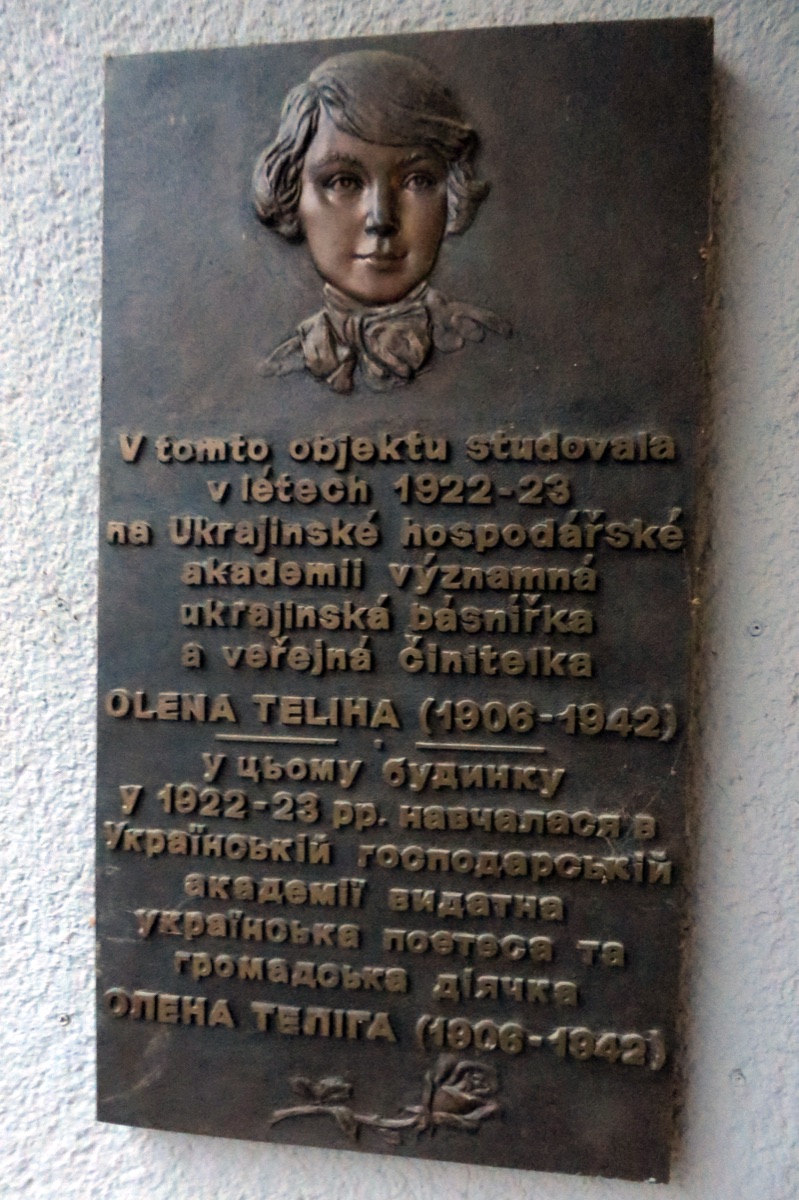
Ivan Shovheniv was the first rector of the Ukrainian Husbandry Academy in Poděbrady. This does not mean that Olena attended that academy: her own studies concerned the pedagogical institute in Prague. These are different database relationships: father_was_rector_of between Ivan Shovheniv and the academy, and studied_at between Olena and the pedagogical institute. [T01; T06]
Poděbrady and Prague: academic and cultural life
The Czechoslovak period is best reconstructed through regular activities: classes, concerts, literary gatherings, Ukrainian celebrations and young artists' work. Most sources describe Olena arriving in Poděbrady in July 1922; her institute studies began later, in 1923. The connection between Poděbrady and Prague was functional: institutions and associations in different cities belonged to the same Ukrainian educational network. [T01; T02; T05]
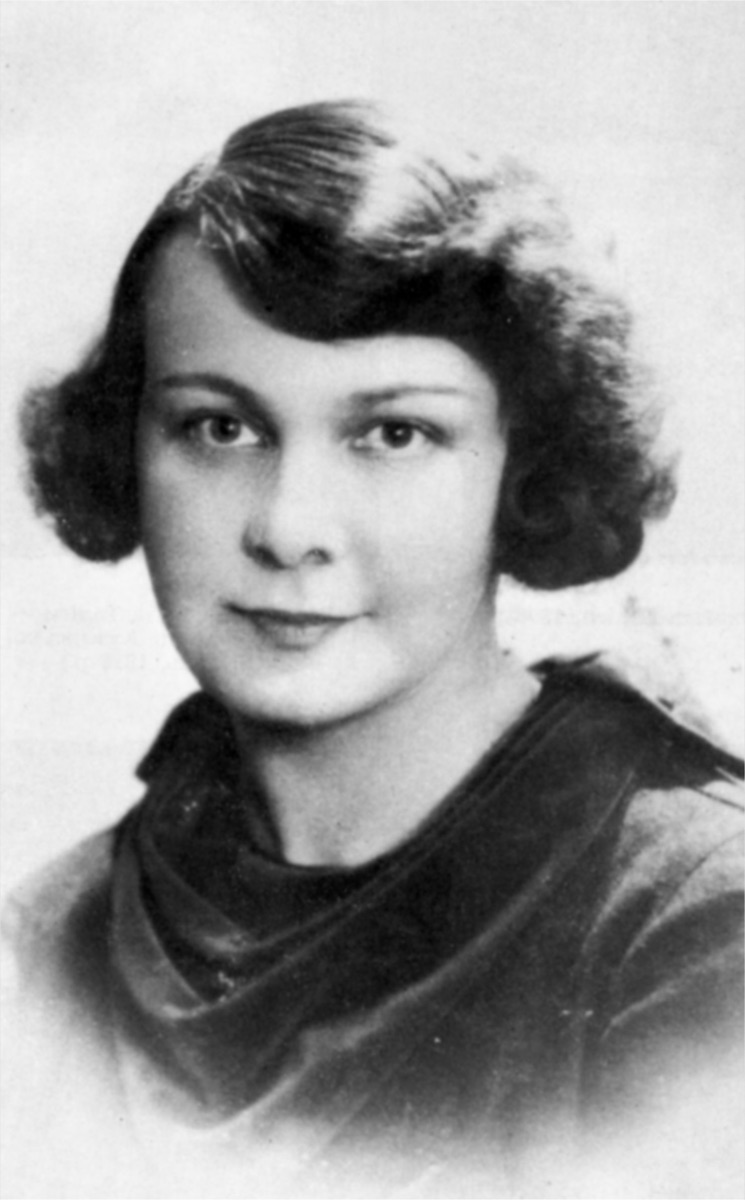
A distinctive source is the Ukrainian Central State Film, Photograph and Sound Archive's online exhibition. Its attributed photographs show her as a pedagogical institute student (Poděbrady, 1925–1926, item 0-193039), attending Vasyl Avramenko's Ukrainian dance school (October 1925, 0-193035), at a Shevchenko memorial evening (1926–1928, 0-193020), with Vasyl Kurylenko on 17 November 1927 (0-193016), and with Mykhailo Teliha on 14 February 1928 (0-193008). These descriptions provide specific dates and social connections; they do not automatically authorise the website to copy the photographs. [T03]
The Ukrainian Institute of National Memory describes Olena meeting Mykhailo at a concert in Prague's student house in winter 1924. This is not yet a map address: “Student House” requires an identified building, concert programme or announcement. The account of the meeting is better presented as a textual story with its source identified. [T04]
Her literary circle included Leonid Mosendz, Yevhen Malaniuk, Yurii Darahan, Oksana Liaturynska, Nataliia Livytska-Kholodna and others. The “Prague school” is a later literary scholars' label for this milieu, rather than a formally registered institution issuing membership cards. Being in the same intellectual circle establishes a shared environment but does not by itself prove friendship or collaboration on a particular work. [T01; T02; T06]
From exile literature to tragedy in Kyiv
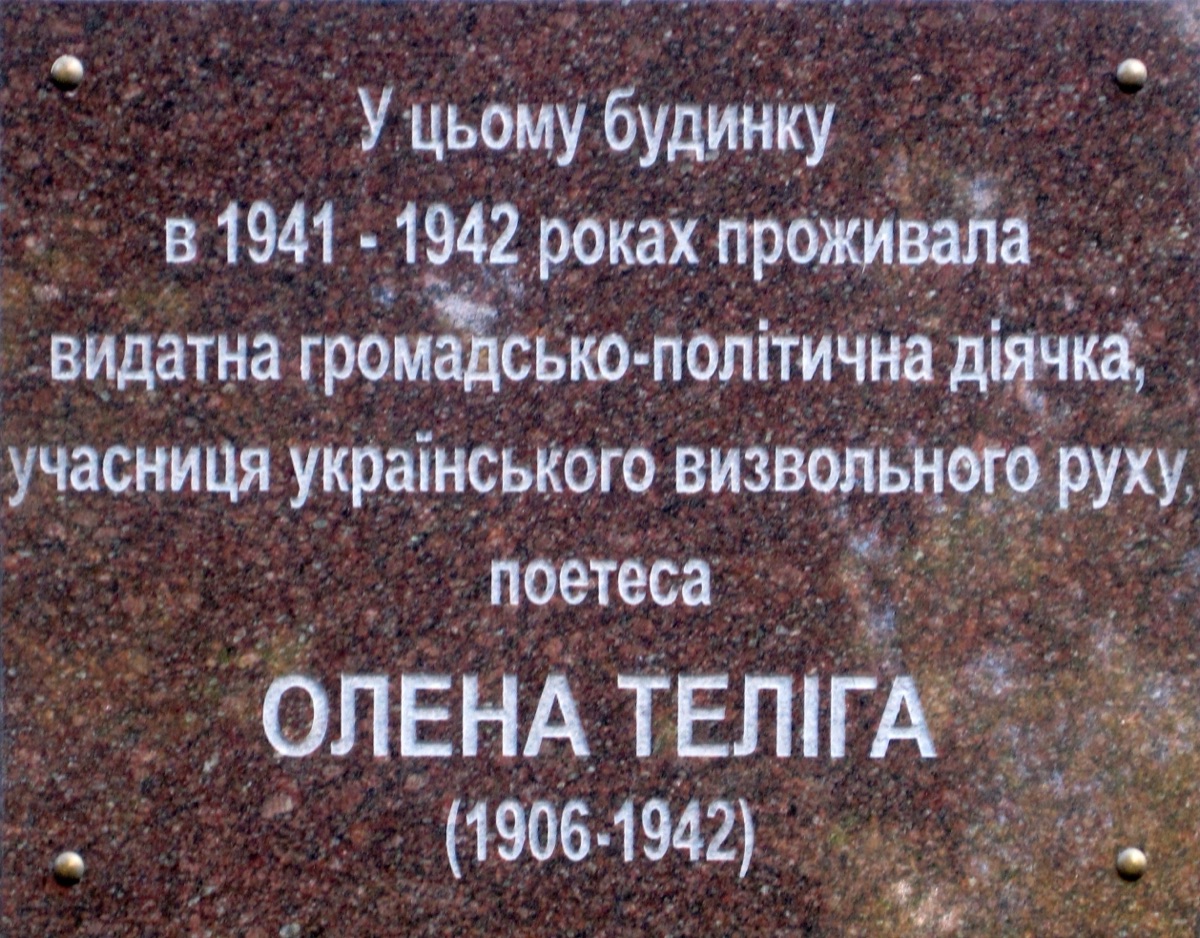
The couple moved to Warsaw in 1929, where Teliha's literary and journalistic work developed. Following the outbreak of the Second World War in 1939, she moved to Kraków and became involved with the Organisation of Ukrainian Nationalists. In October 1941 she arrived in Nazi-occupied Kyiv, helping organise the Union of Ukrainian Writers and edit the literary supplement Litavry. In February 1942 the Nazis murdered her and several colleagues. Although outside Prague geographically, this period is essential to a complete biography. [T05; T07; T08]
A particular bibliographical trap concerns her first book-length poetry collection, Dusha na storozhi: it appeared posthumously in 1946 and cannot be catalogued as “Teliha's Prague edition of 1925”. Dates of composition, periodical publication and particular books must be distinguished. Each edition needs a place, publisher, catalogue link and copyright status. [T07]
A story for a future exhibition
“Olena Teliha's Poděbrady Album / Poděbradské album Oleny Telihy”. The opening scene shows an emigrant family arriving in a country supporting Ukrainian education. Student corridors, Ukrainian dance classes, a concert, well-known poets, marriage and photographs from 1925–1929 follow. The final section presents her independent voice, editorial work in Kyiv and remembrance of those murdered by the Nazi occupiers. Every scene needs a photograph's identification details, caption and source. Map links must identify a documented institutional location, rather than an unsupported building.
Connections
Mentioned in dossiers
- Ivan Šovheniv · Person
Further reading about this person
A catalogue confirms the bibliographic record. It does not mean that every dossier claim has been checked against the book’s full text.
-
Anthology
Поети Празької школи. Срібні сурми
Упорядник Микола Ільницький
Смолоскип · 2009 · ISBN 978-966-2164-02-2
Chapter / pages: {'toc_start_page': 509, 'claim_page_verified': False}
Bibliographic record confirmed · Record checked 2026-11-02
Catalogue or publisher record ↗Text reading not documented
Sources
- T01 Ukrainian Institute of National Memory. “Olena Teliha: A Person Ahead of Her Time” (2026; family, Poděbrady, Prague). uinp.gov.ua
- T02 Ukrainian Institute of National Memory. “Olena Teliha Was Born 110 Years Ago” (dated biographical chronology). old.uinp.gov.ua
- T03 Central State Film, Photograph and Sound Archive of Ukraine. Photographic exhibition for Olena Teliha’s centenary (descriptions of collection items 0-1930xx). old.archives.gov.ua
- T04 Ukrainian Institute of National Memory. “In Search of Her Ukraine: From the Moscow Region to Babyn Yar” (reference to the 1924 concert). old.uinp.gov.ua
- T05 Ukrainian Institute of National Memory. “1906 — Olena Teliha Was Born” (biography, education and birthplace question). uinp.gov.ua
- T06 State Archives of Ukraine. “Documents on the Shovhenev and Teliha Families in the Central State Archive of Supreme Bodies of Power and Government of Ukraine: A Guide” (2006). old.archives.gov.ua
- T07 Vernadskyi National Library of Ukraine. “Olena Teliha Was Born” (1946 publishing history). nbuv.gov.ua
- T08 Visuotinė lietuvių enciklopedija. “Olena Teliha” (independent encyclopedic account, differing death date). vle.lt
Photos and videos
Verification
Draft
Research draft with sources; independent check still pending.
Evidence coverage
Timeline claims assessed: 15 / 15. Claims with verified contradictions: 2.
The score measures coverage of timeline claims by verified sources, not the probability of historical truth. One independent source gives a claim 0.5 points; two or more give 1 point. A disputed claim receives 0. Unassessed claims remain in the denominator.
evidence-v1 · 2026-11-02
How the score is calculated
Each claim shows its contribution to the score and verified current sources. Multiple references may share an origin; context adds no points.
-
21.07.1906
Birth; the particular settlement named Ilinskoe remains uncertain.
Assessed Contribution: 0.5 / 1Independent source origins: 1
Report this claim -
1917/1918
The family moves to Kyiv: T04 gives 1917, while T01/T02/T05 give 1918; the exact year remains unresolved.
Sources contradict one another Contribution: 0.0 / 1Independent source origins: 1
Report this claim -
1920
The family is forcibly separated in connection with her father’s emigration.
Assessed Contribution: 0.5 / 1Independent source origins: 1
- T01 — supports the claim
-
07.1922
Arrival in Czechoslovakia / Poděbrady.
Assessed Contribution: 0.5 / 1Independent source origins: 1
Report this claim -
1923
Studies at the Ukrainian pedagogical institute in Prague.
Assessed Contribution: 0.0 / 1Independent source origins: 0
Report this claim -
winter 1924
Reported first meeting with Mykhailo Teliha at a Prague concert.
Assessed Contribution: 0.5 / 1Independent source origins: 1
- T04 — supports the claim
-
10.1925
Archival photograph at Avramenko’s dance school.
Assessed Contribution: 0.5 / 1Independent source origins: 1
- T03 — supports the claim
-
01.08.1926
Marriage to Mykhailo Teliha.
Assessed Contribution: 0.5 / 1Independent source origins: 1
- T02 — supports the claim
-
17.11.1927
Archival photograph of Teliha with Vasyl Kurylenko.
Assessed Contribution: 0.5 / 1Independent source origins: 1
- T03 — supports the claim
-
14.02.1928
Dated joint portrait of the couple in Poděbrady.
Assessed Contribution: 0.5 / 1Independent source origins: 1
- T03 — supports the claim
-
09.1929
Photograph of a walk in Poděbrady; move to Warsaw in autumn.
Assessed Contribution: 0.0 / 1Independent source origins: 0
Report this claim -
1939
Kraków, political and journalistic work.
Assessed Contribution: 0.5 / 1Independent source origins: 1
Report this claim -
10.1941
Return to Kyiv and literary activity under occupation.
Assessed Contribution: 0.5 / 1Independent source origins: 1
Report this claim -
02.1942
Murder by the Nazis; the exact date differs between sources.
Sources contradict one another Contribution: 0.0 / 1Independent source origins: 1
Report this claim -
1946
Dusha na storozhi — a posthumous poetry book.
Assessed Contribution: 0.5 / 1Independent source origins: 1
Report this claim
How we verify
- DraftResearch draft with sources; independent check still pending.
- Checked automaticallyQuotes mechanically matched to sources; an independent model found no contradictions.
- Two sources (automatic score)Automatic evidence score: key facts rest on at least two independent sources. No person has yet read the whole dossier.
- Confirmed by an editorAn editor confirmed the dossier; the reason is shown on the page. This is not an independent scholarly review.
- Disputed pointsSources disagree; disputed points are marked in the text.
Report an error or add information
Your message goes to the editorial queue. AI pre-sorts it, a human decides.