Person · National revival · Ukrainians in Czechia · R0015
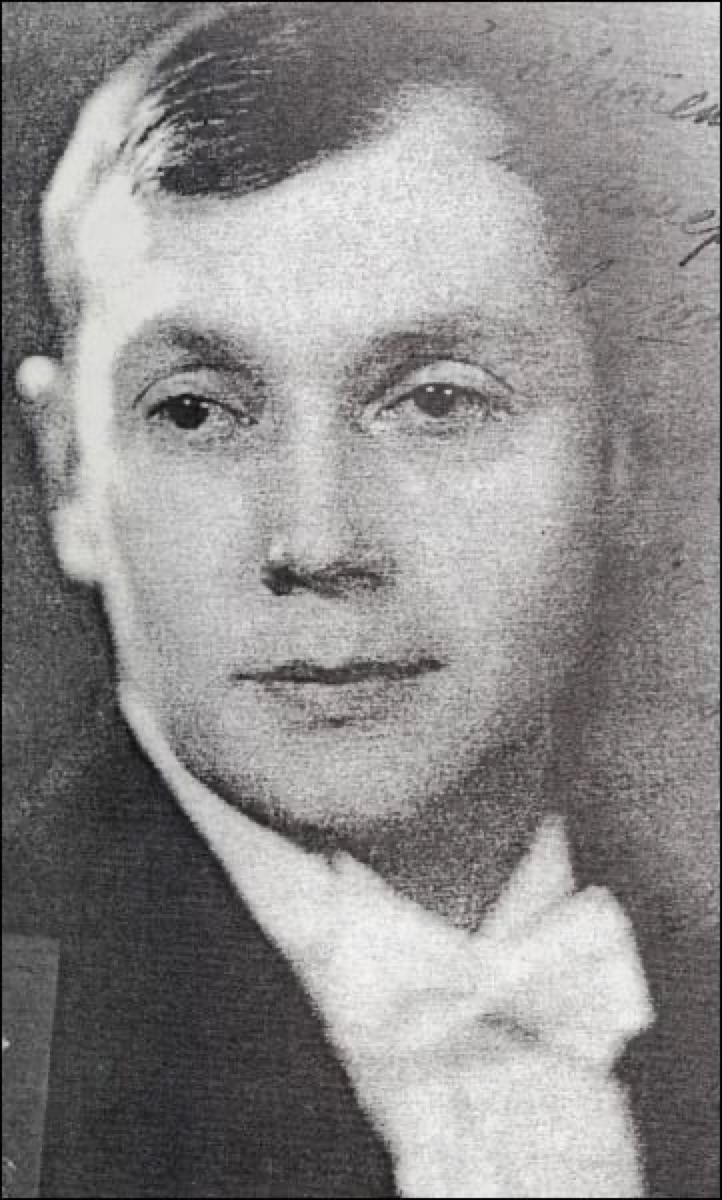
Jevhen Malanjuk
Євген Маланюк · 1897–1968
Essence
Yevhen Malaniuk (1897–1968), a Ukrainian poet and former officer of the Ukrainian People's Republic army, studied at the Ukrainian Husbandry Academy in Poděbrady during the 1920s. His debut collection, Stylet i stylos, was published there in 1925. His career links Czech-based émigré technical education with the formation of modern Ukrainian exile literature.
Timeline
- 20.01 / 01.02 / 02.02.1897Birth: IEU gives 20 January, the large State Archive of Kirovohrad Oblast exhibition 1 February, and the short one 2 February; calendar equivalence has not been established. [E01; E02; E04; E06]
- 1917–1920Military service during the Ukrainian Revolution; according to IEU an officer of the UPR Army from 1917. [E01; E02]
- 1920 — early 1920sInternment in Poland and the camp literary milieu of Kalisz; the exact release year has not been established. [E01; E02; E08]
- 1922 / autumn 1923Move to Czechoslovakia: 1922 according to ESU, autumn 1923 according to Lysenko-Yerzhykivska. [E01; E08]
- 1922–1923«Веселка» in Kalisz: publishing collaboration with Yurii Darahan. [E01; E02; E08]
- 1923 / 1928The academy in Poděbrady: ESU and IEU give completion in 1923, the short State Archive of Kirovohrad Oblast exhibition 1928; E08 gives studies in 1923–1928. [E01; E02; E06; E08]
- 1925«Стилет і стилос»: Poděbrady, publisher Kyiv, 47 pp. according to the NBUV catalogue; the title page has not been read. [E03; E01; E04; E08]
- 1926«Гербарій», Hamburg according to ESU, the archival exhibition and the scholarly article. [E01; E04; E08]
- 1929Warsaw; participation in founding Tank together with Yurii Lypa. [E01; E05]
- 1944According to ESU: from Poland to Kunštát, Prague and then Regensburg; exact days and addresses have not been established. [E01]
- 1948 / 1949Arrival in the USA: 1948 according to ESU, 1949 according to the short State Archive of Kirovohrad Oblast exhibition; IEU gives no year. [E01; E02; E06]
- 16.02.1968Death in New York; according to ESU buried in Bound Brook, New Jersey, USA. [E01; E02]
Full research text
Main story: a poet who studied engineering
The story of Yevhen Fylymonovych Malaniuk is one of the strongest cultural bridges between the Ukrainian and Czech experiences of the twentieth century. A participant in the Ukrainian People's Republic's struggle for independence, he moved to Czechoslovakia after internment in Poland, studied at the Ukrainian Husbandry Academy in Poděbrady and published his debut collection, «Стилет і стилос» (1925), here. The academy trained Ukrainian engineers, yet also became a centre of literary culture; for the public this is far more interesting than the formula “lived in Prague”. [E01; E02; E03; E04]
The “Prague School” of Ukrainian poetry is a literary scholarly concept, rather than a legally registered school or necessarily a circle with membership cards. Its geography included Prague, Poděbrady and later Warsaw. Malaniuk must not be mistakenly presented as a lecturer at the Ukrainian Free University or as the resident of a single Prague house throughout the 1920s. [E01; E05]
Profile, names and time limits
| Field | Information |
|---|---|
| Ukrainian name | Yevhen Fylymonovych Malaniuk [E01] |
| Czech / English variant | Jevhen Malanjuk / Yevhen Malaniuk; catalogue form Malanjuk, Jevhen [E02] |
| Birth | IEU — 20 January 1897; the large State Archive of Kirovohrad Oblast exhibition — 1 February 1897; the short one — 2 February 1897; ESU gives the pair 20.01(02.02). The dates remain attributed source versions, without an established calendar equivalence or a read birth register entry. [E01; E02; E04; E06] |
| Birthplace | Novoarkhanhelsk, now in Kirovohrad Oblast [E01; E06] |
| Death | 16 February 1968, New York [E01; E02] |
| Principal roles | Officer of the UPR Army, engineer, poet, essayist, public figure [E01] |
| Czech geography | Poděbrady: education and literature; Prague — contacts and the 1944 period, with exact addresses unproven [E01] |
| Do not confuse | The Prague poetic school ≠ a separate university; the place where a poem was written ≠ automatically its place of publication |
War experience and the beginning of literary work
In his youth Malaniuk was educated at the Yelysavethrad real school and gained military experience during the First World War and the Ukrainian Revolution. After 1917 he served in Ukrainian military formations and was associated with the UPR Army milieu. His subsequently characteristic opposition between weapons and writing arose from a personal experience of defeat and emigration. This is an interpretation of the author's imagery, rather than a documented motive for every individual work. [E01; E02]
Following the internment of UPR Army units in Poland, the poet stayed in camps, including Kalisz. Together with Yurii Darahan he participated in establishing the journal «Веселка» in 1922–1923. This literary experiment matters for the network of relationships: the interned servicemen continued cultural activity and began developing a new literary language of emigration. Acquaintance with Darahan is confirmed by their joint publishing project; without personal letters this is no reason to make them “closest friends” automatically. [E01; E02]
Poděbrady: the academic setting and the diploma date
Malaniuk's studies at the Ukrainian Husbandry Academy in Poděbrady are confirmed by reference texts; their dates differ. ESU explicitly reports a move to Czechoslovakia in 1922 and completion of the hydraulic engineering department in 1923; IEU also gives completion in 1923. The short State Archive of Kirovohrad Oblast exhibition gives 1928 as the diploma year, while Nataliia Lysenko-Yerzhykivska's scholarly article gives a move in autumn 1923 and studies in 1923–1928. These are discrepancies concerning two events — relocation and completion of education; the original student file has not been read. [E01; E02; E06; E08]
For a short biography, “studied at the Ukrainian Husbandry Academy in Poděbrady in the 1920s” is sufficient. The exact relocation and diploma years are presented in the timeline as differing source versions. The direction for documentary research is the academy's diploma registers; the academy already has a separate record, R0035. [E01; E02; E06; E08]
Student circles and the Ukrainian writers' society Kult, to which Malaniuk belonged, operated in Poděbrady. Here, alongside future engineers, people studied literature, held meetings and printed new texts. A diploma file, a photograph of the circle and publishing announcements for the 1925 collection are especially valuable for a digital exhibition; without them a particular study or house where he wrote poetry should not be reconstructed. [E01; E06]
«Стилет і стилос»: the book as the central artefact
In 1925 the book «Стилет і стилос» appeared in Poděbrady. NBUV describes it as «Стилет і стилос: вірші 1923–1924», Poděbrady: Kyiv, 1925, 47 pp. In this catalogue description Poděbrady is the place of publication and Kyiv is the publisher. These are verified catalogue details, rather than the result of reading the title page or the entire copy; the book's separate object record is R0094. [E03]
The book's title opposes a weapon to a writing instrument. For a Czech reader, the story can be built around a hydraulic engineering student who, after war and exile, sought a new form of Ukrainian cultural expression in Czechoslovakia. An exhibition quotation from the original poem may be published only within copyright law and editorial policy, and a cover scan only after checking the library's licence. [E03; E04]
The collection «Гербарій» appeared in Hamburg in 1926 and should therefore not automatically be placed as a Prague printing. «Земля й залізо» — Paris, 1930; this fact matters for the subsequent route between countries, rather than for a Prague bookshop marker. [E01; E02]
The “Prague School”: a community without formal statutes
The term “Prague School” brings together emigrant writers who worked within a shared intellectual field after 1917–1921. Oksana Liaturynska, Yurii Darahan, Olena Teliha, Oleksa Stefanovych, Leonid Mosendz, Oleh Olzhych and others belong to this literary circle, but their routes, literary views and forms of collaboration differed. Encyclopedia of Ukraine geographically places some authors in Prague and Malaniuk in the Warsaw part of the wider circle. [E05]
Connections with publishers and journals allow the real network to be explored: who wrote to whom; in which issue of a journal someone published; who organised literary evenings; what appeared in Poděbrady, Warsaw, Lviv or Prague. These are more scholarly precise relationships than an undifferentiated member_of PragueSchool. Likewise, the term “nation-building poet” should be presented as a historical and literary characterisation by researchers, rather than an official title. [E01; E05]
From Warsaw to New York
In 1929 Malaniuk moved to Poland and, together with Yurii Lypa, founded the literary group Tank. He worked as an engineer, wrote essays and poetry, and published in Polish journals. His return to the Czech lands during the war is a separate later episode: ESU mentions a move in 1944 from Poland to Kunštát in Moravia, then to Prague and Germany. Exact addresses and transit days require documents; an invented day-by-day itinerary must not be created. [E01]
After the Second World War Malaniuk lived among displaced Ukrainians in Germany and later in the USA. ESU gives residence in the USA from 1948, the short State Archive of Kirovohrad Oblast exhibition from 1949; IEU describes the move without an arrival year. This discrepancy has not been resolved by immigration documents. He died in New York on 16 February 1968; according to ESU he was buried in Bound Brook, New Jersey. This is not a Czech burial. [E01; E02; E06]
Contradictions and limitations
| Question | Comparison of sources | Editorial action |
|---|---|---|
| Academy diploma 1923 / 1928 | E01 and E02 explicitly give completion in 1923; E06 — 1928; E08 — studies in 1923–1928. | Keep the versions open; the diploma file has not been read. |
| Birth: 20 January / 1 / 2 February | E02 — 20 January; E04 — 1 February; E06 — 2 February; E01 gives the pair 20.01(02.02). | Do not establish a calendar equivalence or a new exact date without a source. |
| Move to Czechoslovakia | E01 — 1922; E08, p. 549 — autumn 1923; E06 does not give this year. | Separate relocation from enrolment and completion of studies. |
| USA: 1948 / 1949 | E01 — 1948; E06 — 1949; E02 contains no arrival year. | Do not attribute the discrepancy to IEU; the original immigration records have not been read. |
| Places of activity and the “Prague School” | Poděbrady, Prague and Warsaw are different episodes and literary geography; the photograph caption “Prague, 1924” does not prove long-term residence. | Do not create exact addresses, rooms or formal membership from an overview of the movement. |
| Images, manuscripts and literary texts | Availability of a catalogue or scan does not establish permission for reproduction. | Check rights for the specific material; no media were added in this review. |
The Czech story and places on a future route
“Inženýr, který se stal básníkem / The engineer who became a poet”. Starting point: a confirmed academy building in Poděbrady → the library catalogue of the first book → the Kult literary circle → the European route of publications. An additional museum component: the military and literary experience of emigration. Do not “attach” the 1925 text itself to a particular Poděbrady room without a written reference.
Once diploma registers, copies of Veselka, posters for literary evenings, private letters and student photographs have been found, an evidence-based three-dimensional network can be built: people — schools — books — cities — events. If it turns out that Malaniuk stopped in Prague only briefly in 1944, this should be a separate visit, rather than “twenty years of residence in Prague”.
Connections
Mentioned in dossiers
- Proboiem – Ukrainian publisher in Prague · Organisation
- Sahaidak – Yurii Darahan · Work
- Stylet i stylos – Yevhen Malaniuk · Work
- Earth and Iron – Yevhen Malaniuk · Work
- Fire and Ashes – Natalia Livytska-Kholodna · Work
Further reading about this person
A catalogue confirms the bibliographic record. It does not mean that every dossier claim has been checked against the book’s full text.
-
Anthology
Поети Празької школи. Срібні сурми
Упорядник Микола Ільницький
Смолоскип · 2009 · ISBN 978-966-2164-02-2
Chapter / pages: {'toc_start_page': 345, 'claim_page_verified': False}
Bibliographic record confirmed · Record checked 2026-11-02
Catalogue or publisher record ↗Text reading not documented
-
About this person
Dominus Маланюк: тло і постать
Леонід Куценко
Центрально-Українське видавництво · 2001 · ISBN 966-583-136-4
Bibliographic record confirmed · Record checked 2026-11-02
Catalogue or publisher record ↗Text reading not documented
Sources
- E01 O. H. Astafiev, «Маланюк Євген Филимонович», ESU, vol. 18, 2017; online revision July 2026. The article, bibliography and author information were read. Explicitly gives relocation in 1922 and completion of the academy in 1923; USA from 1948. These dates are retained alongside differing versions; the original birth, diploma and immigration records have not been read. esu.com.ua
- E02 Yurii Lavrinenko, “Malaniuk, Yevhen”, Encyclopedia of Ukraine, vol. 3, 1993, online article. The entire short article was read: 20 January 1897; officer from 1917, interned in Kalisz in 1920; completion of the academy in 1923; «Веселка» with Darahan in 1922–1923. Mentions emigration to the USA WITHOUT an arrival year. encyclopediaofukraine.com
- E03 NBUV, Ukrainika, catalogue: Ye. Malaniuk, «Стилет і стилос: вірші 1923–1924». Poděbrady: Kyiv, 1925, 47 pp. The bibliographic description was actually read through the web reader after an initial timeout. Kyiv occupies the publisher position and Poděbrady is the place of publication. The title page and complete book text have not been read. irbis-nbuv.gov.ua
- E04 State Archive of Kirovohrad Oblast, the exhibition «Спадщина Євгена Маланюка» for the 125th anniversary. The introduction, relevant photograph captions and book descriptions in sections II–III were read: the introduction gives 1 February 1897; captions “Prague, 1924”, “student… 1928”; publications of 1925/1926. Not the entire lengthy exhibition or the embedded archival documents. A biographical summary is not identical to an original official record. dakiro.kr-admin.gov.ua
- E05 Internet Encyclopedia of Ukraine, the Literature thematic survey, section XVI on the “Prague School”. The section introduction and Malaniuk/Lypa passages were read, rather than the entire survey: Prague and Warsaw as the circle's geography; Tank in 1929. The Malaniuk passage repeats E02 and therefore is not independent confirmation. encyclopediaofukraine.com
- E06 State Archive of Kirovohrad Oblast, the short biographical exhibition «Маланюк Євген Филимонович». The short biography and document list were read: 2 February 1897, completion of the academy in 1928, USA from 1949. The year of relocation specifically to Czechoslovakia is not given. Item 7 provides a locator for a birth register entry, but the record itself has not been read: the image returned 403. dakiro.kr-admin.gov.ua
- E07 Ukrainian Institute of National Memory, the historical calendar «28 квітня», material about the academy. The full page was not obtained: web reader 502/timeout, direct request — expired TLS certificate. A search display does not replace reading the page; this URL was not used as verified evidence of the individual's diploma year. old.uinp.gov.ua
- E08 Nataliia Lysenko-Yerzhykivska, «Творчість Євгена Маланюка в контексті слов’янських літератур», «Художня культура. Актуальні проблеми», 2007, issue 4, pp. 548–563. Selected text on pp. 548–549, 552 and notes on pp. 560–561 was actually read: Veselka, relocation in autumn 1923, studies in 1923–1928, Polish contacts. Not the entire PDF or the cited books or archives. Uses Kutsenko, Narizhnyi and other shared literature; independence has not been established. irbis-nbuv.gov.ua
- E09 I. Krypiakevych Institute of Ukrainian Studies of the National Academy of Sciences of Ukraine, description of the anthology «Поети Празької школи. Срібні сурми»: compilation, foreword and literary portraits by M. Ilnytskyi. Kyiv: Smoloskyp, 2009, 916 pp. The institutional description was read, rather than the anthology. The available library locator 345 marks the beginning of the personal section, rather than a read evidence page for all biographical claims. inst-ukr.lviv.ua
- E10 NBUV, Ukrainika, catalogue: Leonid Kutsenko, «Dominus Маланюк: тло і постать: монографія». Kirovohrad: Tsentralno-Ukrainske vydavnytstvo, 2001, 264 pp., ISBN 966-583-136-4. The catalogue was actually read through the web reader; direct GET returned 403. The monograph has not been read. The mention of a 2002 edition in E08 does not disprove the existence of this 2001 copy. irbis-nbuv.gov.ua
Photos and videos
Verification
Draft
Research draft with sources; independent check still pending.
Evidence coverage
Timeline claims assessed: 12 / 12. Claims with verified contradictions: 4.
The score measures coverage of timeline claims by verified sources, not the probability of historical truth. One independent source gives a claim 0.5 points; two or more give 1 point. A disputed claim receives 0. Unassessed claims remain in the denominator.
evidence-v1 · 2026-11-02
How the score is calculated
Each claim shows its contribution to the score and verified current sources. Multiple references may share an origin; context adds no points.
-
20.01 / 01.02 / 02.02.1897
Birth: IEU gives 20 January, the large State Archive of Kirovohrad Oblast exhibition 1 February, and the short one 2 February; calendar equivalence has not been established.
Sources contradict one another Contribution: 0.0 / 1Independent source origins: 1
Report this claim -
1917–1920
Military service during the Ukrainian Revolution; according to IEU an officer of the UPR Army from 1917.
Assessed Contribution: 0.5 / 1Independent source origins: 1
Report this claim -
1920 — early 1920s
Internment in Poland and the camp literary milieu of Kalisz; the exact release year has not been established.
Assessed Contribution: 0.5 / 1Independent source origins: 1
Report this claim -
1922 / autumn 1923
Move to Czechoslovakia: 1922 according to ESU, autumn 1923 according to Lysenko-Yerzhykivska.
Sources contradict one another Contribution: 0.0 / 1Independent source origins: 1
Report this claim -
1922–1923
«Веселка» in Kalisz: publishing collaboration with Yurii Darahan.
Assessed Contribution: 0.5 / 1Independent source origins: 1
Report this claim -
1923 / 1928
The academy in Poděbrady: ESU and IEU give completion in 1923, the short State Archive of Kirovohrad Oblast exhibition 1928; E08 gives studies in 1923–1928.
Sources contradict one another Contribution: 0.0 / 1Independent source origins: 1
- E06 — supports the claim
- E08 — supports the claim
- E01 — contradicts the claim
- E02 — contradicts the claim
-
1925
«Стилет і стилос»: Poděbrady, publisher Kyiv, 47 pp. according to the NBUV catalogue; the title page has not been read.
Assessed Contribution: 0.5 / 1Independent source origins: 1
Report this claim -
1926
«Гербарій», Hamburg according to ESU, the archival exhibition and the scholarly article.
Assessed Contribution: 0.5 / 1Independent source origins: 1
Report this claim -
1929
Warsaw; participation in founding Tank together with Yurii Lypa.
Assessed Contribution: 0.5 / 1Independent source origins: 1
Report this claim -
1944
According to ESU: from Poland to Kunštát, Prague and then Regensburg; exact days and addresses have not been established.
Assessed Contribution: 0.5 / 1Independent source origins: 1
- E01 — supports the claim
-
1948 / 1949
Arrival in the USA: 1948 according to ESU, 1949 according to the short State Archive of Kirovohrad Oblast exhibition; IEU gives no year.
Sources contradict one another Contribution: 0.0 / 1Independent source origins: 1
Report this claim -
16.02.1968
Death in New York; according to ESU buried in Bound Brook, New Jersey, USA.
Assessed Contribution: 0.5 / 1Independent source origins: 1
Report this claim
How we verify
- DraftResearch draft with sources; independent check still pending.
- Checked automaticallyQuotes mechanically matched to sources; an independent model found no contradictions.
- Two sources (automatic score)Automatic evidence score: key facts rest on at least two independent sources. No person has yet read the whole dossier.
- Confirmed by an editorAn editor confirmed the dossier; the reason is shown on the page. This is not an independent scholarly review.
- Disputed pointsSources disagree; disputed points are marked in the text.
Report an error or add information
Your message goes to the editorial queue. AI pre-sorts it, a human decides.