Person · National revival · Ukrainians in Czechia · R0033
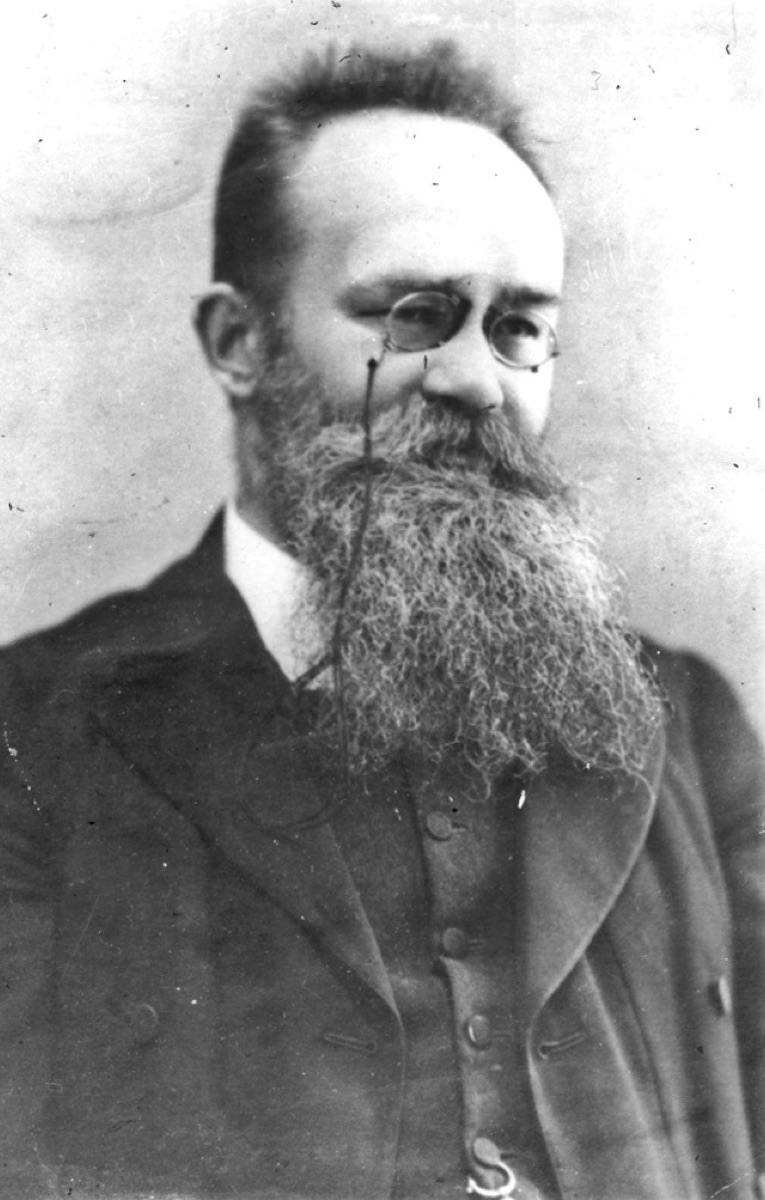
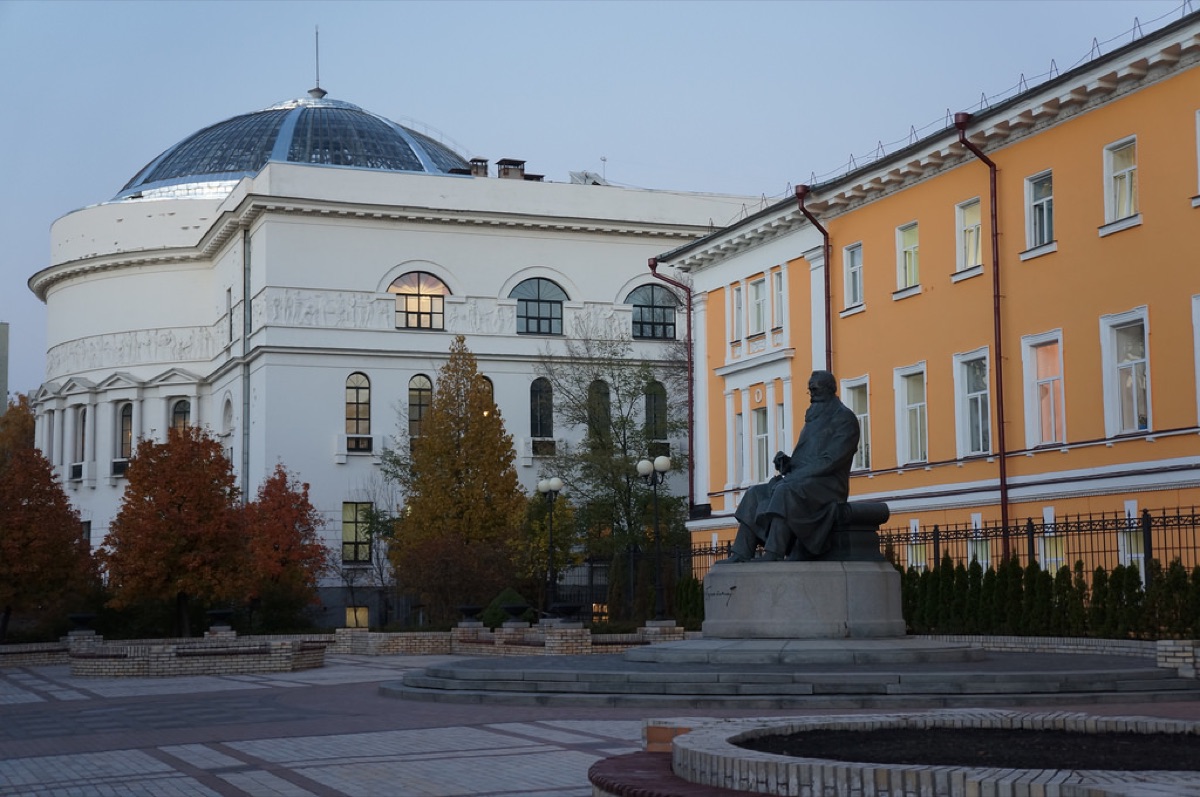
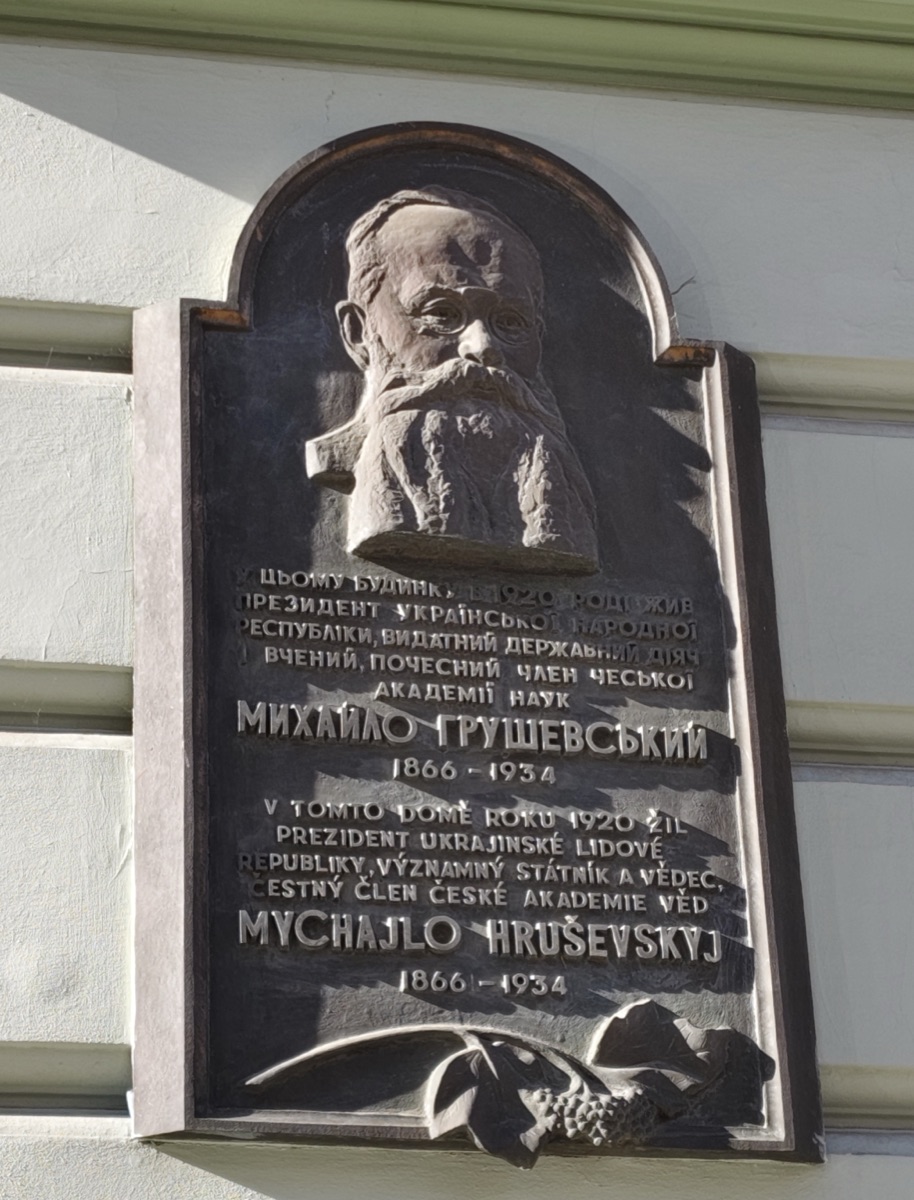
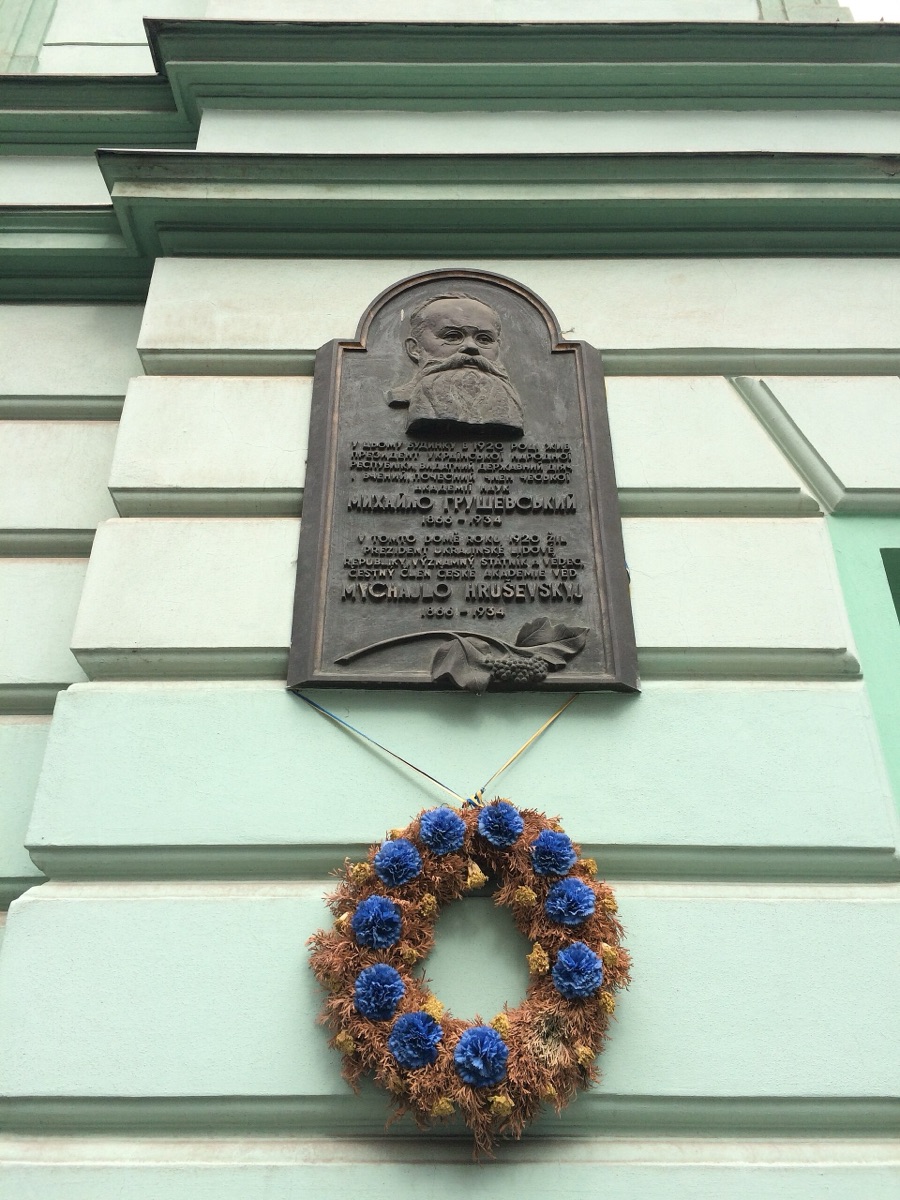
Mykhailo Hrushevsky
Михайло Грушевський · Mychajlo Hruševskyj · 1866–1934
Essence
Mykhailo Hrushevsky (1866–1934) was a Ukrainian historian and chairman of the Ukrainian Central Rada. His 1919–1924 exile connected him to Central European intellectual networks. A letter from Vienna dated 7 May 1923 to the poet Oleksandr Oles reflects his interest in Prague’s Ukrainian students. An alleged personal meeting with T. G. Masaryk in 1920 remains unverified.
Timeline
- 1866-09-29Born in Chełm, historically known as Kholm. [G05]
- 1894Begins his professorship at Lviv University. [G05]
- 1897Elected head of the Shevchenko Scientific Society. [G05]
- 1917-03Becomes chairman of the Ukrainian Central Rada. [G05]
- 1918-04The Central Rada ceases functioning after the Hetman coup. [G05]
- 1919Begins a period of forced emigration following the Ukrainian Revolution. [G01]
- 1920-10Hrushevsky’s political writing appears in the Vienna journal Boritesia — poborete!. [G04]
- 1923-05-07In a letter from Vienna to the poet Oleksandr Kandyba, mentions Ukrainian students in Prague. [G02]
- 1923Raises the question of his future academic prospects in Ukraine amid émigré negotiations. [G01]
- 1924Returns from exile to Soviet Ukraine. [G01]
- 1934-11-25Dies in Kislovodsk. [G05]
Full research text
Profile, identity and the limits of the evidence
Mykhailo Serhiiovych Hrushevsky (1866–1934) was a Ukrainian historian, organiser of scholarship, political figure and chairman of the Ukrainian Central Rada in 1917–1918. A historian of the Lviv academic school and author of the multi-volume History of Ukraine-Rus’, he became a leading intellectual representative of Ukrainian state-building. For Česko × Ukrajina, he matters not only as a national figure, but as a participant in transnational intellectual communication in exile. Confirmed connections concern Czech academic circles through correspondence and relevant archival traces, rather than necessarily residence in Prague. [G01; G05]
Identification: R0033, type Person. The Ukrainian name has the transliterated forms Mykhailo Hrushevsky and Mykhailo Serhiiovych Hrushevsky; the Czech form is Mychajlo Hruševskyj and the English form Mykhailo Hrushevsky. Without a verified personal file in a Czech archive, all transliterations remain synonyms of one ID. Familiar book titles, dates and offices must not substitute for documentary evidence of an alleged personal meeting with President Tomáš Masaryk. [G05]
From Lviv historian to chairman of the Central Rada
Growing up amid the political division of Ukrainian lands between empires, Hrushevsky developed a historiography treating Ukrainian history as an independent subject of study. From 1894, he worked at Lviv University; from 1897, he headed the Shevchenko Scientific Society, combining university teaching, scholarly publishing and the training of researchers. His multi-volume synthesis of the history of Ukraine-Rus’ answered imperial historiographic models that absorbed the Ukrainian experience into broader state narratives. [G05]
After the revolutionary events of 1917, Hrushevsky became head of the Ukrainian Central Rada. He acted as chairman of a representative revolutionary body, rather than as a president in the modern constitutional sense. This distinction matters editorially: the popular description “Ukraine's first president” cannot simply be transferred into an encyclopedic record without explaining the historical institution. His Central Rada activities brought international recognition, while also making his position politically vulnerable after the revolution's defeat. [G05]
Prague as the subject of a letter, not a proven permanent address
The most interesting confirmed Prague-related testimony is Hrushevsky's letter to the Ukrainian poet Oleksandr Kandyba, known by the pen name Oleksandr Oles. In its article about the Ukrainian Academic Society, the Shevchenko Scientific Society's encyclopedia refers to a letter sent from Vienna on 7 May 1923, quoting Hrushevsky on Prague as the “Ukrainian Athens”. This source demonstrates actual communication between the two figures and his awareness of student life in Czechoslovakia's capital. Our graph records the directed relationship R0033 wrote_to R0018 on a specific date. [G02]
An encyclopedic quotation, however, is not a complete archival examination of the manuscript original. It remains necessary to establish who first published the letter, whether there are textual variants, to whom the envelope is addressed, and whether postal markings survive. Confirming the letter's route also does not prove that Hrushevsky was personally in Prague that day. Such distinctions protect the historical map from inadvertently invented journeys. [G02]
The student Ukrainian Academic Society discussed in this context developed in several university centres in Czechoslovakia and received support from Czechoslovak administrative bodies. The encyclopedia gives information on membership numbers, periodicals and related institutions; Hrushevsky himself must not be counted as a society member merely because he mentioned the students. This is a contextual connection, not evidence of membership. [G02]
Hrushevsky and Masaryk: separating a story from a legend
An earlier project outline mentioned a personal meeting between Hrushevsky and Tomáš Garrigue Masaryk in 1920. The available sources checked here provide insufficient evidence for such a meeting. The strongest material trace located is an archival record of a Masaryk portrait among Hrushevsky's papers at the Institute of Manuscripts of the V. I. Vernadsky National Library of Ukraine, collection 357, item 63. The object itself establishes that an image is present in the collection, but not personal acquaintance, a gift, a meeting or a political agreement. [G03]
This case is fundamental to the research graph. A statement about an object — “a portrait is preserved in the archival collection” — may be created with a specific source attached. The existence of a photograph cannot justify a met_with or “friends” relationship. The photograph's reverse, ownership inscriptions, acquisition date, inventory history and presidential calendars for 1920 must be examined. Only if a direct document is found can the story acquire a narrative title such as “A meeting of two statesmen”. [G03]
There was indeed an outward analogy between Hrushevsky and Masaryk: both embodied a connection between historical scholarship and political thought, worked amid the post-war remaking of Central Europe, and defended academic culture. Their political programmes, visions of international order and approaches to Russia were not identical, however. This comparative framework could be explored in a separate scholarly essay, clearly distinguishing the author's interpretation from verified personal contacts. [G01; G05]
The 1924 return and later remembrance
Hrushevsky's return to Soviet Ukraine in 1924 was not simply the end of exile. According to the historical study, it took place against a background of political compromises, conflicting expectations and changes in Soviet policy towards Ukrainian scholarship. His subsequent academic work came under increasing political control. Hrushevsky died on 25 November 1934; his legacy today includes not only printed works, but extensive collections of correspondence and documents. [G01; G05]
For a Ukrainian–Czech digital museum, it is important not to claim Hrushevsky exclusively for the Prague émigré community. His specific role here is that of an intellectual interlocutor of émigrés, the author of a documented letter to Oles, a participant in the European circulation of ideas, and a potential subject for investigating diplomatic contacts with the Czechoslovak presidency. His biographical page should connect the Prague centre with Lviv, Vienna and Ukraine through time periods, rather than direct readers to an unconfirmed address. [G01; G02]
Connections
- Oleksandr Oles · Person · 1923-05-07
- Tomáš Garrigue Masaryk · Person · undetermined
- Ukrainian Civic Committee in Czechoslovakia · Organisation · 1921–1924
Mentioned in dossiers
- Oleksandr Kolessa · Person
- Stanislav Dnistrjanskyj · Person
Further reading about this person
A catalogue confirms the bibliographic record. It does not mean that every dossier claim has been checked against the book’s full text.
-
About this person
Великий Українець: Матеріали з життя та діяльності М. С. Грушевського
Упорядник А. П. Демиденко
Веселка · 1992
Bibliographic record confirmed · Record checked 2026-11-02
Catalogue or publisher record ↗Text reading not documented
Sources
- G01 Yurii Shapoval. “Mykhailo Hrushevsky: Emigration and Return to Ukraine (1919–1924)”. Ukrainian Historical Journal, 2016, No. 6, pp. 4–23. hrushevsky.history.org.ua
- G02 Oleh Kupchynsky. “The Academic Society in Prague”. Encyclopedia of the Shevchenko Scientific Society, 2015. Refers to the letter of 7 May 1923 to O. Kandyba. encyclopedia.com.ua
- G03 Electronic Archive of Mykhailo Hrushevsky: a record of T. G. Masaryk’s portrait among Hrushevsky’s papers, Institute of Manuscripts, V. I. Vernadsky National Library of Ukraine, collection 357, item 63. hrushevsky.history.org.ua
- G04 Electronic Archive of M. Hrushevsky: Boritesia — poborete! journal, No. 2 (Vienna, 1920), article “Between Moscow and Warsaw”. hrushevsky.history.org.ua
- G05 Internet Encyclopedia of Ukraine: Mykhailo Hrushevsky; academic, civic and political biography. encyclopediaofukraine.com
- G06 Electronic Archive of Mykhailo Hrushevsky — homepage of the institutional project of the Institute of History of Ukraine, National Academy of Sciences of Ukraine. hrushevsky.history.org.ua
Photos and videos
Verification
Draft
Research draft with sources; independent check still pending.
Evidence coverage
Timeline claims assessed: 0 / 11. Claims with verified contradictions: 0.
The score measures coverage of timeline claims by verified sources, not the probability of historical truth. One independent source gives a claim 0.5 points; two or more give 1 point. A disputed claim receives 0. Unassessed claims remain in the denominator.
evidence-v1
How the score is calculated
Each claim shows its contribution to the score and verified current sources. Multiple references may share an origin; context adds no points.
-
1866-09-29
Born in Chełm, historically known as Kholm.
Not yet assessed Contribution: 0.0 / 1Independent source origins: 0
Verified current support has not been established. This does not mean the claim is false.
Report this claim -
1894
Begins his professorship at Lviv University.
Not yet assessed Contribution: 0.0 / 1Independent source origins: 0
Verified current support has not been established. This does not mean the claim is false.
Report this claim -
1897
Elected head of the Shevchenko Scientific Society.
Not yet assessed Contribution: 0.0 / 1Independent source origins: 0
Verified current support has not been established. This does not mean the claim is false.
Report this claim -
1917-03
Becomes chairman of the Ukrainian Central Rada.
Not yet assessed Contribution: 0.0 / 1Independent source origins: 0
Verified current support has not been established. This does not mean the claim is false.
Report this claim -
1918-04
The Central Rada ceases functioning after the Hetman coup.
Not yet assessed Contribution: 0.0 / 1Independent source origins: 0
Verified current support has not been established. This does not mean the claim is false.
Report this claim -
1919
Begins a period of forced emigration following the Ukrainian Revolution.
Not yet assessed Contribution: 0.0 / 1Independent source origins: 0
Verified current support has not been established. This does not mean the claim is false.
Report this claim -
1920-10
Hrushevsky’s political writing appears in the Vienna journal Boritesia — poborete!.
Not yet assessed Contribution: 0.0 / 1Independent source origins: 0
Verified current support has not been established. This does not mean the claim is false.
Report this claim -
1923-05-07
In a letter from Vienna to the poet Oleksandr Kandyba, mentions Ukrainian students in Prague.
Not yet assessed Contribution: 0.0 / 1Independent source origins: 0
Verified current support has not been established. This does not mean the claim is false.
Report this claim -
1923
Raises the question of his future academic prospects in Ukraine amid émigré negotiations.
Not yet assessed Contribution: 0.0 / 1Independent source origins: 0
Verified current support has not been established. This does not mean the claim is false.
Report this claim -
1924
Returns from exile to Soviet Ukraine.
Not yet assessed Contribution: 0.0 / 1Independent source origins: 0
Verified current support has not been established. This does not mean the claim is false.
Report this claim -
1934-11-25
Dies in Kislovodsk.
Not yet assessed Contribution: 0.0 / 1Independent source origins: 0
Verified current support has not been established. This does not mean the claim is false.
Report this claim
How we verify
- DraftResearch draft with sources; independent check still pending.
- Checked automaticallyQuotes mechanically matched to sources; an independent model found no contradictions.
- Two sources (automatic score)Automatic evidence score: key facts rest on at least two independent sources. No person has yet read the whole dossier.
- Confirmed by an editorAn editor confirmed the dossier; the reason is shown on the page. This is not an independent scholarly review.
- Disputed pointsSources disagree; disputed points are marked in the text.
Report an error or add information
Your message goes to the editorial queue. AI pre-sorts it, a human decides.