Person · National revival · Ukrainians in Czechia · R0005
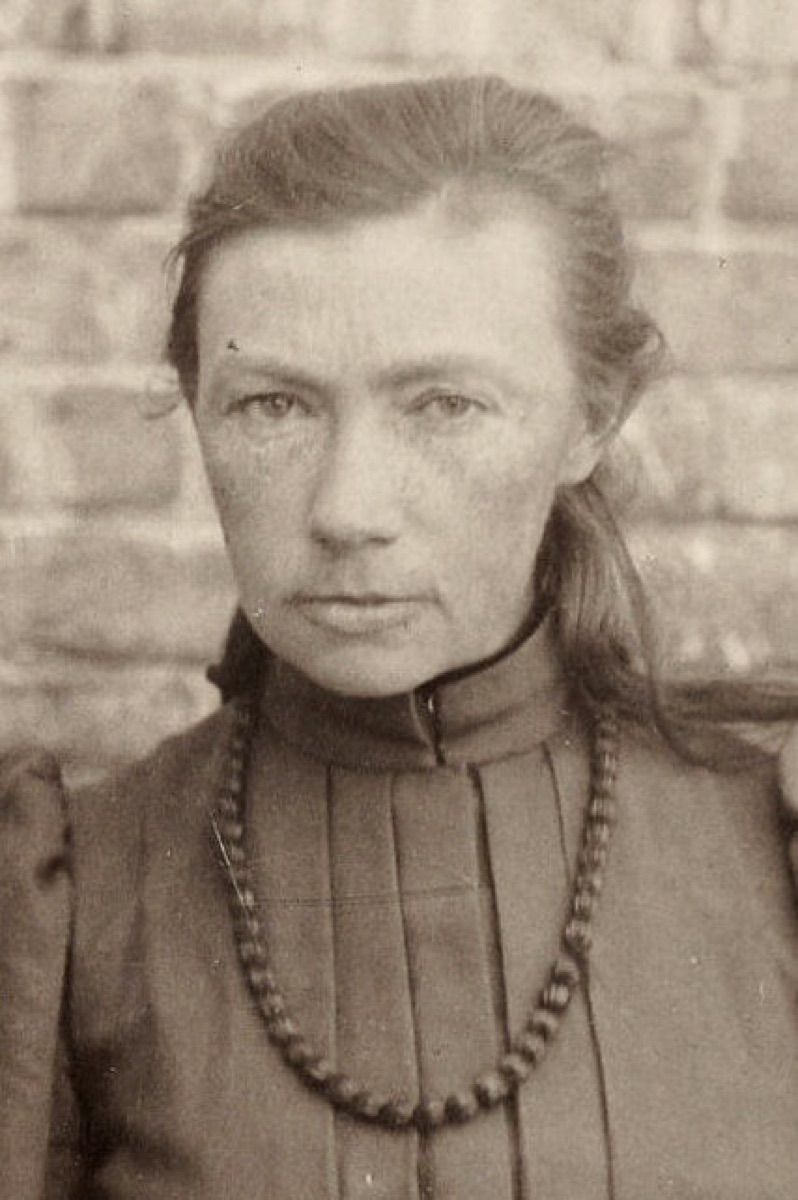
Sofie Rusová
Софія Русова · 1856–1940
Essence
Sofiia Rusova (1856–1940) was a Ukrainian educator, writer and women's rights organizer. In interwar Czechoslovakia she taught at Ukrainian educational institutions in Prague and Poděbrady and contributed to care initiatives for émigré children. Her life connects the histories of education, exile and Czech-Ukrainian civic cooperation.
Timeline
- 18.02 / 01.03.1856Birth; the two calendar dates require confirmation in the birth register. [R01; R02]
- 1871Opens a private kindergarten in Kyiv with her sister. [R02; R06]
- 1870sWorks with her husband on Kobzar in Prague; clarify the edition. [R02]
- 1917Educational and civic work during the Ukrainian Revolution. [R01]
- 1918Works on preschool and out-of-school education. [R05; R06]
- late 1921Emigrates from Ukraine, later working in Czechoslovakia. [R02]
- 1922–1923Lectures at the Ukrainian Husbandry Academy in Poděbrady. [R02]
- 1923–1933Works at the Drahomanov pedagogical institute; check semester lists. [R02; R03]
- 1924Prague: The Theory and Practice of Preschool Education. [R05; R08]
- 1924–1925Helps establish the orphanage. [R02; R03]
- 1937Publication of My Memoirs. [R01]
- 05.02.1940Death in Prague. [R01; R02]
- as recorded in 2020Ukrainian Institute of National Memory register: Olšany 2ob/18/363; the data need a current inspection. [R04]
Full research text
Why Sofiia Rusova matters to Czech readers
Sofiia Fedorivna Rusova, née Lindfors, was an educator, writer and public figure who connected Ukrainian education, the women's movement and assistance to children with the émigré community in Prague. Her biography allows Czech–Ukrainian interaction to be described without abstract declarations of “friendship”: after her forced departure, she taught at Ukrainian higher education institutions in Czechoslovakia, trained teachers and helped organise a shelter for émigrés' children. The Czech Slavonic Library preserves traces of this shelter within the institute's archive; importantly, its catalogue states that the shelter was not legally part of the institute, although Rusova contributed substantially to its creation. [R01; R02; R03]
Rusova should primarily be presented through three verifiable stories: children's education in their native language, intellectual collaboration in Prague, and community care for women and refugees. Calling her unconditionally “the founder of all Ukrainian schools in Czechia” is incorrect: the institutions had their own statutes, organising committees and teachers. [R02; R03]
Kyiv and the development of an educational programme
Rusova began her work when Ukrainian education lacked a broad network of institutions teaching in Ukrainian. The V. O. Sukhomlynsky State Scientific and Pedagogical Library reports that in 1871 she and her sister opened a private kindergarten in Kyiv. This is a concrete example of practical innovation, rather than a theoretical slogan alone. [R02; R06]
Her educational approach paid attention to the child's individuality, the relationship between family and school, language, practical activities, and moral and civic education. Descriptions of these ideas must not attribute modern psychological theories to her that she did not formulate. Her own works Preschool Education (1918) and The Theory and Practice of Preschool Education (Prague, 1924) provide better illustrations. Bibliographic records and full texts of these Ukrainian works are available in the specialist pedagogical library. [R05; R06]
An early episode involving her husband, Oleksandr Rusov, concerns work on a Prague edition of Shevchenko's Kobzar in the 1870s. Each participant's role, the specific edition's year, its printer and the copy's legal status require clarification through the title page and correspondence: the library's short biography mentions assistance to her husband, but does not justify automatically crediting her with editorship or publishing rights. [R02; R05]
The Ukrainian Revolution and the women's civic movement
During the revolutionary changes of 1917–1921, Rusova participated in the Central Rada and the organisation of education. The Encyclopedia of Ukraine describes her as an organiser of the All-Ukrainian Teachers' Union and as head of the relevant educational department under the Ukrainian State. Office titles must be tied to the specific government and document, rather than generalised into “minister of education”. [R01; R02]
The women's movement was a distinct part of her work, rather than a secondary interest. Studies of Rusova bring together education, social rights and women's self-organisation. In exile, she attended international women's meetings representing Ukrainian circles. A series on “Women who built cultural bridges” would be relevant to this website: the specific conferences, delegations, documents and personal Czech contacts must be identified, rather than simply adding Czech surnames to the text. [R01; R02]
The Prague period: 1922–1940
After emigrating in late 1921, Rusova reached Czechoslovakia and worked in educational circles in Poděbrady and Prague. The state pedagogical library records lectures at the Ukrainian Husbandry Academy (1922–1923) and the Mykhailo Drahomanov Ukrainian Higher Pedagogical Institute (1923–1933). This is consistent with the institute itself closing in 1933; the separate Encyclopedia of Ukraine reference to “1924–1939” must not be interpreted as uninterrupted teaching in an institution that had already closed. [R01; R02; R03]
Especially valuable is the Czech archival collection T-DRAH, which contains documents about a Ukrainian orphanage associated with the educator. Its history should be researched as that of a separate organisation, with its own staff list, funding, years of operation and addresses. Rusova helped establish the shelter in 1924–1925; according to the pedagogical library, she then directed it for five years. However, the exact opening date and number of children should come from minutes and reports, rather than an approximate reconstruction. [R02; R03]
Her life in Prague did not end when the institute ceased operating. She continued writing, participating in educational and women's activities, publishing books and supporting Ukrainian associations. My Memoirs (Lviv, 1937) is a distinctive source preserving her own voice, but its recollections must be compared with independent archives. [R01; R05]
Works for the website's thematic library
| Year | Work — English translation of the title | How it can be used |
|---|---|---|
| 1918 | Preschool Education | Origins of the educational programme; modern critical context [R06] |
| 1918 | Out-of-School Education | Connections between learning, libraries and civic life [R06] |
| 1922 | Public Libraries and Reading Rooms in the Czech Lands | A distinctive direct Ukrainian view of the Czech library system; prioritise digitising the catalogue [R05] |
| 1924 | The Theory and Practice of Preschool Education | A Czech–Ukrainian point on the map of publishing: Prague [R05; R08] |
| 1932 | Contemporary Trends in New Education | Comparison with international trends without attributing other people's theories to her [R01] |
| 1934 | Our Notable Women | Women's intellectual history [R01] |
| 1937 | My Memoirs | A memoir perspective, kept separate from confirmed facts [R01] |
| 1938 | The Moral Tasks of the Contemporary School | Education during political instability [R01] |
Rusova's bibliography on the pedagogical library's portal has separate lists of works and full-text documents. It provides a starting point for gradually recording exact titles, authors, years, page references, publishers, library shelfmarks, digital objects and reuse rights. [R05; R06]
Places, photographs and a future itinerary
Prague / Olšany. The government register contains the grave's section and number. Geographical status: CEMETERY_SECTION_DOCUMENTED, GRAVE_GPS_NOT_SURVEYED; its current condition, photography rules and image rights still require checking. The register page's date of currency does not prove the object's physical presence today. [R04]
Poděbrady. The academy is a documented institutional link, but the exact lecture room where Rusova taught is unknown. A map should use only the academy building with a confirmed historical connection, without the caption “she lectured in this very room”. [R02]
Prague / the pedagogical institute and orphanage. T-DRAH documents offer a starting point for locating precise addresses through correspondence and stamps; until then, do not place a “Rusova's house” marker on any familiar Ukrainian community building. [R03]
Photographic needs: a lawfully obtained portrait, book covers, an archival document about the shelter, a current photograph of Olšany and a Prague panorama. Every image requires an author, date, custodian, permission and captions in Czech, Ukrainian and English.
Contradictions and editorial decisions
| Question | Source situation | Editorial decision |
|---|---|---|
| Birth on 18 February or 1 March | R01/R04 — 18 February; R02 — 1 March | Indicate the difference between calendar styles; check the birth register |
| Teaching at the institute “until 1939” | R01 versus R02/R03 and closure in 1933 | Show 1923–1933 as the documented institutional period; investigate other activities in 1934–1939 |
| “She founded the orphanage alone” | R03 describes an important role, not sole founding | Retain helped_organize; clarify the statutes and co-founders |
| Kyiv's “first kindergarten” | R02 says “first private kindergarten” | Do not generalise this to the first in the entire country; check the history of preschool education |
| Exact burial | R04: section 2ob/18/363, record dated 2020 | Arrange an inspection and photographs with permission; do not automatically publish the grave's GPS coordinates |
| Prague in the 1870s — Kobzar | R02 briefly mentions preparations for publication | Check the title page, printer and correspondence; do not attribute editorship |
Connections
Mentioned in dossiers
- Olšany Cemeteries · Place
- The Prague edition of the Kobzar (1875–1876) · Event
Further reading about this person
A catalogue confirms the bibliographic record. It does not mean that every dossier claim has been checked against the book’s full text.
-
About this person
Творча спадщина Софії Русової періоду еміграції
Оксана Джус
Плай · 2002
Bibliographic record confirmed · Record checked 2026-11-02
Catalogue or publisher record ↗Text reading not documented
Sources
- R01 Encyclopedia of Ukraine. “Rusova, Sofiia” — biography, emigration and works. encyclopediaofukraine.com
- R02 V. O. Sukhomlynsky pedagogical library. Biography of Sofiia Rusova and the history of her educational work. dnpb.gov.ua
- R03 National Library of the Czech Republic, Slavonic Library. Mykhailo Drahomanov Ukrainian Pedagogical Institute, collection T-DRAH. sbirkysk.nkp.cz
- R04 Ukrainian Institute of National Memory. Government burial register: Rusova Sofiia Fedorivna. necropolis.uinp.gov.ua
- R05 V. O. Sukhomlynsky pedagogical library. Bibliography of Sofiia Rusova’s works. dnpb.gov.ua
- R06 V. O. Sukhomlynsky pedagogical library. Full-text works by Sofiia Rusova. dnpb.gov.ua
- R07 V. O. Sukhomlynsky pedagogical library. Rusova: a biobibliographic guide and source overview. dnpb.gov.ua
- R08 V. I. Vernadsky National Library of Ukraine. Centenary of the Ukrainian Pedagogical Institute; description of a Prague work from 1924. nbuv.gov.ua
Photos and videos
Verification
Draft
Research draft with sources; independent check still pending.
Evidence coverage
Timeline claims assessed: 0 / 13. Claims with verified contradictions: 0.
The score measures coverage of timeline claims by verified sources, not the probability of historical truth. One independent source gives a claim 0.5 points; two or more give 1 point. A disputed claim receives 0. Unassessed claims remain in the denominator.
evidence-v1
How the score is calculated
Each claim shows its contribution to the score and verified current sources. Multiple references may share an origin; context adds no points.
-
18.02 / 01.03.1856
Birth; the two calendar dates require confirmation in the birth register.
Not yet assessed Contribution: 0.0 / 1Independent source origins: 0
Verified current support has not been established. This does not mean the claim is false.
Report this claim -
1871
Opens a private kindergarten in Kyiv with her sister.
Not yet assessed Contribution: 0.0 / 1Independent source origins: 0
Verified current support has not been established. This does not mean the claim is false.
Report this claim -
1870s
Works with her husband on Kobzar in Prague; clarify the edition.
Not yet assessed Contribution: 0.0 / 1Independent source origins: 0
Verified current support has not been established. This does not mean the claim is false.
Report this claim -
1917
Educational and civic work during the Ukrainian Revolution.
Not yet assessed Contribution: 0.0 / 1Independent source origins: 0
Verified current support has not been established. This does not mean the claim is false.
Report this claim -
1918
Works on preschool and out-of-school education.
Not yet assessed Contribution: 0.0 / 1Independent source origins: 0
Verified current support has not been established. This does not mean the claim is false.
Report this claim -
late 1921
Emigrates from Ukraine, later working in Czechoslovakia.
Not yet assessed Contribution: 0.0 / 1Independent source origins: 0
Verified current support has not been established. This does not mean the claim is false.
Report this claim -
1922–1923
Lectures at the Ukrainian Husbandry Academy in Poděbrady.
Not yet assessed Contribution: 0.0 / 1Independent source origins: 0
Verified current support has not been established. This does not mean the claim is false.
Report this claim -
1923–1933
Works at the Drahomanov pedagogical institute; check semester lists.
Not yet assessed Contribution: 0.0 / 1Independent source origins: 0
Verified current support has not been established. This does not mean the claim is false.
Report this claim -
1924
Prague: The Theory and Practice of Preschool Education.
Not yet assessed Contribution: 0.0 / 1Independent source origins: 0
Verified current support has not been established. This does not mean the claim is false.
Report this claim -
1924–1925
Helps establish the orphanage.
Not yet assessed Contribution: 0.0 / 1Independent source origins: 0
Verified current support has not been established. This does not mean the claim is false.
Report this claim -
1937
Publication of My Memoirs.
Not yet assessed Contribution: 0.0 / 1Independent source origins: 0
Verified current support has not been established. This does not mean the claim is false.
Report this claim -
05.02.1940
Death in Prague.
Not yet assessed Contribution: 0.0 / 1Independent source origins: 0
Verified current support has not been established. This does not mean the claim is false.
Report this claim -
as recorded in 2020
Ukrainian Institute of National Memory register: Olšany 2ob/18/363; the data need a current inspection.
Not yet assessed Contribution: 0.0 / 1Independent source origins: 0
Verified current support has not been established. This does not mean the claim is false.
Report this claim
How we verify
- DraftResearch draft with sources; independent check still pending.
- Checked automaticallyQuotes mechanically matched to sources; an independent model found no contradictions.
- Two sources (automatic score)Automatic evidence score: key facts rest on at least two independent sources. No person has yet read the whole dossier.
- Confirmed by an editorAn editor confirmed the dossier; the reason is shown on the page. This is not an independent scholarly review.
- Disputed pointsSources disagree; disputed points are marked in the text.
Report an error or add information
Your message goes to the editorial queue. AI pre-sorts it, a human decides.