Person · National revival · Czechs in Ukraine · N0017
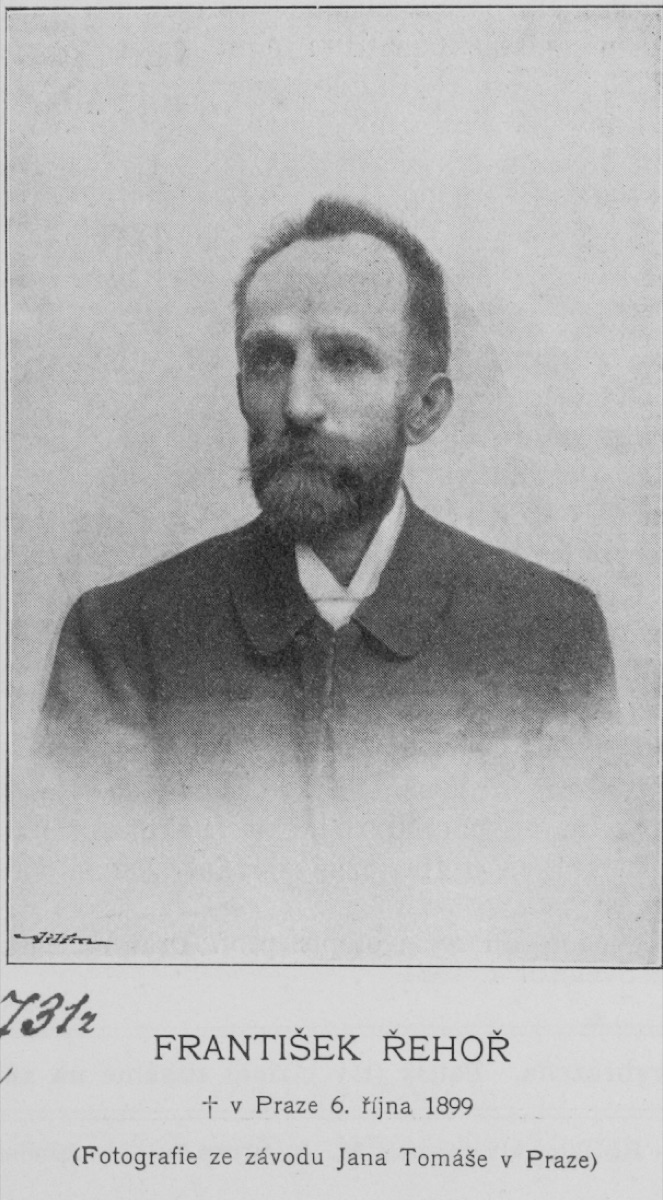
František Řehoř
Франтішек Ржегор · 1857–1899
Essence
František Řehoř (1857–1899) was a Czech ethnographer and collector who spent years documenting everyday life in eastern Galicia. He maintained intellectual contacts with Ukrainian writers, including Ivan Franko, and contributed objects and photographs to Prague museum collections. The National Museum's research database makes this cross-cultural legacy accessible today.
Timeline
- 1857Born in Stěžery, Bohemia. [F01; F08; F10]
- around 1877Moves with his family to Galicia. [F08; F10; F01]
- 1880sJourneys and publications on Eastern Galician culture. [F01; F08]
- 1883Study “Horstvo, vodstvo a podnebí rusínské Halice”. [F01]
- 1884Publication of “Procházka rusínskou vesnicí”. [F01]
- 1891Organises Galicians’ contacts with the Prague exhibition. [F01; F06; F10]
- 1893-11Permanent settlement in Prague, according to the museum biography. [F01]
- 1894-05-29Published letter from Ivan Franko to Řehoř; the transcription and notes were read, not the autograph. [F04]
- 1895Prague ethnographic exhibition and Galician contacts. [F01]
- 1899Dies in Prague. [F01; F08; F10]
- 2019–2020Exhibition “Stará Ukrajina Františka Řehoře”: advertised run 5.10.2019–30.04.2020; early closure reported. [F02; F06]
- 2024–2028Funding-programme period DKRVO 2024–2028/13I.a stated on the collection website; not the full duration of the cataloguing. [F03]
Full research text
The strongest human story in this research wave
František Řehoř (1857–1899) was a Czech researcher and collector of ethnographic material who lived in Galicia for almost fifteen years (with interruptions), studying the local population's way of life, language, traditions and daily routines. He sent collected objects and photographs to the Náprstek family's museum in Prague, wrote in Czech about Ukrainian culture and corresponded with Ukrainian intellectuals, including Ivan Franko. The Czech National Museum now cares for a substantial part of the ethnographic heritage associated with him. [F01, F02, F03]
His work went well beyond “collecting exotic objects”: he studied everyday items as parts of a living culture, describing rituals, songs, rural work, family customs and the ways objects were used. The survival of letters between particular people, alongside museum objects, is especially important for the website's editorial mission. They allow a positive story of friendship without invented feelings or encounters. [F01, F04, F05]
Personal record and context
| Field | Information |
|---|---|
| Ukrainian name, transliterated | Frantishek Rzhehor |
| Czech name | František Řehoř |
| Variants in publications, transliterated where necessary | Frantisek Rehor, F. Rzhehorzh, F. Rzhehor |
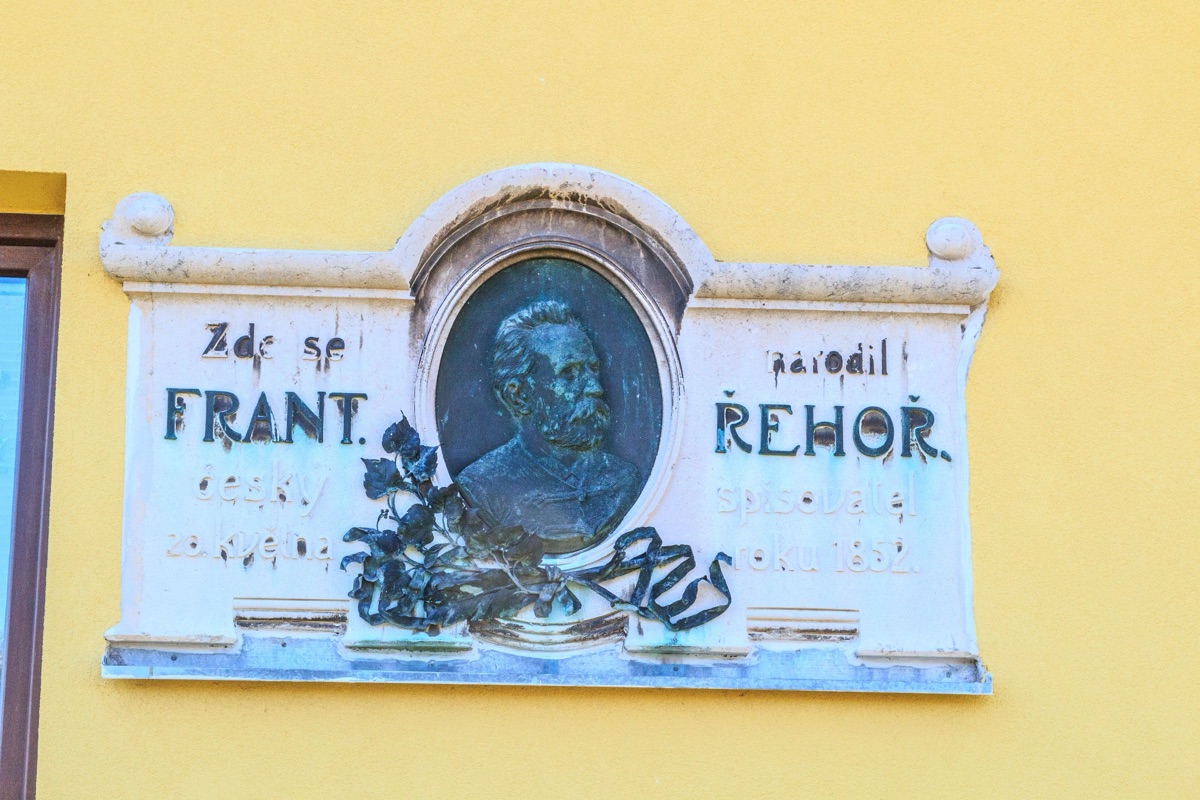
| Birth | 16 December 1857, Stěžery near Hradec Králové |
| Death | 6 October 1899, Prague |
| Specialisms | Ethnography, documentary photography, cultural journalism, folk art |
| Research regions | Eastern Galicia, the Lviv area, Pokuttia, the Kolomyia area and elsewhere |
| ID in the current research queue | N0017; the collection is a separate entity, N0057 |
Řehoř came from Bohemia and lived in the Galician territories of the Habsburg monarchy during the second half of the nineteenth century. The historical term “Ruthenians” should not be replaced without explanation by modern state names; “the Ruthenian (Ukrainian) population of Eastern Galicia” can be used with an indication of the source's language. [F01]
Biography and scholarly contribution
Arrival in Galicia. According to the Czech National Museum's account, Řehoř was born in Stěžery on 16 December 1857 and moved with his parents to Eastern Galicia at approximately twenty years of age. His father rented a farm in the village of Vovkiv near Lviv. Helping his family, the young Czech gradually learned the local language and became familiar with his neighbours' everyday world. He subsequently travelled extensively in the region and made systematic ethnographic notes. [F01]
An interpreter between cultures. Řehoř published in the Czech press on Galicia's geography, folklore, rituals, traditional clothing and folk crafts. His writings include “Horstvo, vodstvo a podnebí rusínské Halice” (1883), “Procházka rusínskou vesnicí” (1884), “Pokutí” (1887) and “Z cest po haličské Rusi” (1894). His aim was a detailed account of the real lives of people little known to Czech readers. The historical Czech titles must be accurately attributed rather than translated as titles of modern Ukrainian books that Řehoř never published. [F01]
From object to museum. He collected embroidered items, textiles, household objects, wooden objects, carvings and ritual items, photographed people and their surroundings, and preserved descriptions of objects' functions. Some material went to the Prague museum associated with Vojta and Josefa Náprstek. The historical collection is now divided among specialist holdings of the Czech National Museum. The database sbirkafrantiskarehore.nm.cz states that, at the current stage of research, more than 2,500 entries relating to the territory of Ukraine are associated with Řehoř's collection; all 2,500 must not be described as exhibits that he personally photographed or carved. [F02, F03]
Ivan Franko — a documented correspondent. The electronic transcription of the letter that we read is dated 29 May 1894 and gives Lviv as the place; it does not give the double date 17 (29). Franko asked for works to be sent for the exhibition and planned a bibliography. An editorial note reports that this bibliography did not appear in the journal Zhyttia i slovo; it points to the Prague autograph and a photocopy, IL, f. 3, no. 1169. We read the published text, not the autograph. This documents a correspondence; the degree of personal closeness requires specific evidence. [F04; F05]
Prague as a place of international encounters. According to the museum's historical account, Řehoř helped organise journeys by Galician Ukrainians to Prague's exhibitions in 1891 and 1895. This is a promising subject for a separate article: friendship between peoples sometimes took the form of opportunities to meet at an exhibition, encounter neighbours' culture and take one's own work to another city, rather than appearing only in official diplomatic documents. Numerical claims about participation require checking against exhibition programmes and organisers' letters. [F01, F06]
The final years. According to the museum biography, Řehoř settled permanently in Prague in November 1893. With the Náprsteks’ assistance he worked at the municipal library, maintained Galician contacts and continued looking after the collections. In 1890 he had returned to Bohemia and spent 1891–1893 again in Galicia [F01]. He died in Prague on 6 October 1899. His scholarly and documentary legacy outlived him and now underpins museum research, electronic catalogues and exhibitions. [F01, F02]
A network of people, organisations and objects
| Object | Relationship | Evidence |
|---|---|---|
| Ivan Franko | Documented correspondence and intellectual collaboration | F04, F05 |
| Vojta Náprstek | Patronage and museum collaboration | F01, F02 |
| Josefa Náprstková | Museum contacts and assistance | F02 |
| Prague's Náprstek Museum | Recipient of ethnographic material | F01, F02 |
| Czech National Museum | Present custodian and researcher of the collection | F02, F03 |
| “Stará Ukrajina Františka Řehoře”, 2019–2020 | Exhibition drawing on his legacy | F02 |
| N0057: Sbírka Františka Řehoře | Separate collection in the catalogue | F03 |
| Lviv, Vovkiv, Pokuttia, Hutsulshchyna | Places of residence, collection and documentation | F01 |
| Prague exhibitions of 1891 and 1895 | Documented participation in cultural exchange | F01, F06 |
Integrating individual object records alongside the person's page is especially valuable: each should have its own inventory number, place of origin, function, image rights and custodial institution. This is the most precise way to turn a general story into a verifiable digital museum.
Creating an interactive collection
The museum project’s home page describes a selective catalogue of folk carving, not a full digitisation of all 2,500 objects connected with Ukraine. The full object records of F07 have not been read at present; therefore we do not present the example from the search index as a verified museum record. Before any specific image is reused, an open object record, the inventory number and the rights holder’s conditions are required. [F03; F07]
A future graph model is: Řehoř → collected/described an object → originates in a village → part of a regional tradition → held in a museum → shown at an exhibition. Visitors could move between a map of ethnographic regions and objects from the same settlement. Publishing images requires separate permission; metadata citations must also follow the museum's terms.
Locations and photography
| Location | Possible story | Geographical precision |
|---|---|---|
| Stěžery, Czechia | Birthplace and commemoration of the researcher | Settlement; the house is unknown |
| Lviv and Vovkiv, Galicia | Family relocation and ethnographic fieldwork | Region confirmed; individual buildings not identified |
| Kolomyia, Pokuttia, Hutsulshchyna | Geography of collections and museum artefacts | Regional identification; individual objects may be located more precisely |
| Prague: Náprstek Museum | History of the transfer of material | Institution confirmed; photography with permission |
| Prague: Ethnographic Museum / Kinský Garden | The 2019–2020 exhibition and present-day preservation | Event confirmed; check current exhibitions |
| Prague's literary archive | Franko's letter to Řehoř | Establish the reading room, collection and reference number |
The museum collection must not turn into a tourist guide to private addresses, and the 2019–2020 exhibition must not be presented as currently open. The museum page explicitly marks it as finished. [F02]
Further work for the historian and photographer
- Obtain digitised copies and archival references for correspondence between Franko, Řehoř, Vojta and Josefa Náprstek; create a dated network of interactions.
- Select an initial 20 objects with the best provenance from the Czech National Museum's digital database; retain their URLs and inventory numbers.
- Agree with the museum on reuse of metadata, object photographs and manuscript scans.
- Where possible, verify the historical address of the Řehoř family's farm in Vovkiv; seek local archives rather than generate coordinates.
- Study the programmes of Prague's 1891 and 1895 exhibitions and lists of Ukrainian participants; create separate event records.
- Prepare a digital exhibition, “From a Galician village to a Prague museum”: the story of one object, one letter and one exhibition.
Further reading about this person
A catalogue confirms the bibliographic record. It does not mean that every dossier claim has been checked against the book’s full text.
-
About this person
Cesta do Haliče. František Řehoř a poznání života východní Haliče ve druhé polovině 19. století
Petr Kaleta
Votobia · 2004
Bibliographic record confirmed · Record checked 2026-11-02
Catalogue or publisher record ↗Text reading not documented
Sources
- F01 Milena Secká, “František Řehoř (1857–1899)”, Národní muzeum, 1999. The full short biographical text was read; museum and archival originals were not consulted. nm.cz
- F02 Národní muzeum, “Stará Ukrajina Františka Řehoře”. The description and the advertised run of 5.10.2019–30.04.2020 were read; the report F06 indicates early closure, and the exact day has not been established. nm.cz
- F03 Národní muzeum, “Sbírka Františka Řehoře”. The home page was read: more than 2,500 collection objects connected with Ukraine; the online catalogue is a selection of wooden items. DKRVO 2024–2028/13I.a is a funding-programme period, not evidence of the duration of the whole project. sbirkafrantiskarehore.nm.cz
- F04 Ivan Franko, letter to František Řehoř, Lviv, 29.05.1894; electronic publication based on the 50-volume collected works, vol. 49 (1986), p. 503. The full transcription and notes were read: the autograph is in Prague, and the edition derives from a photocopy, IL, f. 3, no. 1169. The page does not give the double date 17 (29); the autograph was not read. i-franko.name
- F05 The same article as F01 (Milena Secká); it cites Řehoř’s letter to Franko of 22.01.1894. An indirect quotation was read; the separate original of the letter was not consulted. Not an independent source. nm.cz
- F06 Bohdan, “Z listáře Františka Řehoře (8)”, My a Ukrajina, 21.05.2020. The full author’s account and the quotations from letters about the 1891 exhibition were read. “Čtvrtek” is a day of the week, not the author’s surname. The original letters were not consulted. myaukrajina.cz
- F07 Národní muzeum, object catalogue of the František Řehoř Collection. Direct access: 403; the full object records were not read. A search index does not replace viewing the record or the image. sbirkafrantiskarehore.nm.cz
- F08 Daniela Záveská, Helena Medřická, “Doklady fotografické činnosti Františka Řehoře ve sbírkách Národního muzea”, Acta Musei Nationalis Pragae – Historia 74/1–2 (2020), pp. 23–32; DOI 10.37520/amnph.2020.003. The article page and abstract were read, not the whole PDF. publikace.nm.cz
- F09 Vlastimila Čechová, review of Petr Kaleta, “Cesta do Haliče. František Řehoř a poznání života východní Haliče ve druhé polovině 19. století”, Národopisná revue 2004, no. 4, p. 241 (PDF p. 51). The bibliographic description and selected paragraphs of the review were read: Olomouc, Votobia 2004, 266 pp. Neither the book nor the whole issue was read. revue.nulk.cz
- F10 Czech Wikipedia, 'František Řehoř': birth and death dates, 1877 move to Volkov, 1891 exhibition, friendship with Franko; its date for the move to Prague (1890) conflicts with F01. cs.wikipedia.org
Photos and videos
Verification
Two sources (automatic score)
Automatic evidence score: key facts rest on at least two independent sources. No person has yet read the whole dossier.
- Automatic evidence score: 67 points (threshold 40).
- Independent fact check of every statement against primary sources (3 November 2026).
Evidence coverage
Timeline claims assessed: 12 / 12. Claims with verified contradictions: 1.
The score measures coverage of timeline claims by verified sources, not the probability of historical truth. One independent source gives a claim 0.5 points; two or more give 1 point. A disputed claim receives 0. Unassessed claims remain in the denominator.
evidence-v1 · 2026-11-03
How the score is calculated
Each claim shows its contribution to the score and verified current sources. Multiple references may share an origin; context adds no points.
-
1857
Born in Stěžery, Bohemia.
Assessed Contribution: 1.0 / 1Independent source origins: 2
Report this claim -
around 1877
Moves with his family to Galicia.
Assessed Contribution: 1.0 / 1Independent source origins: 2
Report this claim -
1880s
Journeys and publications on Eastern Galician culture.
Assessed Contribution: 0.5 / 1Independent source origins: 1
Report this claim -
1883
Study “Horstvo, vodstvo a podnebí rusínské Halice”.
Assessed Contribution: 0.5 / 1Independent source origins: 1
- F01 — supports the claim
-
1884
Publication of “Procházka rusínskou vesnicí”.
Assessed Contribution: 0.5 / 1Independent source origins: 1
- F01 — supports the claim
-
1891
Organises Galicians’ contacts with the Prague exhibition.
Assessed Contribution: 1.0 / 1Independent source origins: 3
Report this claim -
1893-11
Permanent settlement in Prague, according to the museum biography.
Sources contradict one another Contribution: 0.0 / 1Independent source origins: 1
Report this claim -
1894-05-29
Published letter from Ivan Franko to Řehoř; the transcription and notes were read, not the autograph.
Assessed Contribution: 0.5 / 1Independent source origins: 1
Report this claim -
1895
Prague ethnographic exhibition and Galician contacts.
Assessed Contribution: 0.5 / 1Independent source origins: 1
- F01 — supports the claim
-
1899
Dies in Prague.
Assessed Contribution: 1.0 / 1Independent source origins: 2
Report this claim -
2019–2020
Exhibition “Stará Ukrajina Františka Řehoře”: advertised run 5.10.2019–30.04.2020; early closure reported.
Assessed Contribution: 1.0 / 1Independent source origins: 2
Report this claim -
2024–2028
Funding-programme period DKRVO 2024–2028/13I.a stated on the collection website; not the full duration of the cataloguing.
Assessed Contribution: 0.5 / 1Independent source origins: 1
- F03 — supports the claim
2026-11-03
How we verify
- DraftResearch draft with sources; independent check still pending.
- Checked automaticallyQuotes mechanically matched to sources; an independent model found no contradictions.
- Two sources (automatic score)Automatic evidence score: key facts rest on at least two independent sources. No person has yet read the whole dossier.
- Confirmed by an editorAn editor confirmed the dossier; the reason is shown on the page. This is not an independent scholarly review.
- Disputed pointsSources disagree; disputed points are marked in the text.
Report an error or add information
Your message goes to the editorial queue. AI pre-sorts it, a human decides.