Person · National revival · Ukrainians in Czechia · R0010
Jurij Darahan
Юрій Дараган · 1894–1926
Essence
Yurii Darahan (1894–1926) was a Ukrainian poet and officer of the Ukrainian People's Republic army. After internment in Poland he joined the literary community of Prague and Poděbrady and published his only lifetime poetry collection, Sahaidak, in Prague in 1925. He died near Prague; his former grave at Olšany no longer survives.
Timeline
- 16.03.1894Birth: reference works give 16 March 1894, Yelysavethrad; Krupach reports an early 1893 variant and himself gives 16/17 March. Vital registers unread. [D01; D04; D10]
- 1914–1917First World War and military service. [D01; D09; D11]
- 1917–1921Ukrainian military service from late 1917; in 1919–1921, Ukrainian People's Republic military educational institutions. [D01; D10]
- 1920–1922Polish internment camps. [D01; D05; D10; D11]
- 1922–1923Work with Kalisz's Veselka; Darahan and Malaniuk participated at different points in 1922–1923. [D01; D04; D05; D10]
- 1922/1923Arrival in Czechoslovakia: 1922 or 1923, discrepancy unresolved. [D01; D04; D05; D09; D10; D11]
- 1923Start of studies at the Prague pedagogical institute. [D07; D10]
- 1924The Kult society was established in Poděbrady; Darahan belonged to it, but his joining year is unestablished. [D01; D05]
- 1925Sahaidak: Prague, Ukrainian Civic Publishing Fund, 1925 — read title page. [D06; D08]
- 17.03.1926Death on 17 March 1926: UINP and Pelenska give Nová Ves pod Pleší; IEU Prague, ULE Pleshov in Slovakia. Reference locations differ. [D01; D03; D04; D09; D11; D12; D13]
- 1926Historical burial at Olšany. [D04; D05; D12]
- mid-1930s?The Kherson library article dates loss of the grave to the mid-1930s; register unread. [D05; D12]
Full research text
For Czech readers: a short life, a major cultural legacy
Yurii Yuriiovych Darahan (1894–1926) was a Ukrainian poet and serviceman in the Ukrainian People's Republic army whose final life chapter was connected with interwar Czechoslovakia. War and Polish internment camps gave way to poetic and student activity in Prague and Poděbrady. His only lifetime collection, Sahaidak, printed in Prague in 1925, influenced a younger generation of writers later grouped under the Prague School name. [D01; D02; D03]
This story allows Prague to be shown as a cultural place of refuge and creative self-assertion. Yet it ends sadly: Darahan died of tuberculosis in a sanatorium near Prague, and his Olšany grave has not survived, according to Ukrainian Institute of National Memory (UINP) materials. A tourist map cannot show a precise present-day burial place or reconstruct a gravestone from imagination. [D04; D05]
From Yelysavethrad to internment camps
Darahan was born into a family connected with the railway. He spent part of his childhood in the Caucasus, studied and experienced several linguistic and cultural environments. According to ESU, he served in the Ukrainian military from late 1917. In 1919–1921 he served in Ukrainian People's Republic military educational institutions and, after the defeat of the independence struggle, entered Polish internment camps. This military biography should be compared with service records, rather than literary memoirs alone. [D01; D02]
Polish camp experience connected him with Kalisz's Veselka and Yevhen Malaniuk. ESU briefly calls them co-founders in 1922; the Kherson library article and Krupach's research date Malaniuk's joining the editorial team to 1923. Their shared journal work in 1922–1923 should therefore not be presented as simultaneous editing by both throughout the whole period. Original Veselka issues have not been read. [D01; D04; D05; D10]
Historiographical context matters: the romantic “poet-soldier” image can obscure the complexity of private life, illness, lack of money and unstable émigré existence. The visitor narrative should retain specific events — service, internment, journal work, study and book publication — without invented scenes or dialogue. [D01; D03]
Prague, Poděbrady and the formation of a literary environment
Sources agree that Darahan reached Czechoslovakia in the early 1920s and entered Ukrainian creative émigré circles. UINP dates his move to 1923; ESU mentions 1922. The Kherson library article and Krupach likewise give 1922, while the Ukrainian Literary Encyclopedia (ULE) republication and Melnyčenko give 1923. Assuming separate initial entry and settlement does not resolve the contradiction without student and police documents. [D01; D04; D05; D09; D10; D11]
He studied at the M. Drahomanov Ukrainian Pedagogical Institute but did not graduate because of severe illness. Krupach dates the start of studies to 1923; the student register has not been read. In Poděbrady he belonged to the Kult society of Ukrainian writers, founded in 1924. This is the society's founding year, rather than an established date of his joining. [D01; D05; D10] Darahan published in Nova Ukraina, Studentskyi visnyk and other Ukrainian émigré journals. It should be clarified whether particular printed testimony concerns Prague itself or the wider Prague–Poděbrady environment. [D02; D04]
His poetics combined historical allusions to the princely and Cossack eras, memories, landscapes, personal experience, symbolist influences and a striving for strong artistic form. Literary scholarship often calls him a precursor of the Prague School, but this is a retrospective classification rather than official participation in an educational institution of that name. [D01; D02; D03]
Sahaidak, 1925 — an object that can be shown
The read title page of Sahaidak gives Yurii Darahan's name, the subtitle “Poems. Book One. 1922–1924”, Prague, the Ukrainian Civic Publishing Fund and 1925. The Yaroslav Mudryi National Library of Ukraine catalogue describes the same copy as a 64-page edition; 2021 is the digital-copy year. The catalogue and scan of this copy constitute one source origin. [D06; D08]
Educational compilation D07 names Veselka as publisher, contradicting the read 1925 title page. The publisher of this copy has been established without assumptions about the error's cause. The title page, verso and selected pages 7, 8, 16, 29, 63–64 were examined, rather than the entire book. Dates beneath selected poems, including Prague 5.XI.1924, Brno—Poděbrady 7.VIII.1924 and Poděbrady 16.IX.1924, do not prove first-publication dates. [D07; D08]
According to the literary encyclopaedia, poems were also published in Veselka, Literaturno-naukovyi visnyk, Studentskyi visnyk and Nova Ukraina. Specific journal issues and pages must be found before creating a digital collected edition: bibliographic records will reveal connections with editors and publishers in Czechoslovakia. [D02]
Final months, death and memory
Reference works agree on death on 17 March 1926 but differ on location. IEU says “Prague”; UINP and Oksana Pelenska a sanatorium in Nová Ves pod Pleší; Melnyčenko Mount Pleš; the ULE republication instead gives “Pleshov” in the East Slovak Region. The Czech state register confirms a sanatorium near Nová Ves pod Pleší but does not mention Darahan. The Czech location is attributed, rather than presented as a verified death record; no sanatorium document has been read. [D03; D04; D09; D11; D12; D13]
He was buried at Prague's Olšany cemeteries. Pelenska and the Kherson library article report a shared grave with sculptor Stepan Koliadynskyi, who died on 22 July of the same year, 1926. The library article dates loss of the plot to the mid-1930s because payments ended; Pelenska does not establish a loss date. Burial books and the lease have not been read. [D04; D05; D12] The public Memory Sites section should show historic_burial_at and grave_status=lost; precise location, section and monument must remain unfilled. A separate contemporary memorial ceremony is possible, but should be distinguished from historical burial. [D04]
Places and visualisation
Prague matters as a centre of study and Sahaidak's publication, Poděbrady as a literary centre, Kalisz as Veselka's publication city, and Nová Ves pod Pleší as UINP's reported death location. The geographical map needs only established historical addresses or surviving buildings. A point at a city centre is not equivalent to person_lived_here. Olšany cemetery can have a general historical memory marker stating “the former burial has been lost”, but a route should not be attached to a nonexistent gravestone. [D04]
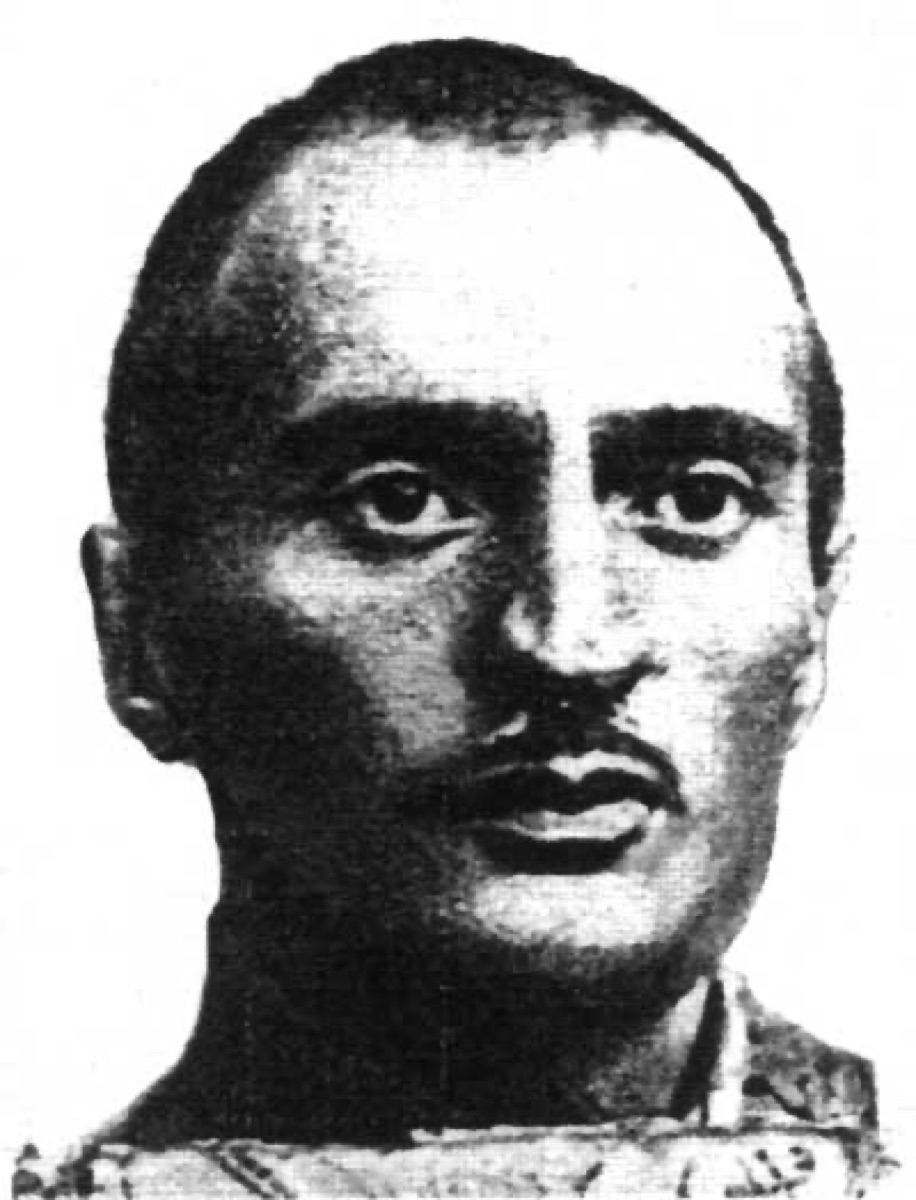
For a digital exhibition, prepare an actual Sahaidak cover scan and imprint page; a library portrait of the poet identifying rights; a Veselka facsimile; correspondence with Malaniuk and Shapoval if found; a migration map and timeline. [D01; D04; D06]
Connections
Mentioned in dossiers
- Sahaidak – Yurii Darahan · Work
Further reading about this person
A catalogue confirms the bibliographic record. It does not mean that every dossier claim has been checked against the book’s full text.
-
Anthology
Поети Празької школи. Срібні сурми
Упорядник Микола Ільницький
Смолоскип · 2009 · ISBN 978-966-2164-02-2
Chapter / pages: {'toc_start_page': 119, 'claim_page_verified': False}
Bibliographic record confirmed · Record checked 2026-11-02
Catalogue or publisher record ↗Text reading not documented
Sources
- D01 M. I. Mushynka. «Дараґан Юрій», ESU, 2007. Complete short web text read: 16 March 1894, move in 1922, service from late 1917, Kult founded in 1924. Primary vital, military and student records unread. esu.com.ua
- D02 I. M. Lysenko, L. R. Svitailo. «Дараган Юрій», Ukrainian Literary Encyclopedia, Kyiv, 1990, vol. 2; the web section covers pp. 5–18, exact article page unestablished. Direct GET 200: complete article read in HTML transcription; relocation 1923, Pleshov in Slovakia. Printed volume unread. izbornyk.org.ua
- D03 Encyclopedia of Ukraine, vol. 1, 1984. Darahan, Yurii: complete short web text read. Gives 1894, death on 17 March 1926 in Prague and Sahaidak 1925; individual author attribution and printed-volume page unestablished. encyclopediaofukraine.com
- D04 UINP. «1894 – народився Юрій Дараган» (Kalisz, Prague, Nová Ves pod Pleší, loss of grave). uinp.gov.ua
- D05 Kherson Regional Library. «Боже... дай мені стати великим поетом: Юрій Дараган» (biographical memorial overview). biblio.lib.kherson.ua
- D06 Yaroslav Mudryi National Library of Ukraine. Culture of Ukraine, object record 13531: Yurii Darahan, «Сагайдак: вірші», book 1, 1922–1924, Prague: Ukrainian Civic Publishing Fund, 1925, 64 pp. Catalogue read; 2021 digital copy is not the first-edition year. Same copy as primary scans D08. elib.nlu.org.ua
- D07 O. V. Holyk, educational compilation on Yu. Darahan at Vseosvita. Biographical extract read: studies in 1923, but Sahaidak's publisher named as Veselka, contradicting copy D08's title page. Not academic or primary evidence. vseosvita.ua
- D08 Yurii Darahan. «Сагайдак: вірші. Книга перша, 1922–1924 р.» Prague: Ukrainian Civic Publishing Fund, 1925. Title-page scan (0005), verso (0006) and selected pp. 7, 8, 16, 29, 63–64 read, rather than the entire book. The title confirms publisher and year; dates beneath poems do not prove first publication. elib.nlu.org.ua
- D09 Igor Melnyčenko. Jurij Darahan a Karel Hynek Mácha: Vyhnanství fyzické a duševní v kontextu jednoho zapomenutého překladu. Máchovské rezonance, edited by Karel Piorecký. Prague: ÚČL AV ČR / Akropolis, 2010, pp. 139–143. Selected pp. 139–140 read; biographical basis not independently established, not a complete reading of the collection. edicee.ucl.cas.cz
- D10 M. Krupach. «І я колись в майові дні в офіру серце ніс...», Dzvin, 2001, no. 8, pp. 138–148 according to the web republication's attribution. Web text read, not original journal. Describes the 1893/1894 contradiction and himself gives 16/17 March; primary obituaries unread. md-eksperiment.org
- D11 I. M. Lysenko, L. R. Svitailo. «Дараган Юрій», Ukrainian Literary Encyclopedia: complete Slovnyk.me web republication previously read. Same text as D02; current direct GET returned 403. Printed volume unread; republication is not a separate independent origin. slovnyk.me
- D12 Oksana Pelenska. «125 років Юрію Дарагану, воїну і поету», Radio Svoboda, 17 March 2019. Web article read: relocation 1923, Nová Ves pod Pleší, shared grave with Stepan Koliadynskyi (died 22 July 1926); does not establish grave-loss date. Independence from related biographical surveys unproven. radiosvoboda.org
- D13 National Heritage Institute, State Archaeological Register: Sanatorium Nová Ves pod Pleší, ID 8798, Milan Jančo, record 2005, updated 2023. Locality and building description read. Geographical context without Darahan; not confirmation of his death location. isad.npu.cz
Photos and videos
Verification
Draft
Research draft with sources; independent check still pending.
Evidence coverage
Timeline claims assessed: 12 / 12. Claims with verified contradictions: 3.
The score measures coverage of timeline claims by verified sources, not the probability of historical truth. One independent source gives a claim 0.5 points; two or more give 1 point. A disputed claim receives 0. Unassessed claims remain in the denominator.
evidence-v1 · 2026-11-02
How the score is calculated
Each claim shows its contribution to the score and verified current sources. Multiple references may share an origin; context adds no points.
-
16.03.1894
Birth: reference works give 16 March 1894, Yelysavethrad; Krupach reports an early 1893 variant and himself gives 16/17 March. Vital registers unread.
Sources contradict one another Contribution: 0.0 / 1Independent source origins: 1
Report this claim -
1914–1917
First World War and military service.
Assessed Contribution: 0.5 / 1Independent source origins: 1
Report this claim -
1917–1921
Ukrainian military service from late 1917; in 1919–1921, Ukrainian People's Republic military educational institutions.
Assessed Contribution: 0.5 / 1Independent source origins: 1
Report this claim -
1920–1922
Polish internment camps.
Assessed Contribution: 0.5 / 1Independent source origins: 1
Report this claim -
1922–1923
Work with Kalisz's Veselka; Darahan and Malaniuk participated at different points in 1922–1923.
Assessed Contribution: 0.5 / 1Independent source origins: 1
Report this claim -
1922/1923
Arrival in Czechoslovakia: 1922 or 1923, discrepancy unresolved.
Sources contradict one another Contribution: 0.0 / 1Independent source origins: 1
- D01 — supports the claim
- D05 — supports the claim
- D10 — supports the claim
- D04 — contradicts the claim
- D02 — contradicts the claim
- D09 — contradicts the claim
-
1923
Start of studies at the Prague pedagogical institute.
Assessed Contribution: 0.5 / 1Independent source origins: 1
Report this claim -
1924
The Kult society was established in Poděbrady; Darahan belonged to it, but his joining year is unestablished.
Assessed Contribution: 0.5 / 1Independent source origins: 1
Report this claim -
1925
Sahaidak: Prague, Ukrainian Civic Publishing Fund, 1925 — read title page.
Assessed Contribution: 0.5 / 1Independent source origins: 1
Report this claim -
17.03.1926
Death on 17 March 1926: UINP and Pelenska give Nová Ves pod Pleší; IEU Prague, ULE Pleshov in Slovakia. Reference locations differ.
Sources contradict one another Contribution: 0.0 / 1Independent source origins: 1
- D04 — supports the claim
- D12 — supports the claim
- D09 — supports the claim
- D02 — contradicts the claim
- D03 — context only
- D13 — context only
-
1926
Historical burial at Olšany.
Assessed Contribution: 0.5 / 1Independent source origins: 1
Report this claim -
mid-1930s?
The Kherson library article dates loss of the grave to the mid-1930s; register unread.
Assessed Contribution: 0.5 / 1Independent source origins: 1
Report this claim
How we verify
- DraftResearch draft with sources; independent check still pending.
- Checked automaticallyQuotes mechanically matched to sources; an independent model found no contradictions.
- Two sources (automatic score)Automatic evidence score: key facts rest on at least two independent sources. No person has yet read the whole dossier.
- Confirmed by an editorAn editor confirmed the dossier; the reason is shown on the page. This is not an independent scholarly review.
- Disputed pointsSources disagree; disputed points are marked in the text.
Report an error or add information
Your message goes to the editorial queue. AI pre-sorts it, a human decides.