Person · National revival · Czechs in Ukraine · R0026
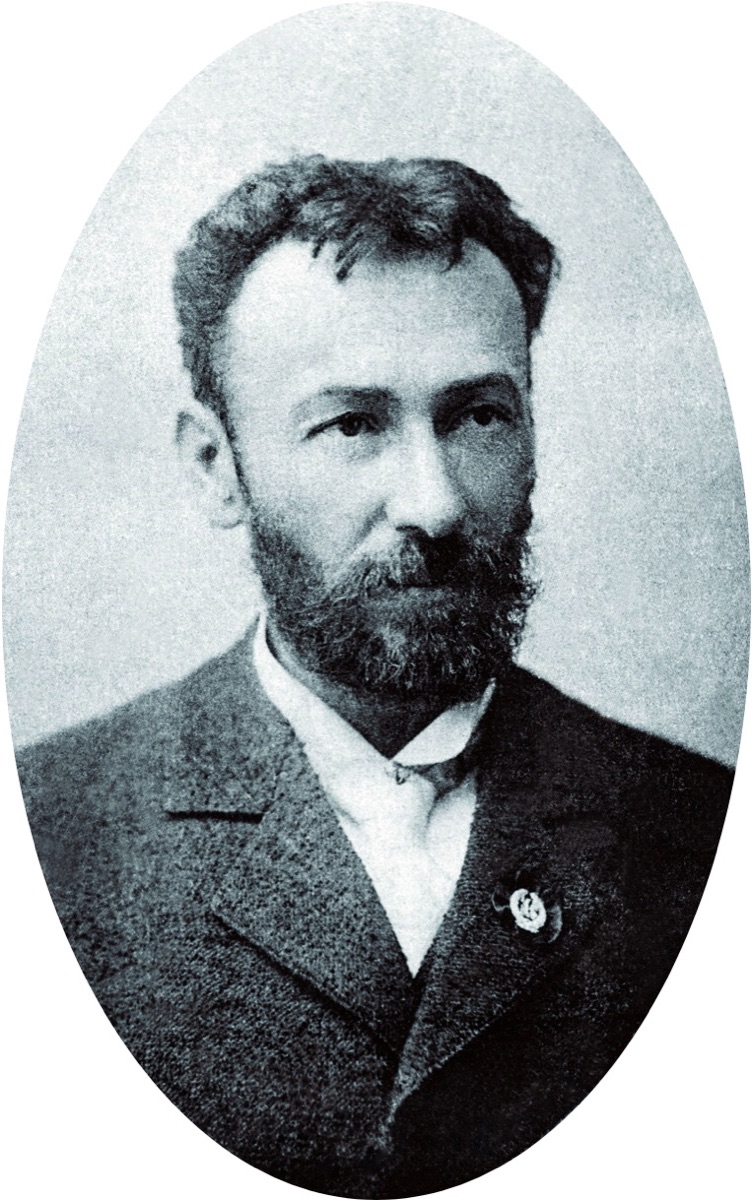
Čeněk Chvojka
Ченек Хвойка · 1850–1914
Essence
Born in Bohemia, Čeněk Chvojka (1850–1914), also known as Vikentiy Khvoyka, moved to Kyiv in 1876. He later became a pioneering archaeologist in the Dnipro region, contributing to the study of prehistoric sites and the foundation of Kyiv's archaeological museum collections. His legacy is a remarkable Czech–Ukrainian connection in the history of science.
Timeline
- 1850Born in Semín in 1850; the exact day differs between sources: 8 February (Ukrainian Institute of National Memory), 20 February (Rzhyshchiv museum), 21 February (Wikipedia, Wikidata). [C10; C01; C11; C12; C13]
- 1876Moves to Kyiv. [C02; C01; C11]
- 1885Agronomic publication “Crabgrass Millet”. [C02]
- 1891Work on hop cultivation and care. [C02]
- 1893Discovery of the Kyrylivska Palaeolithic site. [C01; C02; C10; C11]
- 1893–1897Early finds and the emergence of Trypillia research. [C02; C07; C11]
- 1896–1898Fieldwork in villages of the Kyiv region. [C11; C07]
- 1897Membership of the Kyiv Society of Antiquities and Art. [C02; C10]
- 1899Archaeological exhibition and establishment of the museum department. [C03; C08; C10]
- 1901Publications on the Stone Age and burial grounds of the Dnipro region. [C01; C10]
- 1913Comprehensive monograph on the ancient inhabitants of the Middle Dnipro region. [C02; C10; C11]
- 1914Death in Kyiv and burial in Baikove Cemetery. [C01; C10; C11; C12; C13]
Full research text
Why this story matters
Čeněk Chvojka was Czech by origin and is known in Ukrainian historiography as Vikentii Viacheslavovych Khvoika (1850–1914). Born in Semín in the Czech lands, he lived in Prague and worked in Kyiv from 1876. Initially a teacher and agronomist, he later became a pioneer of archaeological research in the Middle Dnipro region. His finds provided material for studying the Palaeolithic Kyrylivska site and archaeological complexes known as the Trypillia, Zarubyntsi and Cherniakhiv cultures. He helped establish the archaeological department of Kyiv's Museum of Antiquities and Art. [C01, C02, C03]
This exemplifies “Czechs in Ukraine”: decades of life and work with Ukrainian scholars, patrons and museums, extending beyond a short visit. His biography shows how one Czech researcher's work became important to Ukrainian archaeology and museum traditions. However, he did not “discover an entire culture single-handedly” or create the legacy through his efforts alone: local researchers, excavation participants, landowners, colleagues and patrons worked alongside him. [C02, C03, C05]
From Prague to Kyiv: a researcher's story
Early career. After commercial schooling, Chvojka lived in Prague for a time. In 1876 he moved to Kyiv and taught German and drawing. He took a practical interest in crop cultivation, growing hops and crabgrass millet. He published agronomic studies and received exhibition awards. This phase matters: his archaeological career followed a long period of living and working in a Ukrainian city. [C01, C02]
Turning to archaeology. In the early 1890s Chvojka shifted his main focus to archaeological research. He studied historical antiquities, collaborated with Volodymyr Antonovych and Fedir Vovk, and enlisted patrons, among whom the sources name the Khanenkos and the Tereshchenkos; the personal names are not identical across the accounts. This is a typical case for a historical atlas of several different kinds of relationship: scholarly contacts, research funding, archaeological collaboration and museum work. The existence of a contact does not establish close personal friendship. [C01, C02]
The Kyrylivska site. In 1893 he discovered a Palaeolithic site on Kyiv's Kyrylivska heights. Excavations produced extensive evidence of an ancient settlement, including faunal remains and artefacts. Today's Centre for the Conservation of Archaeological Objects associates one historical location with the present 59 Kyrylivska Street. This is a point for archival and field verification, rather than an automatic route to a “fully preserved site”. [C02, C06]
Trypillia culture: a sequence of different events. The V. I. Vernadskyi National Library of Ukraine dates the early finds to 1893, while the municipal Centre describes excavations on the Kyiv plateau in 1894, at the Svitoslavskyi estate in 1895 and a broader phase of work in 1896–1898. The Rzhyshchiv museum uses 1896 for the generalised discovery. The abstract of a specialist article by Mykhailo Videiko dates the first excavation of the settlement near Trypillia itself to autumn 1897. The abstract and captions were read, not the whole PDF or the field diary. These are different events, so we do not turn them into one forced date or an artificial contradiction. [C02; C05; C06; C07]
The emergence of a museum tradition. In 1899 an archaeological exhibition opened in Kyiv, becoming one foundation of the municipal Museum of Antiquities and Art, from which the National Museum of the History of Ukraine traces its history. Chvojka headed the archaeological department. Museums emphasise both his finds and their presentation: his material was exhibited alongside other collectors' holdings. A future digital exhibition can explore “how archaeological discoveries became the city's public history”. [C03, C08]
Scholarly legacy and burial. Chvojka published studies of Dnipro-region antiquities and worked until his death in 1914. He is buried in Kyiv's Baikove Cemetery. The project can present both his discoveries and developments in modern archaeology that reassess his dating and interpretations. [C01, C02, C04]
People, institutions and actual relationships
| Object | Role / interaction | Evidence |
|---|---|---|
| Volodymyr Antonovych | intellectual contact and influence on archaeological research | C01, C02 |
| Fedir Vovk | scholarly communication | C01, C02 |
| Khanenko family | patronage and collecting support; personal names to be checked against the specific account | C02; C03 |
| Tereshchenko family | financial support for research | C02 |
| Kyiv Society of Antiquities and Art | membership, museum exhibitions | C02 |
| National Museum of the History of Ukraine (historical predecessor institution) | work in the archaeological department | C03, C08 |
| Kyiv and surrounding settlements | long-term places of work and residence | C02, C05 |
| Semín, Bohemia | birthplace | C01 |
The system needs worked_at, investigated_site, supported_by, collaborated_with and born_at relationships. A scholarly network must not become “personal friends” where a source establishes only acquaintance, funding or collegiality.
Historical locations for future routes
| Place | Subject | Geographical status |
|---|---|---|
| Semín (Czechia) | beginning of his life | settlement confirmed; house address unknown |
| Prague | period of study / life before 1876 | specific buildings unknown |
| Kyiv, 59 Kyrylivska Street | area of the Kyrylivska site | C06 supplies the modern address; the boundaries of the historical site need verification |
| Kyiv, 6 M. Hrushevskoho Street | historical building of the 1899 exhibition; now the National Art Museum of Ukraine | not to be confused with the main building of the National Museum of the History of Ukraine at 2 Volodymyrska Street [C03; C08] |
| Trypillia — Zhukivtsi — Staiky — Rzhyshchiv | archaeological research and the nature of the discovery | coordinates of individual excavation sites are undetermined |
| Baikove Cemetery, Kyiv | commemoration of the archaeologist | cemetery confirmed; plot number not verified |
Without Chvojka's diary, the historical excavation and today's museum must not be connected by a line presented as his actual journey. The thematic atlas links them through a historical relationship, rather than automatically making a walking tour.
Checking popular myths
The date of “discovering Trypillia”. Scholarly and popular sources use 1893, 1895, 1896 and 1897, often referring to different events. Separate events should have first_related_find, excavation_at_named_site, scientific_presentation and publication fields. A biography must not give one unconditional date. [C02, C05, C06, C07]
“A Czech discovered Ukraine's history.” This is an attractive but historically inaccurate headline: many scholars researched Ukrainian territories before and after Chvojka, and archaeological cultures were described collectively. A better formulation is “a Czech researcher who greatly expanded knowledge of Ukraine's ancient past”. [C02, C08]
Outdated interpretations of ethnic continuity. Chvojka advocated autochthonist concepts that modern archaeology cannot automatically accept without new evidence. Trypillia culture must not support direct assertions that its population was “identical” to modern Ukrainians. [C01, C04]
Dates of birth and death. The sources name different days: 8 February [C01; C09], 20 February [C05] and 21 February (the Ukrainian and Czech Wikipedias, and Wikidata citing the Great Russian Encyclopedia) [C11; C12; C13]. In the National Library of Ukraine 21 February is only the date of a calendar event, not the day of birth [C02]. The year 1850 and the birthplace, Semín near Přelouč, are confirmed by the Encyclopedia of Ukraine [C10]. The pair 2 November (20 October) 1914 does not in itself imply a contradiction. Pending archival verification we keep cautious years of life. [C01; C02; C05; C09]
Further research queue
- Locate Chvojka's birth record in Semín and confirm the calendar date; add the historical name form appearing in the document.
- Inspect Mykhailo Videiko's publications and fieldwork diaries from 1893–1897; reconstruct individual days only from primary sources.
- Find early museum catalogues, the Museum of Antiquities and Art's archive and documents appointing Chvojka as curator.
- Check the Kyrylivska site's heritage status and exact excavation boundaries with the heritage authority.
- Establish the grave location and conditions for photographing the headstone in Baikove Cemetery.
- Identify rights holders for archival photographs of Chvojka and his archaeological plates; prepare a joint Kyiv–Semín digital exhibition.
Further reading about this person
A catalogue confirms the bibliographic record. It does not mean that every dossier claim has been checked against the book’s full text.
-
About this person
Вікентій (Чеслав) Хвойка: сторінки наукової біографії
Вікторія Колесникова
Корвін Пресс · 2007
Bibliographic record confirmed · Record checked 2026-11-02
Catalogue or publisher record ↗Text reading not documented
Sources
- C01 Ukrainian Institute of National Memory, “1850 — Vikentii Khvoika Was Born”. The full main text was read: 8 February 1850, Semín; 1876 Kyiv; 1893 Kyrylivska; works of 1901; death on 2 November 1914, Baikove Cemetery. A secondary calendar biography, not an archival record. uinp.gov.ua
- C02 V. I. Vernadskyi National Library of Ukraine, “Vikentii Khvoika Was Born…”, 2020. The full biographical text was read, prepared directly from the Encyclopedia of the History of Ukraine. “21-02-2020” is the date of a calendar event; the biography gives only the year 1850, not the exact day of birth. nbuv.gov.ua
- C03 National Museum of the History of Ukraine, “Museum History”. The relevant sections were read: the 1899 exhibition in the building now at 6 Hrushevskoho Street; Khvoika headed the first archaeological department; from 1944 the historical museum at 2 Volodymyrska Street. The current official page replaced an unusable old index. nmiu.org
- C04 V. I. Vernadskyi National Library of Ukraine, catalogue pointer to the collection “Research into Trypillia Civilisation in the Scholarly Legacy of Archaeologist Vikentii Khvoika”, 2006, part 2 “Materials and Research”. Direct access 403 / timeout; the full catalogue description and the book were not read, and search metadata does not replace the text. irbis-nbuv.gov.ua
- C05 Rzhyshchiv Archaeological and Local History Museum, “V. V. Khvoika’s Discovery of Trypillia Culture”, 01.11.2025. The full main text was read: a broadly conceived “discovery” in 1896, research of 1896–1898, death on 2 November 1914; birthday of 20 February in the memorial section. A popular museum account, not a parish-register record. muzeum-r.fitshi.com
- C06 Municipal institution “Centre for the Conservation of Archaeological Objects” of the KMDA, “Khvoika – Trypillia – Kyrylivska”, 25.04.2024. The full main text was read: 1893 Kyrylivska, excavation of the plateau in 1894, the Svitoslavskyi estate in 1895; phases of 1893–1895 and 1896–1898. Modern addresses are not a full reconstruction of historical boundaries. archkyiv.org.ua
- C07 Mykhailo Videiko, “Investigations of Trypillia site”, Tyragetia, new series, vol. X [XXV], no. 1, Chișinău 2016. The full abstract and the illustration captions on the article page were read: the first investigation of a particular settlement in autumn 1897, archival basis. The PDF of the article and the archival materials were not read. nationalmuseum.md
- C08 National Museum of the History of Ukraine, “The ‘Origins’ Project…”, 11.10.2024. The full main text was read: exhibition of 5 (17) August 1899, collections of Khvoika and other collectors; the current project is at the National Art Museum of Ukraine at 6 Hrushevskoho Street, not in the current main building of the National Museum of the History of Ukraine. nmiu.org
- C09 City Specialised Youth Library, “Khvoika Vikentii. From Kyiv Artefacts to Trypillia Culture”. The biographical account and a selected bibliographic record were read: Viktoriia Kolesnykova, “Vikentii (Cheslav) Khvoika: Pages of a Scholarly Biography”, Kyiv: Korvin Press, 2007, 191 pp. 8 February 1850 and 2 November (20 October) 1914 are also given. Neither the whole bibliography nor the book was read. msmb.org.ua
- C10 Encyclopedia of Ukraine (CIUS), entry 'Khvoika, Vikentii': born 1850 in Semin near Přelouč, work at the Kyrylivska site 1893-1903, membership of the Kyiv Society of Antiquities and Art, works of 1901 and 1913, died 2 November 1914 in Kyiv. encyclopediaofukraine.com
- C11 Ukrainian Wikipedia, 'Khvoika Vikentii': born 21 February 1850 in Semín, Kyiv from 1876, Kyrylivska site 1893, Trypillia sites from 1896, museum 1899, died 20 October (2 November) 1914, Baikove Cemetery; the commemoration section also mentions 8 February. uk.wikipedia.org
- C12 Czech Wikipedia, 'Čeněk Chvojka': born 21 February 1850 in Semín (house no. 46), parents Václav and Anna Chvojka, schooling in Chrudim, died 2 November (20 October) 1914 in Kyiv, Baikove Cemetery. cs.wikipedia.org
- C13 Wikidata, Q1973287: date of birth 21 February 1850 (citing the Great Russian Encyclopedia), date of death 20 October 1914 (Julian), place of burial Baikove Cemetery. wikidata.org
Photos and videos
Verification
Two sources (automatic score)
Automatic evidence score: key facts rest on at least two independent sources. No person has yet read the whole dossier.
- Automatic evidence score: 92 points (threshold 40).
- Independent fact check of every statement against primary sources (3 November 2026).
Evidence coverage
Timeline claims assessed: 12 / 12. Claims with verified contradictions: 0.
The score measures coverage of timeline claims by verified sources, not the probability of historical truth. One independent source gives a claim 0.5 points; two or more give 1 point. A disputed claim receives 0. Unassessed claims remain in the denominator.
evidence-v1 · 2026-11-03
How the score is calculated
Each claim shows its contribution to the score and verified current sources. Multiple references may share an origin; context adds no points.
-
1850
Born in Semín in 1850; the exact day differs between sources: 8 February (Ukrainian Institute of National Memory), 20 February (Rzhyshchiv museum), 21 February (Wikipedia, Wikidata).
Assessed Contribution: 1.0 / 1Independent source origins: 3
- C10 — supports the claim
- C01 — supports the claim
- C11 — supports the claim
- C12 — supports the claim
- C13 — supports the claim
-
1876
Moves to Kyiv.
Assessed Contribution: 1.0 / 1Independent source origins: 3
Report this claim -
1885
Agronomic publication “Crabgrass Millet”.
Assessed Contribution: 0.5 / 1Independent source origins: 1
- C02 — supports the claim
-
1891
Work on hop cultivation and care.
Assessed Contribution: 0.5 / 1Independent source origins: 1
- C02 — supports the claim
-
1893
Discovery of the Kyrylivska Palaeolithic site.
Assessed Contribution: 1.0 / 1Independent source origins: 4
Report this claim -
1893–1897
Early finds and the emergence of Trypillia research.
Assessed Contribution: 1.0 / 1Independent source origins: 3
Report this claim -
1896–1898
Fieldwork in villages of the Kyiv region.
Assessed Contribution: 1.0 / 1Independent source origins: 2
Report this claim -
1897
Membership of the Kyiv Society of Antiquities and Art.
Assessed Contribution: 1.0 / 1Independent source origins: 2
Report this claim -
1899
Archaeological exhibition and establishment of the museum department.
Assessed Contribution: 1.0 / 1Independent source origins: 2
Report this claim -
1901
Publications on the Stone Age and burial grounds of the Dnipro region.
Assessed Contribution: 1.0 / 1Independent source origins: 2
Report this claim -
1913
Comprehensive monograph on the ancient inhabitants of the Middle Dnipro region.
Assessed Contribution: 1.0 / 1Independent source origins: 3
Report this claim -
1914
Death in Kyiv and burial in Baikove Cemetery.
Assessed Contribution: 1.0 / 1Independent source origins: 3
- C01 — supports the claim
- C10 — supports the claim
- C11 — supports the claim
- C12 — supports the claim
- C13 — supports the claim
2026-11-03
How we verify
- DraftResearch draft with sources; independent check still pending.
- Checked automaticallyQuotes mechanically matched to sources; an independent model found no contradictions.
- Two sources (automatic score)Automatic evidence score: key facts rest on at least two independent sources. No person has yet read the whole dossier.
- Confirmed by an editorAn editor confirmed the dossier; the reason is shown on the page. This is not an independent scholarly review.
- Disputed pointsSources disagree; disputed points are marked in the text.
Report an error or add information
Your message goes to the editorial queue. AI pre-sorts it, a human decides.