Person · Interwar Prague · Czechs in Ukraine · N0027
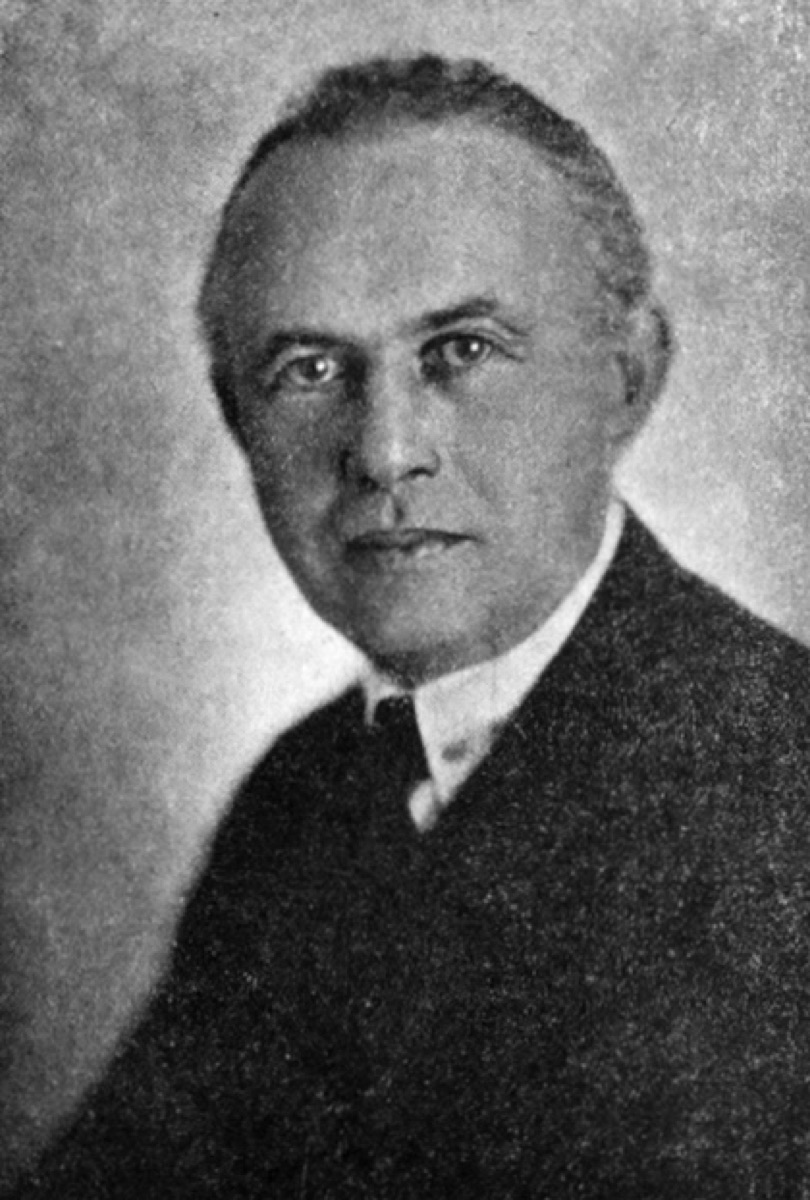
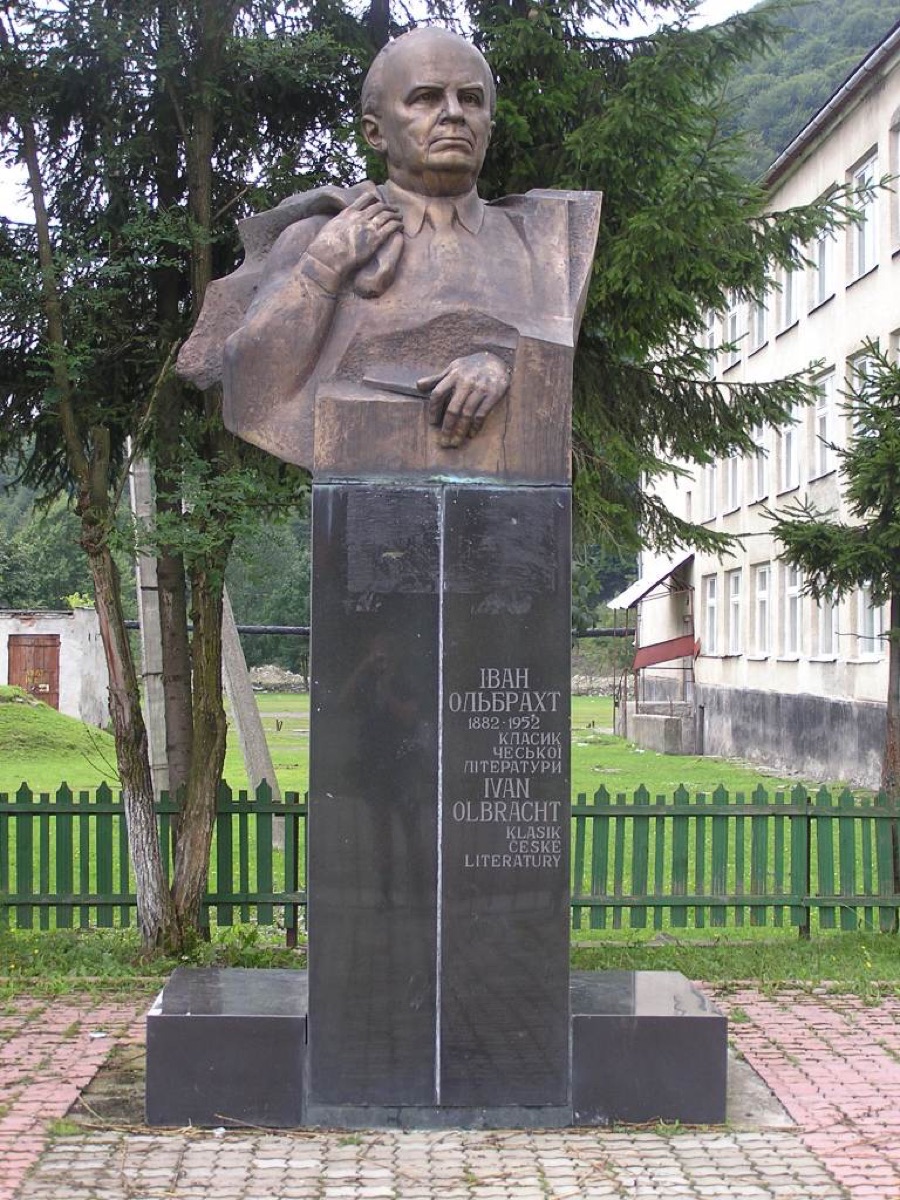
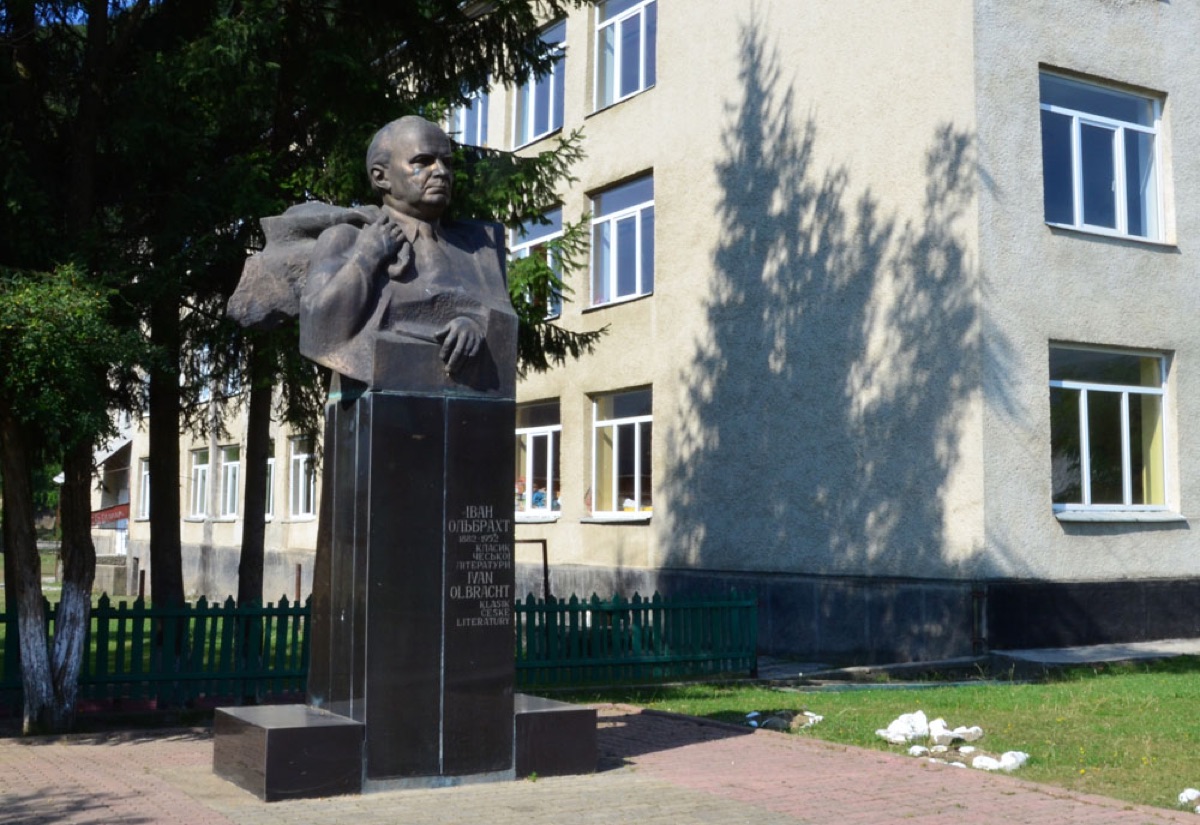
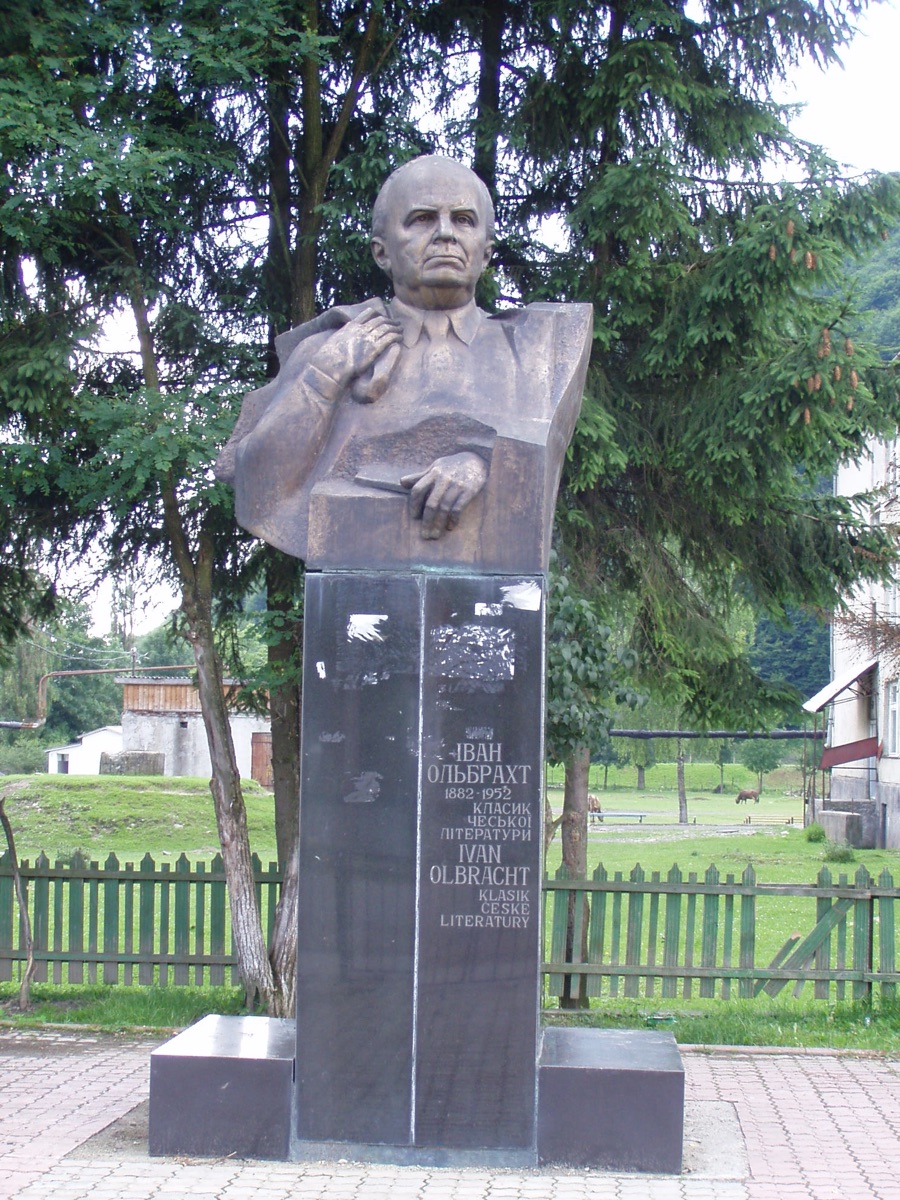
Ivan Olbracht (Kamil Zeman)
Іван Ольбрахт (Каміль Земан) · 1882–1952
Essence
The Czech writer Ivan Olbracht often stayed in Subcarpathian Rus in 1931–1936, settled in Koločava and wrote the reportage Země bez jména (1932), the novel Nikola Šuhaj loupežník (1933) and other works about the region. According to Czech Wikipedia he concludes in the reportage that the local population forms a Ukrainian nation; this conclusion and the very naming of the population are disputed.
Timeline
- 6.1.1882Born in Semily (birth name Kamil Albrecht Zeman). [OLB01]
- 1921Joined the Communist Party of Czechoslovakia (expelled on 26.3.1929 after signing the Manifesto of the Seven). [OLB01]
- 1931–1936According to Czech Wikipedia he often stayed in Subcarpathian Rus; he settled in the village of Koločava, where he gathered material. [OLB01]
- 1932The reportage Země bez jména on Subcarpathian Rus was published. [OLB01; OLB02]
- 1933The novel Nikola Šuhaj loupežník was published; according to Czech Wikipedia Olbracht received the State Prize for Literature for it. [OLB01; OLB02]
- 1935The book Hory a staletí appeared; according to Czech Wikipedia it builds on the reportage Země bez jména. [OLB01; OLB02]
- 1937The story collection Golet v údolí with Jewish themes appeared (called a novella in Beníšková's thesis). [OLB01; OLB02]
- 30.12.1952Died in Prague. [OLB01]
Full research text
Significance
Ivan Olbracht (born Kamil Zeman, 1882–1952) was a Czech writer and journalist known for works about Subcarpathian Rus, today's Zakarpattia in Ukraine. According to Czech Wikipedia he often stayed in the region in 1931–1936, settled in the village of Koločava and devoted the 1930s to its subject, a period the article calls the peak of his literary output. [OLB01] A master's thesis recorded in the Charles University repository deals precisely with Olbracht's relationship to Subcarpathian Rus. [OLB02]
Life
Olbracht was born on 6 January 1882 in Semily and died on 30 December 1952 in Prague. [OLB01] He belonged to the Marxist left, joined the Communist Party of Czechoslovakia in 1921 and worked on the editorial staff of Rudé právo; in 1929 he signed the Manifesto of the Seven and was expelled from the party on 26 March of that year. [OLB01]
Subcarpathian Rus in his work
According to Czech Wikipedia, Olbracht founded the Committee for the Rescue of the Working People of Subcarpathian Rus, which F. X. Šalda and V. Nezval, among others, joined, and founded a school there; the article gives no founding dates. [OLB01] His works include the reportage Země bez jména (1932), which became the basis of the book Hory a staletí (1935), the novel Nikola Šuhaj loupežník (1933; for which, according to the article, he received the State Prize for Literature in 1933) and the collection Golet v údolí (1937) with Jewish themes. [OLB01] According to the thesis abstract, the social and political conditions of the backward region led him to a series of reportages, which became the factual and epic basis of the novel and the novella; the author analyses a layered narrative with factual and legendary levels. [OLB02]
Ukrainian connection
The Ukrainian dimension is the place: Koločava and Subcarpathian Rus, which belonged to interwar Czechoslovakia and today lie in Ukraine. Czech Wikipedia summarises the end of Země bez jména thus: Olbracht looks for the right name for the population and for the language closest to theirs, and concludes that they are a Ukrainian nation; he also urges the population to fight for their nationality, culture and language. [OLB01] The article gives no separate source for this summary, so it is a secondary paraphrase, not Olbracht's own words. [OLB01]
Disagreements in the sources
Naming of the population: the paraphrase in Czech Wikipedia speaks of a "Ukrainian nation", whereas the thesis record in the repository does not use the word "Ukrainians"; its Czech keywords are "Rusíni" (in English "Ruthenians"). The statement about Olbracht's Ukrainian national conclusion is therefore given in this dossier as a paraphrase from Czech Wikipedia, not as confirmed by textual analysis. The history of the self-designation and identity of the region's population is a separate disputed topic that this dossier does not resolve. [OLB01; OLB02]
Chronology of his stay: Czech Wikipedia gives 1931–1936 in general terms and no exact dates for his life in Koločava; the founding dates of the committee and school are missing. The genre of Golet v údolí: the article calls it a story collection, the thesis a novella. The full texts of the works and the thesis itself were not checked for this dossier. [OLB01; OLB02]
Further reading about this person
A book about this person has not yet been confirmed. Research in library catalogues continues.
Sources
- OLB01 Czech Wikipedia, article "Ivan Olbracht": life, political activity, works with years, the section on Subcarpathian Rus; it cites Lexikon české literatury (2000), Dějiny české literatury IV (1995) and others. The summary of Země bez jména is given without a separate reference. cs.wikipedia.org
- OLB02 Charles University digital repository, record of D. Beníšková's master's thesis "Obraz Podkarpatské Rusi v díle Ivana Olbrachta" (Faculty of Arts, 2011): abstract and keywords; the full text of the thesis was not checked. dspace.cuni.cz
Photos and videos
Verification
Draft
Research draft with sources; independent check still pending.
Evidence coverage
Timeline claims assessed: 0 / 8. Claims with verified contradictions: 0.
The score measures coverage of timeline claims by verified sources, not the probability of historical truth. One independent source gives a claim 0.5 points; two or more give 1 point. A disputed claim receives 0. Unassessed claims remain in the denominator.
evidence-v1
How the score is calculated
Each claim shows its contribution to the score and verified current sources. Multiple references may share an origin; context adds no points.
-
6.1.1882
Born in Semily (birth name Kamil Albrecht Zeman).
Not yet assessed Contribution: 0.0 / 1Independent source origins: 0
Verified current support has not been established. This does not mean the claim is false.
Report this claim -
1921
Joined the Communist Party of Czechoslovakia (expelled on 26.3.1929 after signing the Manifesto of the Seven).
Not yet assessed Contribution: 0.0 / 1Independent source origins: 0
Verified current support has not been established. This does not mean the claim is false.
Report this claim -
1931–1936
According to Czech Wikipedia he often stayed in Subcarpathian Rus; he settled in the village of Koločava, where he gathered material.
Not yet assessed Contribution: 0.0 / 1Independent source origins: 0
Verified current support has not been established. This does not mean the claim is false.
Report this claim -
1932
The reportage Země bez jména on Subcarpathian Rus was published.
Not yet assessed Contribution: 0.0 / 1Independent source origins: 0
Verified current support has not been established. This does not mean the claim is false.
Report this claim -
1933
The novel Nikola Šuhaj loupežník was published; according to Czech Wikipedia Olbracht received the State Prize for Literature for it.
Not yet assessed Contribution: 0.0 / 1Independent source origins: 0
Verified current support has not been established. This does not mean the claim is false.
Report this claim -
1935
The book Hory a staletí appeared; according to Czech Wikipedia it builds on the reportage Země bez jména.
Not yet assessed Contribution: 0.0 / 1Independent source origins: 0
Verified current support has not been established. This does not mean the claim is false.
Report this claim -
1937
The story collection Golet v údolí with Jewish themes appeared (called a novella in Beníšková's thesis).
Not yet assessed Contribution: 0.0 / 1Independent source origins: 0
Verified current support has not been established. This does not mean the claim is false.
Report this claim -
30.12.1952
Died in Prague.
Not yet assessed Contribution: 0.0 / 1Independent source origins: 0
Verified current support has not been established. This does not mean the claim is false.
Report this claim
How we verify
- DraftResearch draft with sources; independent check still pending.
- Checked automaticallyQuotes mechanically matched to sources; an independent model found no contradictions.
- Two sources (automatic score)Automatic evidence score: key facts rest on at least two independent sources. No person has yet read the whole dossier.
- Confirmed by an editorAn editor confirmed the dossier; the reason is shown on the page. This is not an independent scholarly review.
- Disputed pointsSources disagree; disputed points are marked in the text.
Report an error or add information
Your message goes to the editorial queue. AI pre-sorts it, a human decides.