Person · National revival · Czechs in Ukraine · N0016
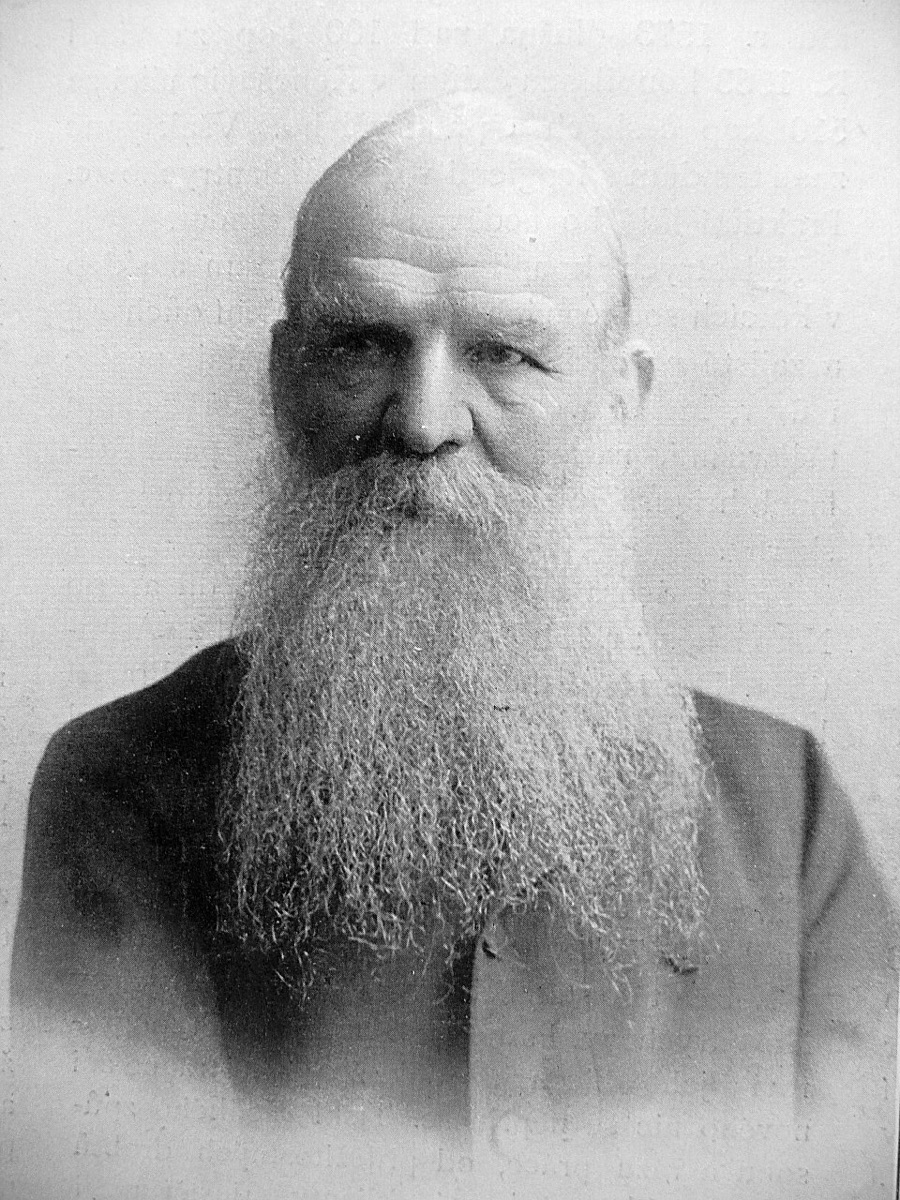
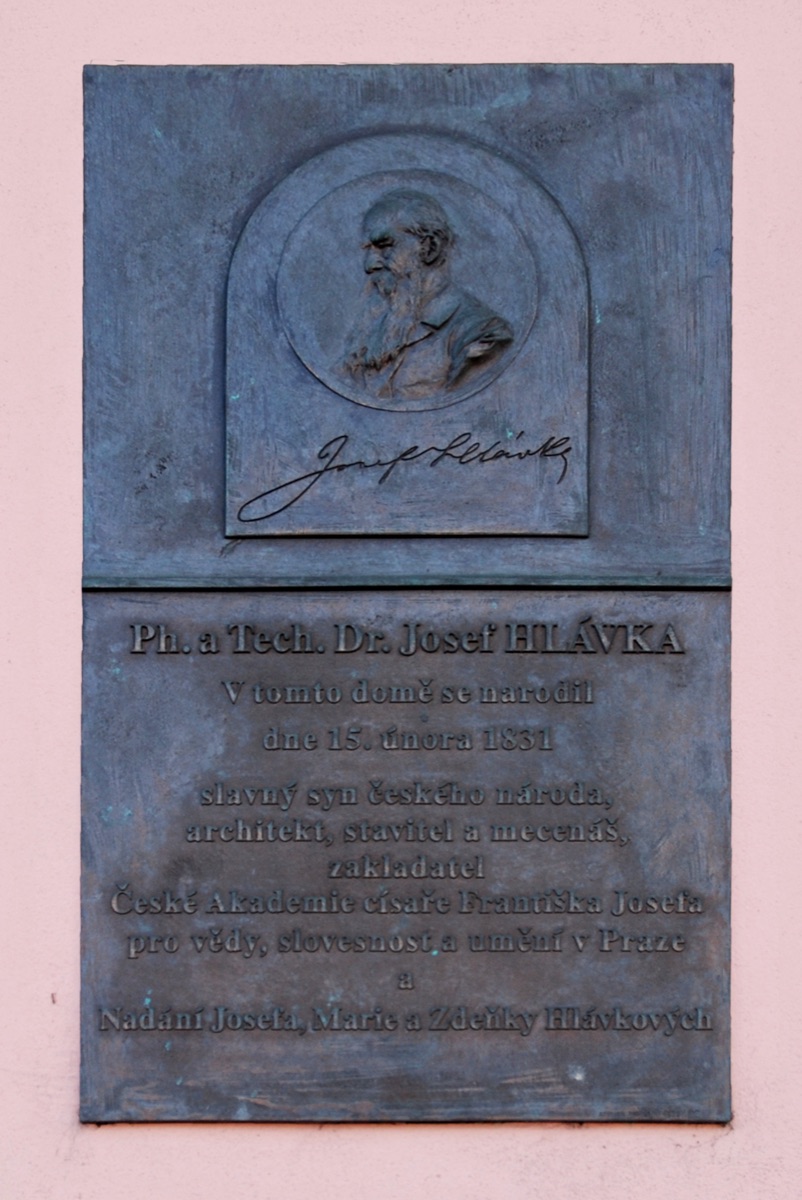
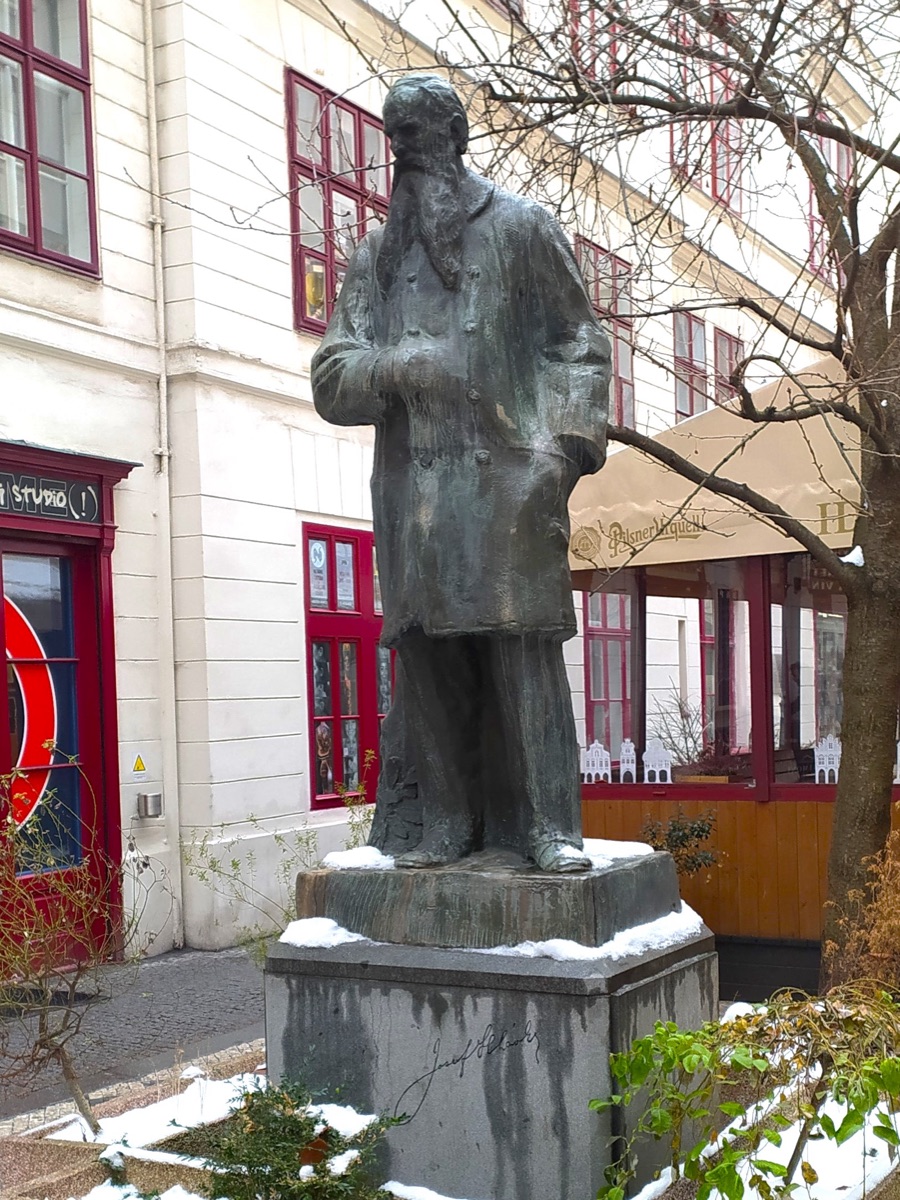
Josef Hlávka
Йозеф Главка · 1831–1908
Essence
Josef Hlávka (1831–1908) was a Czech architect, builder and patron whose design shaped the Residence of Bukovinian and Dalmatian Metropolitans in Chernivtsi. Constructed between 1864 and 1882, the ensemble now belongs to Chernivtsi National University and has been a UNESCO World Heritage Site since 2011. His career connects architectural heritage in Prague and present-day Ukraine.
Timeline
- 1831Born in Přeštice [J01; J11]
- 1840s–1850sEducation in Prague and Vienna [J01; J04; J11]
- 1860–1862Early design work for the Chernivtsi residence [J01]
- 1864Construction of the Chernivtsi complex begins [J01; J04; J11; J12]
- 1867Second prize for the residence project at the World Exhibition in Paris [J04]
- 1867–1875Construction of the Prague Provincial Maternity Hospital at Apolinář (J01: 1867–1875; J04: built 1867–1870, opened 1875) [J01]
- 1869–1871Serious illness; personal supervision in Chernivtsi ends [J01]
- 1872Publication of his report on the residence [J06]
- 1882Completion of the Chernivtsi complex [J11; J12; J03]
- 1886–1887Work on Lužany château [J01]
- 1908Death in Prague [J01; J11]
- 2011The residence is inscribed on the UNESCO list [J01; J13]
Full research text
The story
Josef Hlávka (1831–1908) was a Czech architect, entrepreneur and patron who designed the Residence of Bukovinian and Dalmatian Metropolitans in Chernivtsi. The project was built between 1864 and 1882. The complex now houses Yuriy Fedkovych Chernivtsi National University and was inscribed on UNESCO's World Heritage List in 2011. This heritage developed before the establishment of today's nation states, in the multicultural Bukovina of the Habsburg monarchy. [J01, J02, J03]
Hlávka's story connects two specific architectural legacies: the residence in Chernivtsi and buildings in Prague associated with the same architect. Its significance lies in the transfer of architectural knowledge, construction technologies and craftsmanship that created the physical basis of today's university environment. The simplified claim that a Czech architect “built a Ukrainian university” obscures the building's original purpose. [J01, J02, J04]
Essential facts and historical context
| Field | Information |
|---|---|
| Ukrainian form of the name | Йозеф Главка |
| Czech form of the name | Josef Hlávka |
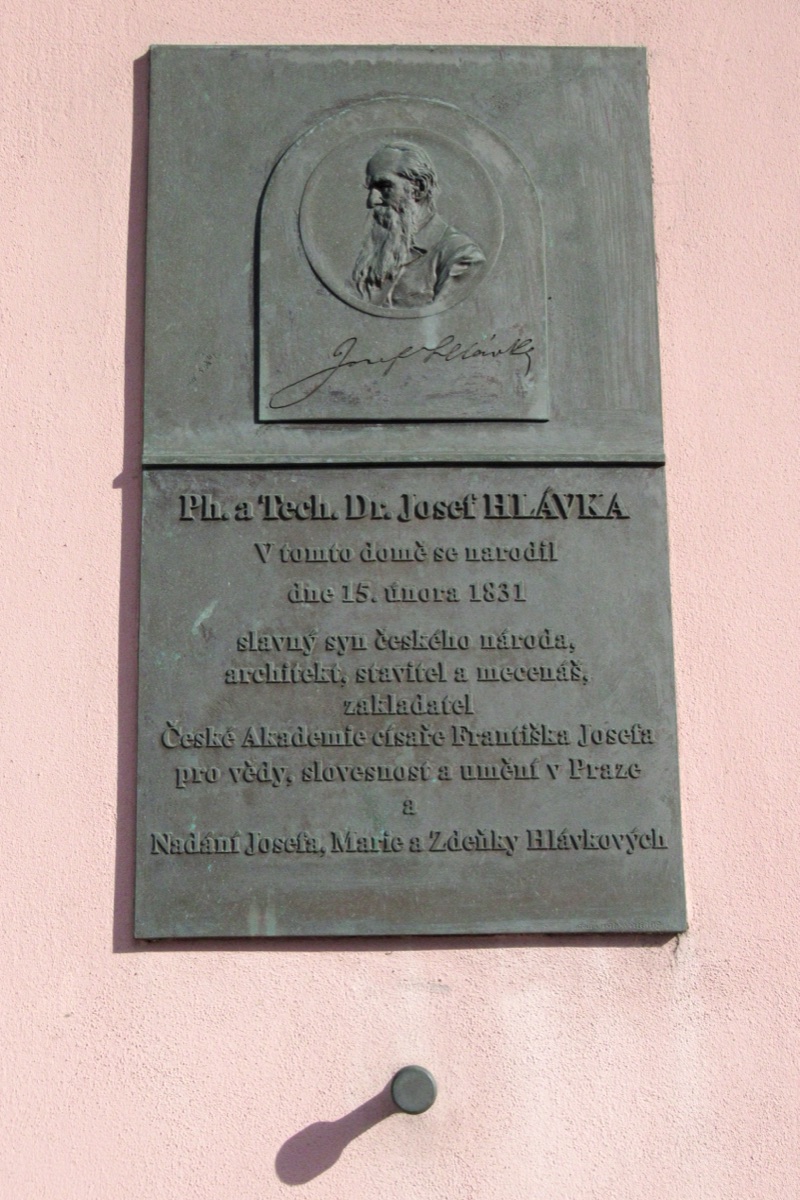
| Born | 15 February 1831, Přeštice, Bohemia |
| Died | 11 March 1908, Prague |
| Occupations | architect, builder, entrepreneur, patron |
| Principal building in present-day Ukraine | Residence of Bukovinian and Dalmatian Metropolitans, Chernivtsi |
| Principal Czech buildings and initiatives | Prague: Zemská porodnice u Apolináře; Lužany; the foundation's student initiatives |
| Research identifier | N0016 |
In the nineteenth century, Chernivtsi was part of Austrian Bukovina. The residence belonged to an Orthodox ecclesiastical institution and was not originally designed as a teaching building. The university has used the complex since the twentieth century. Its current function should therefore not be projected back onto the period of construction. [J02, J03]
An architect between cultures
Education in Prague and Vienna. Hlávka received technical and architectural training in Prague and completed his studies at the Academy of Fine Arts in Vienna. During the 1860s he developed a substantial construction business in Vienna, taking part in major Ringstrasse projects, the opera house and other buildings. According to Archiweb, he became best known for building the Vienna Court Opera, and his firm built 142 buildings in about ten years [J10]. His own architectural designs must be distinguished from projects that his company merely constructed to designs by other architects. [J01]
The commission in Chernivtsi. Contacts in Prague's academic circles, particularly the official Josef Jireček, helped Hlávka obtain the state commission for the residence of the Orthodox metropolitan in Bukovina. He studied Orthodox religious architecture and combined Byzantine, Romanesque and other historical motifs with the functional requirements of a representative residence. The Biographical Dictionary of the Czech Lands dates early design work to 1860–1862, whereas UNESCO dates construction to 1864–1882. These are different phases of the same process. The university page dates the solemn laying of the cornerstone to 19 April 1867 and the completion of the ensemble to the church built in 1882 [J03]; consecration followed in winter 1882/83 [J13]. [J01, J02]
Engineering and organisation. The large complex required materials, logistics, training for local craftspeople and production capacity. A Czech regional library describes the use of local materials, the establishment of brickworks and the involvement of skilled workers. The organisation of resources matters alongside architectural style. These details still require further comparison with drawings and original reports from 1872, rather than reliance solely on popular accounts. [J04]
Who completed the building. Hlávka did not personally supervise the entire construction until 1882. According to the Biographical Dictionary of the Czech Lands, illness and disagreements with the local administration led him to relinquish his role in 1871. Supervision then passed to the architect Feliks Księżarski. Hlávka is accurately described as the designer and supervisor of the early construction phase. [J01]
Catalogue record of the 1872 work. The Chernivtsi University Library catalogue describes Hlávka's own work, “Denkschrift über den … Bau … Residenzgebäude in Czernowitz”, Wien, 1872. Earlier actual reading covered bibliographic metadata, rather than book pages. The figures of 122 components and 133 files belong to the digital object; they do not establish printed pagination. Neither the book nor its title page has been read. Current repeated requests to the catalogue are unavailable, so this record earns no point as currently verified evidence. [J06]
Illness, return to the Czech lands and patronage. After demanding years of major construction projects, Hlávka became seriously ill and ceased actively managing the company. He later resumed public and philanthropic activities, supporting the arts, education and science. Prague connections include the maternity hospital near St Apollinaris and Hlávka's student residences, Hlávkovy koleje. The château at Lužany also connects his story to Antonín Dvořák's visits and the composition of the Lužany Mass. [J01, J07]
Disputed interpretations and limits of the evidence
“He built the university.” The building was originally a metropolitan residence; the university moved in much later. More precisely, he designed the complex that now houses the university. [J02]
“He personally supervised construction until 1882.” Supervision passed to another architect in 1871. This distinction matters both to the chronology and to attributing individual building interventions. [J01]
“Josef Hlávka was a Ukrainian architect.” He was a Czech architect working on a project in present-day Ukraine, in the multicultural Bukovina of the nineteenth century. [J01, J02]
Personal cultural contacts. A state commission alone does not establish personal friendship between particular Czech and Ukrainian individuals. Such claims require letters, contracts or diaries from local collaborators. [J06]
Further reading about this person
A catalogue confirms the bibliographic record. It does not mean that every dossier claim has been checked against the book’s full text.
-
About this person
Josef Hlávka, největší český mecenáš
Pavel Ries
Akropolis · 1991 · ISBN 80-85334-08-9
Bibliographic record confirmed · Record checked 2026-11-02
Catalogue or publisher record ↗Text reading not documented
Sources
- J01 Institute of History, Czech Academy of Sciences. “HLÁVKA Josef 1831–1908”, Biografický slovník českých zemí 25 (2022), pp. 657–659; online update 4 September 2025. The principal architectural-career passages, lifespan details and relevant bibliography were read, rather than the whole patronage section. Cited book and archival originals have not been read. biography.hiu.cas.cz
- J02 UNESCO World Heritage Centre. “Residence of Bukovinian and Dalmatian Metropolitans”, entry 1330. The opening giving the construction period 1864–1882 and the 2011 inscription field were read through the web reader. Direct GET returned a 403 protection challenge, rather than the article text, and cannot be presented as direct reading of the page. The nomination files have not been read. whc.unesco.org
- J03 Chernivtsi University, UNESCO programme: official information about the heritage site. A reference retained from the previous research wave; the page was not reread during this pass and no current verification is claimed. chnu.edu.ua
- J04 Studijní a vědecká knihovna Plzeňského kraje. Online exhibition “Osobitý kraj”. Selected passages about Hlávka's education, Chernivtsi, the second prize in Paris in 1867, Apolinář and illness were read, rather than the entire three-person exhibition. Linked images of books were not inspected. Part of its bibliographic provenance is shared with J01. svkpk.cz
- J05 Václav Pavlíček. Opening address of 18 December 2003 for the exhibition marking 100 years of Nadání, on the Hlávka Foundation website. The opening was read and the speech genre established. This is not an architectural history or confirmation of the date 1882. hlavkovanadace.cz
- J06 Scientific Library of Chernivtsi University, Bucovinensia digital collection, catalogue record 355: Josef Hlávka, “Denkschrift …”, Wien, 1872. Earlier actual reading was limited to the catalogue author, title and publication details; 122 components and 133 files describe the digital object, rather than printed pagination. Neither the book nor its title page has been read. Current repeated requests timed out; there is no reproducible fresh snapshot, so this record is not used here as currently verified evidence. bucovinensia.chnu.edu.ua
- J07 Hlávka Foundation. An archival account of the construction business and foundation. A reference retained from the previous research wave; it was not reread during this pass and no current verification is claimed. hlavkovanadace.cz
- J08 Chernivtsi National University. “University Arboretum”. A reference retained from the previous research wave; the page was not reread during this pass and no current verification is claimed. chnu.edu.ua
- J09 Scientific Library of Chernivtsi University. Simeon Reli, “Reşedinţa Mitropolitană din Cernăuţi şi meşterul ei Iosif Hlăvka”, 1933. A reference retained from the previous research wave; it was not reread during this pass and no current verification is claimed. bucovinensia.chnu.edu.ua
- J10 Archiweb, «Architect and builder Hlávka has a memorial plaque in Vienna»: he became known for building the Vienna Court Opera; his office built 142 buildings in about ten years. archiweb.cz
- J11 Encyclopedia of Modern Ukraine, entry on Hlávka: life dates (15 Feb 1831 – 11 Mar 1908), study at the Vienna Academy, the metropolitan residence ensemble in Chernivtsi 1864–1882. esu.com.ua
- J12 Czech Academy of Sciences bulletin (Sept 2011, web archive): Hlávka built the residence 1864–1882; it had just been added to the UNESCO World Heritage List. webarchiv.lib.cas.cz:443
- J13 English Wikipedia, article on the residence: construction from 1864, consecration winter 1882/83, UNESCO inscription 28 June 2011; Hlávka's resignation and successor Księżarski. Supporting, not independent. en.wikipedia.org
Photos and videos
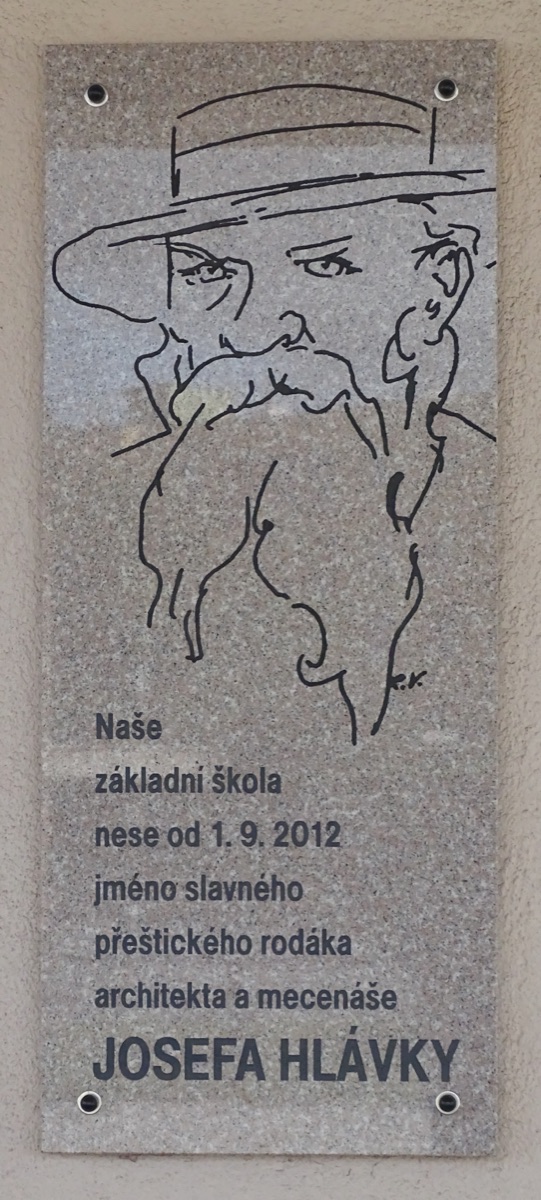
Verification
Two sources (automatic score)
Automatic evidence score: key facts rest on at least two independent sources. No person has yet read the whole dossier.
- Automatic evidence score: 67 points (threshold 40).
- Independent fact check of every statement against primary sources (3 November 2026).
Evidence coverage
Timeline claims assessed: 12 / 12. Claims with verified contradictions: 1.
The score measures coverage of timeline claims by verified sources, not the probability of historical truth. One independent source gives a claim 0.5 points; two or more give 1 point. A disputed claim receives 0. Unassessed claims remain in the denominator.
evidence-v1 · 2026-11-03
How the score is calculated
Each claim shows its contribution to the score and verified current sources. Multiple references may share an origin; context adds no points.
-
1831
Born in Přeštice
Assessed Contribution: 1.0 / 1Independent source origins: 2
Report this claim -
1840s–1850s
Education in Prague and Vienna
Assessed Contribution: 1.0 / 1Independent source origins: 3
Report this claim -
1860–1862
Early design work for the Chernivtsi residence
Assessed Contribution: 0.5 / 1Independent source origins: 1
Report this claim -
1864
Construction of the Chernivtsi complex begins
Assessed Contribution: 1.0 / 1Independent source origins: 4
- J01 — supports the claim
- J04 — supports the claim
- J11 — supports the claim
- J12 — supports the claim
- J03 — context only
-
1867
Second prize for the residence project at the World Exhibition in Paris
Assessed Contribution: 0.5 / 1Independent source origins: 1
Report this claim -
1867–1875
Construction of the Prague Provincial Maternity Hospital at Apolinář (J01: 1867–1875; J04: built 1867–1870, opened 1875)
Sources contradict one another Contribution: 0.0 / 1Independent source origins: 1
Report this claim -
1869–1871
Serious illness; personal supervision in Chernivtsi ends
Assessed Contribution: 0.5 / 1Independent source origins: 1
Report this claim -
1872
Publication of his report on the residence
Assessed Contribution: 0.0 / 1Independent source origins: 0
Report this claim -
1882
Completion of the Chernivtsi complex
Assessed Contribution: 1.0 / 1Independent source origins: 3
Report this claim -
1886–1887
Work on Lužany château
Assessed Contribution: 0.5 / 1Independent source origins: 1
Report this claim -
1908
Death in Prague
Assessed Contribution: 1.0 / 1Independent source origins: 2
Report this claim -
2011
The residence is inscribed on the UNESCO list
Assessed Contribution: 1.0 / 1Independent source origins: 2
Report this claim
2026-11-03
How we verify
- DraftResearch draft with sources; independent check still pending.
- Checked automaticallyQuotes mechanically matched to sources; an independent model found no contradictions.
- Two sources (automatic score)Automatic evidence score: key facts rest on at least two independent sources. No person has yet read the whole dossier.
- Confirmed by an editorAn editor confirmed the dossier; the reason is shown on the page. This is not an independent scholarly review.
- Disputed pointsSources disagree; disputed points are marked in the text.
Report an error or add information
Your message goes to the editorial queue. AI pre-sorts it, a human decides.